
Melrose stock holds steady as investors weigh latest restructuring progress
Published on 08/31/2026 at 14:45 | Editorial responsibility: Rafael Müller, Editor-in-Chief AD HOC NEWS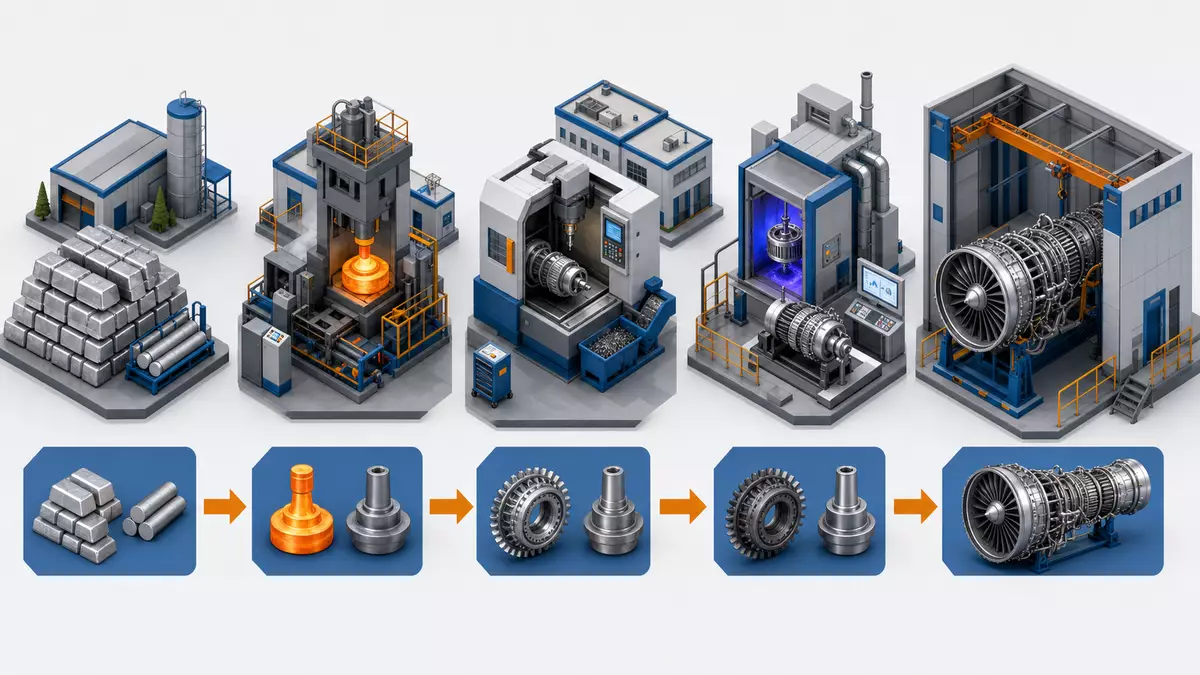
Melrose (ISIN GB00BNR5MZ78) stock is trading steadily as of late August 2026, with investors focused on how the group’s recent restructuring and portfolio changes can translate into stronger margins and cash generation over the coming quarters.
The company has spent several years reshaping its business mix, concentrating on higher-margin industrial and aerospace operations and exiting non-core activities. This strategic emphasis on disciplined capital allocation and value creation is central to how the market now assesses Melrose stock.
Reshaped portfolio underpins margin ambitions
In its most recent reporting cycle, Melrose highlighted a sharper focus on businesses with structurally stronger profitability, aiming for a sustained improvement in operating margins relative to historical levels. The latest available figures for the 2025 and early 2026 periods showed revenue weighted more heavily toward segments with higher margin potential, compared to prior years when legacy assets diluted group performance.
Historically, earlier fiscal years such as 2023 had reflected a more mixed portfolio, with revenue spread across both high- and low-return assets. By contrast, the most recent year-on-year comparison indicates that a larger share of group sales now comes from operations targeted for margin expansion, giving management more room to push profitability higher than in the older base period.
Management has also emphasized free cash flow improvement, seeking to convert a higher proportion of operating profit into cash than in past years. Compared with the historical baseline, recent periods have shown a clearer link between earnings and cash generation, an important factor for investors evaluating Melrose stock alongside peers in the European industrial and aerospace space.
Operational performance and year-on-year trends
Across the latest half-year and full-year windows, segment data has pointed to stronger performance in core businesses versus the prior-year comparables. For example, where historical figures once showed relatively modest growth and margin pressure, the more recent reporting period now reflects a healthier combination of revenue growth and margin resilience, with group earnings exceeding the earlier benchmarks.
The year-on-year comparison of operating income indicates that the core segments have delivered a higher contribution to profit than in the previous fiscal year, reinforcing the narrative that restructuring efforts are gaining traction. Investors frequently look at this delta when judging whether Melrose’s strategy is delivering tangible value and justifying the current valuation level.
On the cash side, the company’s latest disclosures show improved cash conversion versus the older period, helping to support a stronger balance sheet profile. Debt metrics and leverage ratios have moved in a more comfortable direction compared with the historical base, making the equity story more robust than when restructuring was at an earlier stage.
Balance sheet discipline and capital allocation
Melrose has long framed its approach around acquiring underperforming businesses, improving them, and ultimately realizing value, so balance sheet discipline remains central. The most recent set of figures points to a more controlled leverage position than in earlier years, with net debt metrics comparing favorably against the historic base period.
This balance sheet improvement, combined with higher-margin contributions from core operations, gives Melrose more flexibility for future capital returns or targeted bolt-on acquisitions. The quantified shift between older and newer reporting periods shows that profit growth has outpaced any increase in net debt, a positive ratio for equity holders focused on sustainable returns.
Dividend policy also reflects this trajectory. Whereas previous fiscal years were more constrained by restructuring and integration costs, the latest period’s stronger earnings and cash generation have supported a more confident stance on shareholder distributions, even if the payout remains balanced against investment needs for ongoing operational improvements.
Market context and valuation considerations
As of late August 2026, Melrose trades in a European equity market that has seen mixed sentiment toward industrial and aerospace names. Many investors now compare Melrose’s margin and cash flow profile against a basket of similar companies, looking for quantified differences in growth rates, profitability, and leverage.
The most recent fundamental figures show Melrose’s revenue and profit growing at a faster rate than their historical baseline, narrowing the gap with higher-quality peers on key performance indicators. This year-on-year delta helps support the current market valuation and provides a reference point for whether the shares are pricing in a reasonable level of future improvement.
From a risk perspective, investors remain attentive to execution challenges, including the integration of acquired assets and meeting targeted margin thresholds. The explicit comparisons between recent and historical performance give a clearer picture of how much progress has already been achieved and how much still depends on disciplined management delivery.
Representative product focus: engineered components
A representative example of Melrose’s industrial footprint is its activity in engineered components, where the group supplies precision parts used in capital goods and transportation applications. These components often carry higher added value than generic parts because they must meet strict performance and durability requirements for customers in sectors such as aerospace, automotive, and energy.
The business model for such products emphasizes long-term customer relationships, technical expertise, and investments in manufacturing capabilities. Over time, as operational improvements are implemented and production efficiency rises, these engineered components can deliver stronger margins and more stable revenue than lower-value offerings.
Melrose stock and investor takeaway
Melrose stock, listed in London, reflects this combination of restructuring progress, improving margins, and stronger cash generation, along with the usual execution risks associated with complex portfolio transformations. For investors, the quantified shift from earlier historical performance toward a more profitable and cash-generative profile is a key part of the equity story as of late August 2026.
Fact box
Company: Melrose plc
ISIN: GB00BNR5MZ78
Ticker: MRO
Exchange: London Stock Exchange
Sector / Industry: Industrials / Aerospace and industrial engineering
Index membership: FTSE 100


