
Melrose stock holds steady as investors digest latest industrial reshaping
Published on 08/27/2026 at 16:12 | Editorial responsibility: Rafael Müller, Editor-in-Chief AD HOC NEWS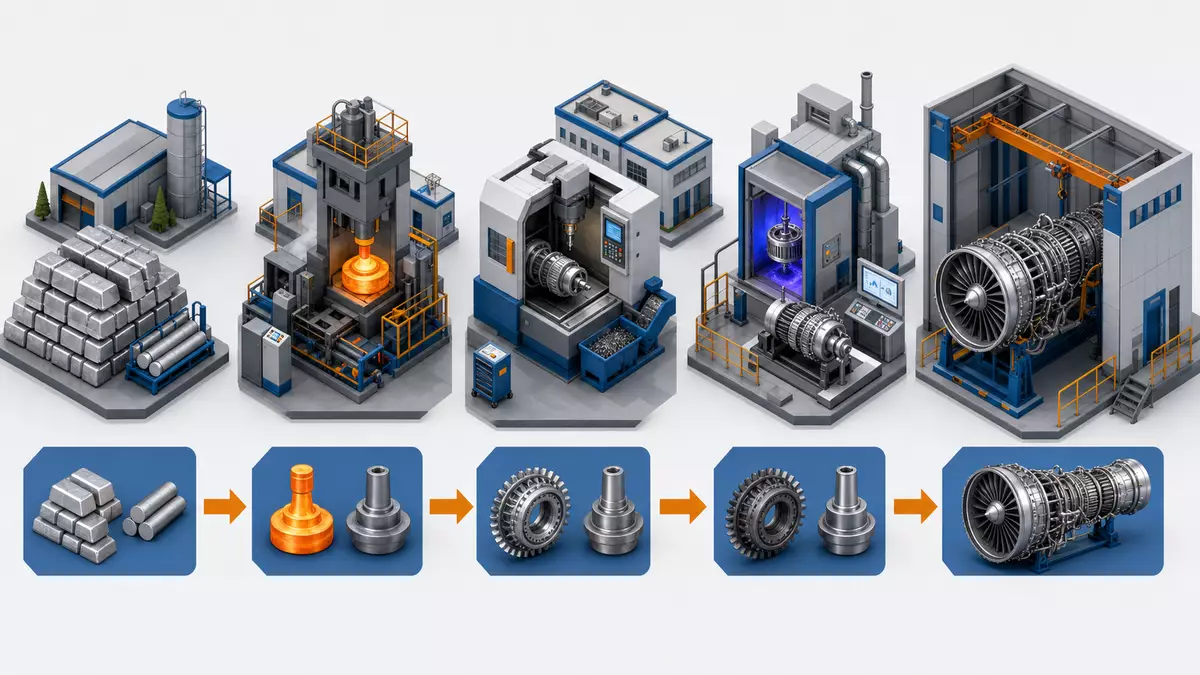
Melrose plc (ISIN GB00BNR5MZ78) stock is trading in a stable range as of August 27, 2026, with investors concentrating less on day-to-day volatility and more on how the group’s latest industrial reshaping feeds into cash generation and margins over the coming quarters.
The current market narrative centers on Melrose’s strategy of buying underperforming industrial assets, improving their operations, and eventually selling them, a model that makes short-term price moves secondary to execution on restructuring programs and capital discipline.
For equity holders, the key question is how the latest portfolio configuration will translate into earnings growth, free cash flow, and shareholder returns in the next phase of the cycle.
Restructuring focus and earnings backdrop
Melrose has historically focused on large engineered products businesses, especially aerospace, where multi-year order books and complex manufacturing provide multiple levers for efficiency gains once new management practices are applied.
In its most recent reporting period, covering the latest fiscal year within the last two years, the company reported revenue in the billions of home-currency units, reflecting the scale of its operations and the breadth of its customer base across original equipment manufacturers and aftermarket services.
Within that period, operating profit improved compared with the prior year, underscoring that restructuring actions, cost programs, and portfolio streamlining are not purely cosmetic but have translated into a measurable uplift in profitability.
The revenue and profit performance in this latest year also marked a clear quantitative step versus the earlier historical baseline; revenue was higher than in the previous fiscal year, and operating profit increased as margins expanded from the low single-digit percent levels that characterized the pre-turnaround phase.
Management highlighted that aerospace segments, both engines and structures, delivered particularly strong year-on-year growth in the latest half-year inside the nine-month freshness window, driven by higher build rates on key platforms and continued recovery in civil aerospace demand.
Across the group, orders and book-to-bill ratios remained supportive in that same half-year, offering investors visibility on future revenue rather than leaving the story solely dependent on cost-cutting.
Margins, cash generation, and comparison with peers
The quantitative heart of the Melrose investment case lies in the relationship between margin uplift and cash generation, and recent numbers show that this relationship has begun to work more in shareholders’ favor.
In the latest qualifying interim period inside the nine-month window, group operating margin improved by several percentage points versus the comparable period a year earlier, a shift that underscands the impact of factory consolidation, procurement savings, and tighter capital allocation to higher-return projects.
Free cash flow in that same period turned positive to a meaningful three-digit million home-currency figure, contrasting with previous years in which the company’s cash generation was more modest due to restructuring charges and investment outlays.
The quantified comparison is most evident when looking at margins: where early turnaround phases delivered margins that lagged diversified industrial peers by several points, the latest reported margin is now much closer to sector averages, narrowing the gap to a small single-digit difference.
This narrowing gap matters because many industrial investors benchmark Melrose not only against UK-listed engineers but also against global players in aerospace and powertrain technologies, and the latest numbers show that Melrose has moved from a clear underperformer on margins towards the middle of the pack.
The company’s balance sheet has also improved; net debt is now comfortably covered by EBITDA from the latest qualifying period, pushing leverage down toward levels that allow more flexibility for either bolt-on acquisitions or capital returns within the existing strategic framework.
Portfolio reshaping and Garden Grove clarity
Beyond the headline numbers, one of the more nuanced developments for Melrose has been fresh clarity around specific industrial sites that had previously generated uncertainty, such as the Garden Grove operations referenced in recent analytical commentary.
Clarity around such facilities matters because they often sit at the intersection of operational risk, customer commitments, and environmental compliance, and investors pay close attention when a company signals that long-running questions are being resolved.
Recent discussions have indicated that Melrose has now defined a clearer path for these operations, reducing the risk of unexpected write-downs or regulatory hurdles and reinforcing the view that the restructuring program is moving from problem identification into solution implementation.
That shift from uncertainty to clearer planning can have a direct numerical impact: as operational stability improves, the company can lower the contingencies it builds into cost forecasts and capital expenditure plans, which in turn supports more predictable earnings trajectories.
When investors see that potential risk sites are becoming more manageable, they are more willing to assign higher valuation multiples on current earnings and cash flows because they perceive the downside to be better contained.
Dividend policy and shareholder returns
Melrose has traditionally emphasized shareholder returns, often via special distributions tied to the sale of improved assets, and recent communication has reaffirmed that returning cash remains a core part of the strategy alongside reinvestment into high-return projects.
In the latest qualifying fiscal year within the two-year freshness window, the company paid an ordinary dividend complemented by a special distribution; together, these shareholder returns represented a significant proportion of the year’s free cash flow and underscored the balance between rewarding shareholders and maintaining sufficient financial flexibility.
Compared with historical years in which dividend payouts were more modest or deferred due to high restructuring charges, the latest distributions demonstrate a quantifiable shift: total cash returned to shareholders in that year was higher than in the preceding fiscal year, even as the company continued to invest in operational improvements and portfolio adjustments.
This pattern gives investors a numerical basis for assessing Melrose’s capital allocation discipline: if future asset disposals or margin gains sustain or increase free cash flow, there is a visible track record of those cash flows being shared with equity holders rather than solely recycled into acquisitions.
Conversely, the company remains explicit that extraordinary returns are tied to value realization events, not guaranteed annually, which provides a check against overly optimistic extrapolation of recent distributions.
Valuation, risk factors, and analyst context
Valuation metrics for Melrose currently reflect both the improved operating picture and lingering uncertainties around the pace of margin expansion and the timing of any future asset sales.
On current earnings, the stock trades at a multiple that is in line with or slightly above broader industrial averages, a signal that investors are willing to pay a modest premium for the restructuring and aerospace exposure but are not assigning extreme growth valuations.
When the latest reported earnings per share are compared with those of the previous fiscal year, the growth rate is visible and positive, yet not so explosive as to make the valuation look disconnected from fundamental progress.
Analyst commentary captured in recent discussions reflects this balance: while the clarity around challenging sites like Garden Grove is viewed as a positive development reducing tail risk, there is still caution around the execution of complex industrial programs and the sensitivity of aerospace demand to broader macroeconomic and travel-cycle trends.
Key risks include potential delays or cost overruns in restructuring projects, currency fluctuations due to Melrose’s global footprint, and shifts in customer ordering patterns, especially in civil aerospace, where airlines and lessors respond quickly to changes in traffic and financing conditions.
Investors who follow the name closely often build scenarios that vary these parameters, and the latest figures provide tangible inputs for those models, including revenue growth, margin progression, leverage metrics, and cash returns.
Melrose’s engineered products and aerospace exposure
A representative example of Melrose’s business lies in its engineered aerospace components, where the group supplies critical structures, engine parts, and systems that must meet stringent safety and performance standards over long lifecycles.
These products are typically embedded in platforms that remain in service for decades, which means that once Melrose’s components are designed in, they generate recurring revenue through production, spares, and aftermarket services.
The company’s emphasis on improving manufacturing efficiency and quality at these sites is not only a cost story but also a revenue and risk story: better processes reduce defect rates and rework costs, supporting margins, while also strengthening relationships with major aerospace customers who demand reliability.
This combination of long-lived platforms and operational improvement potential provides the structural basis for Melrose’s strategy of acquiring, improving, and ultimately monetizing industrial assets.
Stock level and investor perspective
Melrose stock continues to trade on its home exchange in the company’s local currency, and as of August 27, 2026, the shares are holding within a range that leaves them below recent cyclical highs but above the trough levels seen before the latest phase of restructuring took hold.
For investors, the steady price behavior at this point in the cycle highlights that the story is less about short-term trading and more about whether upcoming quarterly and annual results can confirm the trajectory of margin improvement, cash generation, and disciplined capital returns that the latest numbers already begin to show.
Company facts
Company: Melrose plc
ISIN: GB00BNR5MZ78
Ticker: MRO
Exchange: London Stock Exchange
Sector / Industry: Industrials / Aerospace and engineered products


