
McDonald's stock holds at $267 as Q2 2026 earnings highlight margin strength and softer U.S. traffic
Published on 08/19/2026 at 09:05 | Editorial responsibility: Rafael Müller, Editor-in-Chief AD HOC NEWS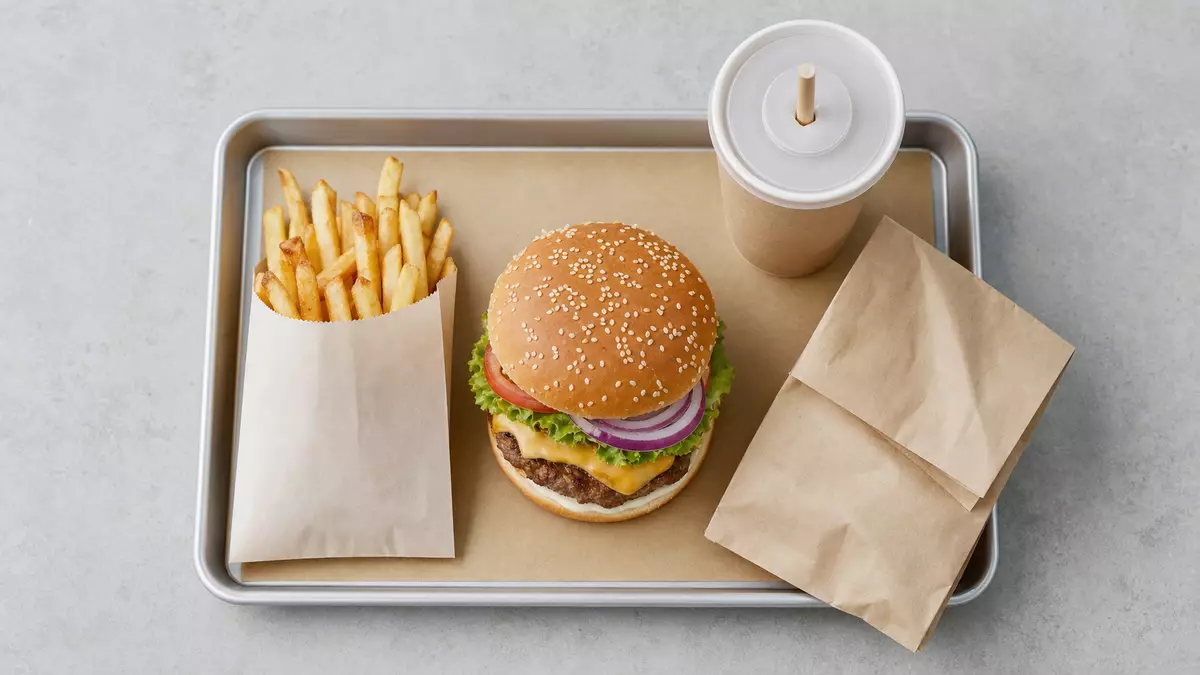
McDonald's Corp. (ISIN US5801351017) stock is holding close to $267 following the company’s Q2 2026 earnings release, where adjusted earnings grew faster than revenue and U.S. guest traffic lagged international trends as of August 18, 2026.
The latest quarterly report shows that adjusted earnings per share reached $3.38 in Q2 2026, a 6% year-over-year increase that also exceeded consensus expectations of $3.32 for the period ended June 30, 2026. Revenue for the quarter rose 4% to $7.10 billion but came in slightly below the $7.14 billion market expectation, indicating that profit growth is being driven more by margin improvements than by top-line outperformance.
Franchised restaurant margin dollars climbed 4.3% in Q2 2026 to $3.71 billion, representing about 90% of total restaurant margin dollars, underlining how the predominantly franchised structure continues to support the company’s profitability. In contrast, company-operated restaurant margins grew more modestly at 1.8% overall, and within the U.S. segment margins fell 6% to $91 million, reflecting persistent cost inflation and the challenge of maintaining value perceptions while protecting profitability.
U.S. comparable sales increased 0.8% in Q2 2026, supported by higher average check and favorable product mix, but lower guest counts limited the overall result and left traffic as a key watchpoint for the domestic business. Internationally, comparable sales remained positive, suggesting that the brand’s menu, marketing, and digital engagement continue to resonate more strongly outside the United States, where value dynamics and competitive pressures differ.
Q2 2026 earnings and valuation context
Market commentary on August 18, 2026 notes that McDonald's traffic disappointed in the recent quarter while its rent-like franchised income stream still underpins the dividend and valuation. One analysis highlighted a current share price of $266.99 during that session, with McDonald's offering a dividend yield around 2.7% to 2.8%, and pointed out that the stock is down 12% year-to-date in 2026. This places McDonald's in a situation where operational execution and traffic recovery must justify a still-premium valuation multiple even as the shares trade closer to their 52-week low.
Another same-day overview indicates that McDonald's stock was trading around $270, close to a 52-week low of $260.96, reinforcing the view that the market has already discounted some of the near-term traffic and margin risks into the share price. At a closing price of $267.15 on August 18, 2026, with a modest gain of 0.61% on the day, investors appear to be weighing the resilience of franchised margins and the global brand against the need for clearer evidence that value-focused initiatives can rebuild U.S. guest counts.
Real-time technical data on August 18, 2026 shows McDonald's closing at 267.145 USD with a daily gain of 0.61%, which is consistent with the indicated $267.15 closing mark for that session. This technical snapshot underscores that while the stock has moved off the very bottom of its recent range, it remains close to support levels defined by the 52-week low, making subsequent traffic and margin trends in Q3 and beyond critical for any sustained re-rating.
Consensus commentary as of August 18, 2026 characterizes McDonald's current rating profile as neutral, with a hold-oriented stance based on mixed valuation signals. The company’s value, growth, and momentum factors are described as uneven, where solid dividend support and global margin strength are offset by caution on U.S. traffic and the effectiveness of value-menu promotions. For investors, this implies that the discount to prior valuation peaks is not yet widely viewed as a clear entry point without further data on guest count recovery.
Traffic, value perception, and net-lease implications
Sector analysis published on August 18, 2026 points out that fast-food value deals are losing some of their pull for net-lease property owners, citing McDonald's disappointing value-menu performance alongside a 7% same-store sales decline at Wendy’s and a 7.5% U.S. same-store sales decline at Wingstop. This context suggests that aggressive discounting and value promotions are not uniformly delivering the hoped-for traffic rebound among lower-income consumers, which has implications both for operating performance and the perceived stability of underlying real estate cash flows.
For McDonald's specifically, the Q2 2026 numbers show that while U.S. comparable sales grew 0.8%, traffic declined, meaning that the sales gain came largely from higher ticket and mix rather than an increase in visitation. This reinforces the message that the company must refine its value proposition to ensure that menu innovation and price points resonate with cost-sensitive diners without eroding margins. The 6% decline in U.S. company-operated restaurant margins to $91 million in Q2 2026 illustrates the tension between maintaining affordability and absorbing elevated labor and food costs.
Outside the United States, comparable sales in Q2 2026 remained positive, and franchised margins expanded, underscoring the strength of McDonald's global model and its focus on capital-light growth. The 4.3% rise in franchised restaurant margin dollars to $3.71 billion serves as a reminder that the company’s earnings power is increasingly anchored in stable franchise rents and fees, which behave like a diversified real estate and royalty stream rather than purely as operating restaurant profit.
At the same time, commentary on August 18, 2026 frames McDonald's valuation as lower than in previous periods but still exposed to execution risk, especially around traffic and value messaging in the United States. The 12% year-to-date share price decline and a trading level near $270 versus a 52-week low of $260.96 imply that the market has priced in some of the current challenges; however, investors may require more robust evidence that guest counts are recovering before treating the discount as a sufficient catalyst for renewed buying.
Menu and product perspective: core burger platform
Beyond quarterly figures and traffic metrics, McDonald's long-term earnings story continues to be closely tied to the performance of its core burger platform, particularly the Big Mac and related value-meal configurations. The Q2 2026 data show that U.S. comparable sales growth was driven in part by favorable product mix, meaning that customers gravitated toward combinations and offerings that carried slightly higher margins, likely including premium sandwiches, combo meals, and digital-order upsells such as larger fries or beverages.
The Big Mac, as a representative product, illustrates how McDonald's balances value and margin. Historically, promotional pricing on the Big Mac and similar items has been used to drive traffic during periods of economic strain, while more premium versions and limited-time variants help support average check. In Q2 2026, the company’s mix-driven comparable sales growth suggests that these levers are still functioning, but the decline in U.S. guest counts indicates that they are not yet sufficient to bring back more price-sensitive diners in large numbers.
Digital ordering and loyalty programs, which frequently feature targeted discounts or personalized offers tied to core products such as the Big Mac, have also become central to McDonald's strategy. With franchised margins up 4.3% to $3.71 billion and constituting about 90% of total restaurant margin dollars in Q2 2026, franchisees benefit when digital initiatives increase throughput and shift patron behavior toward profitable items. As such, the company is likely to continue refining its app-based promotions and menu architecture around its flagship products to balance traffic growth against margin preservation.
From a net-lease and landlord perspective, the performance of these core menu items matters because they help determine the stability of franchisee cash flows and, in turn, the reliability of rent payments. The sector commentary highlighting weaker value-menu traction implies that landlords are watching closely to see whether chains like McDonald's can adjust their offerings to sustain sales without meaningfully compressing margins. McDonald's Q2 2026 results, with higher franchised margin dollars and weaker U.S. traffic, present a nuanced picture where the income stream appears solid but volume-based growth drivers need strengthening.
Stock level as of the latest session
As of the most recent completed U.S. trading session on August 18, 2026, McDonald's stock closed at $267.15, representing a daily gain of 0.61% and placing the shares close to the indicated trading band around $270 that is not far above the 52-week low of $260.96. This level suggests that while the market acknowledges the strength of franchised margins and the stability of the dividend, it remains cautious regarding the pace of U.S. traffic recovery and the broader effectiveness of value-menu strategies in a higher-cost environment.
With a share price in the high-$260s and a dividend yield around 2.7% to 2.8% as of August 18, 2026, McDonald's offers investors a combination of moderate income and exposure to a global consumer brand whose earnings mix is increasingly skewed toward franchised fees and rents. The Q2 2026 figures showing adjusted EPS of $3.38, revenue of $7.10 billion, franchised margin dollars of $3.71 billion, and U.S. comparable sales growth of 0.8% encapsulate the current state: solid profitability, healthy international momentum, but only modest domestic growth constrained by traffic trends.
Read more
Investor Relations information for McDonald's, including detailed quarterly filings, presentations, and historical financial data, is available from the company’s dedicated investor website.
Big Mac and value meals as a strategic pillar
Within McDonald's product lineup, the Big Mac and its associated value meals remain a key strategic pillar, serving as both a traffic driver and a margin contributor across economic cycles. The Q2 2026 emphasis on favorable product mix and higher average check aligns with an environment where customers may be trading up to combo offerings or premium sandwiches, even as total guest counts soften. For franchisees, this dynamic can partially offset lower visit frequency by extracting more revenue from each transaction, especially when upselling through digital channels.
In practice, this means that menu engineering around core items such as the Big Mac helps determine whether McDonald's can sustain comparable sales growth without relying heavily on deep discounting that compresses margins. The 6% decline in U.S. company-operated restaurant margins to $91 million in Q2 2026 highlights the risk of cost inflation eating into profitability when price points are held down to preserve perceived value. At the same time, the 4.3% increase in franchised margin dollars to $3.71 billion underscores how franchisees can still thrive when the mix shifts toward higher-margin offerings, even with softer traffic.
McDonald's stock price context
For McDonald's stock, the current level of $267.15 as of August 18, 2026 in U.S. trading places the shares in a zone where downside appears buffered by stable franchised earnings and a dependable dividend, while upside likely depends on clearer evidence of U.S. traffic recovery and the success of value-menu recalibration. The proximity of the stock to its 52-week low of $260.96, alongside a 12% year-to-date decline and a trading band around $270, illustrates how the market has already adjusted expectations but has not yet granted a full premium to the brand’s long-term earnings profile.
Investors following McDonald's stock are therefore confronted with a balance between margin-driven EPS growth and volume-related risks. The Q2 2026 results, with adjusted EPS up 6% to $3.38, revenue up 4% to $7.10 billion, franchised margin dollars up 4.3% to $3.71 billion, and U.S. comparable sales up 0.8% but with declining traffic and a 6% drop in U.S. company-operated margins to $91 million, encapsulate this duality. As of August 18, 2026, the share price at $267.15 reflects cautious confidence that the global franchise model and dividend can carry value while the company works to restore domestic guest momentum.
Fact box
Company: McDonald's Corp.
ISIN: US5801351017
Ticker: MCD
Exchange: NYSE
Price (as of August 18, 2026, 3:59 p.m. ET): $267.15 USD
Market cap: not specified in this data set
Sector / Industry: Consumer discretionary / Restaurants
Index membership: S&P 500, Dow Jones Industrial Average


