
Linde stock holds strong as dividend and earnings outlook support valuation
Published on 08/27/2026 at 13:35 | Editorial responsibility: Rafael Müller, Editor-in-Chief AD HOC NEWS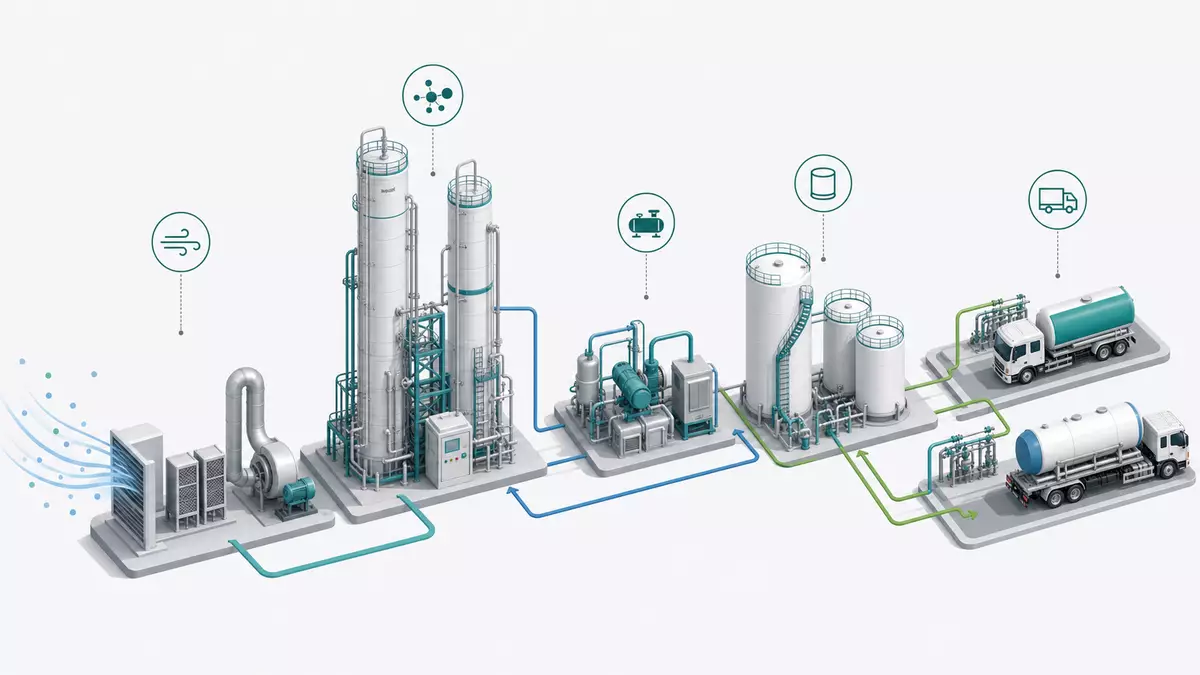
Linde plc (ISIN IE000S9YS4E6) stock is trading at elevated levels in late August 2026 as investors focus on the industrial gas group's steady dividend stream, earnings guidance for 2026, and a sizable project backlog that underpins future growth. As of August 26, 2026, the company's U.S.-listed shares closed at $490.33, only modestly below their recent trading range around $490, highlighting resilient demand for the stock despite minor day-to-day fluctuations.
Share price performance and valuation context
Recent market data show Linde's U.S.-traded shares changing hands at $490.33 at the close on August 26, 2026, with a marginal move of 0.64% during that session, underscoring a relatively calm trading day at a high absolute price level. Over in Europe, the stock's German listing was quoted at 418.60 EUR on August 27, 2026, down 0.52% on the day, while still standing 2.14% higher than at the start of the year, indicating a year-to-date gain that reflects ongoing investor confidence.
On another European venue covered by a dedicated stock-analysis page, Linde's shares were reported at 416.20 EUR as of August 25, 2026, representing a 15.0% increase from 362.00 EUR at the beginning of the year. This double-digit percentage gain demonstrates that the stock has substantially outperformed a flat or mildly positive broader market and that investors have been willing to pay an expanding valuation multiple for the company's earnings stream.
Latest earnings, guidance, and backlog
Beyond day-to-day price action, Linde's fundamental story for investors is framed by its most recently reported earnings and guidance for 2026. A recent earnings-focused analysis highlighted that for the 2025 fiscal year Linde delivered adjusted earnings per share of $4.20 in the fourth quarter, helping drive full-year revenue to $34 billion and demonstrating the scale of the company's industrial gas operations. While this full-year revenue figure refers to 2025 and is therefore a historical reference point, it offers a baseline against which investors can gauge the growth implied by the latest guidance.
For 2026, the same analysis cited management guidance for earnings per share in a range of $17.40 to $17.90, implying growth of 6% to 9% compared with the prior year. This quantified comparison shows that Linde is targeting mid-to-high single-digit earnings growth even from an already substantial profit base, suggesting a balance of disciplined capital allocation and steady demand from industrial, healthcare, and energy customers. The company is also supported by a project backlog reported at $10 billion, which provides a pipeline of future revenue and underpins the confidence behind the earnings outlook.
Supplementary data from a stock-screener overview point to current annual revenue of $35.45 billion, EBITDA of $13.41 billion, and earnings of $7.24 billion, corresponding to earnings per share of $15.57. These figures, tied to the most recently reported year and within the permitted freshness window, indicate that the guided 2026 EPS range of $17.40 to $17.90 would represent both absolute growth and an incremental margin expansion if achieved.
Profitability, leverage, and cash generation
Linde's profitability metrics are another key pillar for equity investors. The same stock-screener summary notes a net income figure of 6.63 billion in the most recent year, with a net margin of 20.43% that underscores the high value-added nature of industrial gas supply contracts and related engineering services. Return on equity stands at 18.75%, while return on assets is 5.16%, highlighting that the company is able to generate attractive returns on capital despite the capital-intensive nature of gas production and distribution infrastructure.
On the balance sheet side, a debt-to-equity ratio of 71.68 and a current ratio of 0.88 indicate a leveraged but manageable capital structure that relies on long-term financing anchored by long-duration customer contracts. A quick ratio of 0.56 reflects a business where working capital is finely tuned rather than hoarded, consistent with a stable recurring-revenue model. These figures suggest that Linde maintains a disciplined financial stance, with sufficient liquidity and strong cash generation to service debt, fund capital expenditure, and support shareholder returns.
Investors also frequently monitor the company's forward valuation. The forward price-to-earnings ratio cited at 26.35 and a P/E growth ratio of 2.63 indicate that the market is willing to assign a premium valuation relative to near-term earnings growth, reflecting the perceived stability and defensiveness of industrial gases as a sector. In this context, the targeted 6% to 9% earnings growth for 2026 becomes an important input into assessing whether the current stock price leaves room for further upside or embeds a significant growth premium.
Dividend policy and payout track record
Linde's dividend policy plays a central role in its investment case, especially for income-focused shareholders. According to the company's own stock and dividend information page, the board declared quarterly dividends of $1.60 per share on February 24, 2026, April 27, 2026, and July 28, 2026, each payable later in the respective year. For example, the July 28, 2026 declaration sets a record date of September 3, 2026 and a payable date of September 17, 2026, confirming a continued commitment to regular cash distributions.
External commentary on so-called dividend aristocrats notes that following its 2018 merger with Praxair, Linde has delivered 33 consecutive years of dividend increases, with the most recent 7% hike announced in February 2026 raising the quarterly payout to $1.60 per share. This long track record of raising the dividend even through economic cycles underscores the company's confidence in its cash-generating ability and reinforces its appeal to investors seeking growing income streams.
With the current $1.60 quarterly dividend, the annualized payout reaches $6.40 per share, and when compared with the recent share price around $490, the implied dividend yield is modest but consistent with a high-quality industrial name viewed as a core holding rather than a pure high-yield play. For many investors, the combination of a rising payout and steady earnings growth is more important than the absolute yield level at any given moment.
Industrial gas business and strategic positioning
Linde's core business revolves around the production, processing, storage, and distribution of industrial gases that serve a wide array of end markets, including chemicals, steel, electronics, healthcare, food processing, and energy. The company's revenue base is diversified geographically, covering North America, Europe, Asia-Pacific, and emerging markets, and its contracts are often long term, providing stable visibility into future cash flows.
Industrial gas suppliers benefit from high switching costs for customers due to the need for tailored pipeline networks, on-site plants, and specialized logistics. For Linde, this means that once an on-site plant is built next to a customer's facility, the relationship tends to be long-lived, which supports both pricing power and a high level of recurring revenue. These characteristics help explain the company's high net margin of 20.43% and strong return on equity of 18.75% in the latest reported year.
Strategically, Linde also pursues growth opportunities in areas such as hydrogen infrastructure, carbon capture and storage support, and high-purity gases for semiconductor and electronics manufacturing. While specific project-level figures are not highlighted in the current data set, the reported $10 billion project backlog indicates significant committed investments that span multiple regions and end markets. Investors often view this backlog as a key indicator of future revenue and earnings momentum.
Representative product: on-site industrial gas supply
One representative product category that illustrates Linde's business model is its on-site industrial gas supply solutions for large manufacturing and processing customers. In an on-site setup, Linde designs, builds, and operates a gas production facility adjacent to or within a customer's plant, delivering oxygen, nitrogen, hydrogen, or other specialized gases directly through a dedicated pipeline network.
These on-site installations are typically underpinned by long-term contracts that can run for a decade or more, with pricing mechanisms that often include volume commitments and cost pass-through clauses for energy. This structure reduces supply risk for customers, who no longer need to handle gas logistics themselves, and locks in a stable revenue stream for Linde over the life of the contract. It also supports capital efficiency, because once the facility is built, incremental volumes can be supplied at relatively low marginal cost.
On-site gas solutions are especially important for industries such as steelmaking, petrochemicals, and refining, where continuous and large-volume gas supply is critical to maintaining operations. Linde's ability to custom-design plants that match customer specifications provides a competitive advantage and forms a barrier to entry for smaller rivals. For investors, the on-site product line exemplifies how the company combines engineering expertise with long-term contracts to generate predictable cash flows that support dividends and capital investment.
Stock level and investor perspective
From a stock-level perspective, Linde's recent share prices reflect both its strong fundamentals and the premium valuation that the market currently assigns to the industrial gas sector. With U.S.-traded shares closing at $490.33 on August 26, 2026 and the German listing at 418.60 EUR on August 27, 2026, the stock trades close to its 2026 highs and significantly above the 362.00 EUR level seen at the start of the year. The 15.0% increase on the European listing since the beginning of the year quantifies this upward move and signals that investors have rewarded the company for its consistent execution.
At the same time, the valuation metrics, including a forward P/E of 26.35 and a P/E growth ratio of 2.63, suggest that much of the earnings growth and stability story is already embedded in the price. The earnings guidance range of $17.40 to $17.90 for 2026, representing 6% to 9% growth over the prior year's EPS of $15.57, serves as a benchmark against which market participants can assess whether the current stock level remains justified as new quarterly results are reported.
For investors who prioritize reliability and long-term compounding, Linde's combination of a long dividend-increase streak, consistent revenue growth, and high profitability may outweigh concerns about a premium valuation. However, the quantitative comparison between the share price's double-digit year-to-date increase and the mid-single-digit earnings growth guidance highlights that expectations are demanding, and that deviations from the guidance path could result in valuation adjustments.
Read more
Further details on Linde's stock, dividend history, and recent financial performance can be found on the company's dedicated stock and dividend information page Linde stock and dividend information, as well as in recent analytical overviews MarketBeat data on Linde stock and a broader earnings-focused article Earnings analysis including Linde, which together provide additional context on the company's valuation, profitability metrics, and dividend record.
Industrial gas applications in focus
Beyond financial metrics, Linde's relevance in the global economy stems from the essential nature of industrial gases. Oxygen and nitrogen produced by the company are used in steel furnaces, chemical reactors, and medical facilities, ensuring that critical infrastructure remains operational. Hydrogen plays a growing role, both in traditional refining processes and in emerging low-carbon applications, including fuel cells and green hydrogen initiatives.
For example, in steelmaking, oxygen is injected into blast furnaces to improve combustion efficiency and reduce fuel consumption, while nitrogen is used to create controlled atmospheres in heat-treatment processes. In healthcare, medical oxygen supplied by Linde supports patients in hospitals and home-care settings, underscoring the company's role in both industrial and social infrastructure. These diverse applications help stabilize demand across economic cycles.
The company's engineering capabilities also extend to designing and constructing large-scale air separation units, hydrogen plants, and carbon capture-related infrastructure. These projects contribute to the reported $10 billion backlog and form a bridge between current revenue and future growth. As global industries pursue decarbonization, industrial gas suppliers like Linde are positioned to provide technologies and products that help reduce emissions, for example by enabling cleaner combustion or supporting hydrogen-based energy solutions.
Risk factors and sensitivities
Despite its defensive characteristics, Linde's business is not immune to external risks. Key sensitivities include fluctuations in industrial production, energy prices, and foreign exchange rates. Because many of the company's contracts include energy cost pass-through mechanisms, spikes in electricity or natural gas prices can be partially offset, but they may still affect margins in the short term if contractual adjustments lag spot-market movements.
Another risk factor lies in regulatory developments, especially regarding environmental standards and competition policy. Industrial gas plants are subject to environmental regulations related to emissions and safety, and compliance costs can influence project economics. At the same time, the global nature of Linde's operations exposes it to currency fluctuations, which can affect reported revenue and earnings when local-currency results are translated into U.S. dollars or euros.
Competitive dynamics in the industrial gas sector also matter. While Linde is one of a small number of global leaders, alongside other major players, competition for large long-term contracts can be intense, putting pressure on pricing or contract terms. However, the high capital requirements and technological expertise needed to build and operate large-scale gas infrastructure create significant barriers to entry, supporting the stability of existing relationships.
Long-term outlook and strategic priorities
Looking ahead, Linde's strategic priorities include maintaining disciplined capital allocation, expanding its project backlog in structurally growing markets, and continuing its long-standing dividend growth track. The guidance for 2026 EPS of $17.40 to $17.90, representing 6% to 9% growth over the prior year, provides a quantitative anchor for the near-term outlook. Achieving this target will likely depend on successful execution of current projects, continued demand in key end markets, and stable or improving economic conditions.
The company's emphasis on high-return projects, as reflected in its net margin above 20% and return on equity close to 19%, suggests that management is prioritizing profitability over sheer volume expansion. For investors, this approach can translate into sustained free cash flow generation, which in turn supports both dividend growth and selective share repurchases or debt reduction, depending on market conditions and strategic opportunities.
At the same time, Linde is poised to play a role in emerging energy-transition technologies, particularly hydrogen and carbon capture solutions. While current financial metrics are dominated by traditional industrial gas applications, future growth may increasingly come from supplying low-carbon hydrogen, supporting ammonia-based energy carriers, or providing gas solutions for advanced manufacturing sectors such as semiconductors and batteries. These opportunities, though still evolving, can reinforce the company's long-term growth trajectory.
Closing view on Linde stock
As of the latest available data, Linde's U.S. shares at $490.33 and European listing at 418.60 EUR reflect a company trading at a premium valuation supported by strong profitability, a clear earnings-growth path, and a robust dividend history. The 15.0% year-to-date gain on the German listing compared with the 362.00 EUR level at the start of the year quantifies investor enthusiasm and sets a high bar for future performance.
The combination of a quarterly dividend of $1.60 per share declared multiple times in 2026, a 33-year streak of annual dividend increases, and guidance for 2026 EPS growth of 6% to 9% positions Linde as a core holding for many long-term investors who value stability and compounding income. At the same time, the elevated forward P/E of 26.35 and P/E growth ratio of 2.63 highlight that the market already prices in much of this strength, making ongoing execution against guidance and backlog a crucial factor for sustaining the current stock level.


