
Linde stock holds close to record territory as investors digest recent gains
Published on 08/26/2026 at 07:33 | Editorial responsibility: Rafael Müller, Editor-in-Chief AD HOC NEWS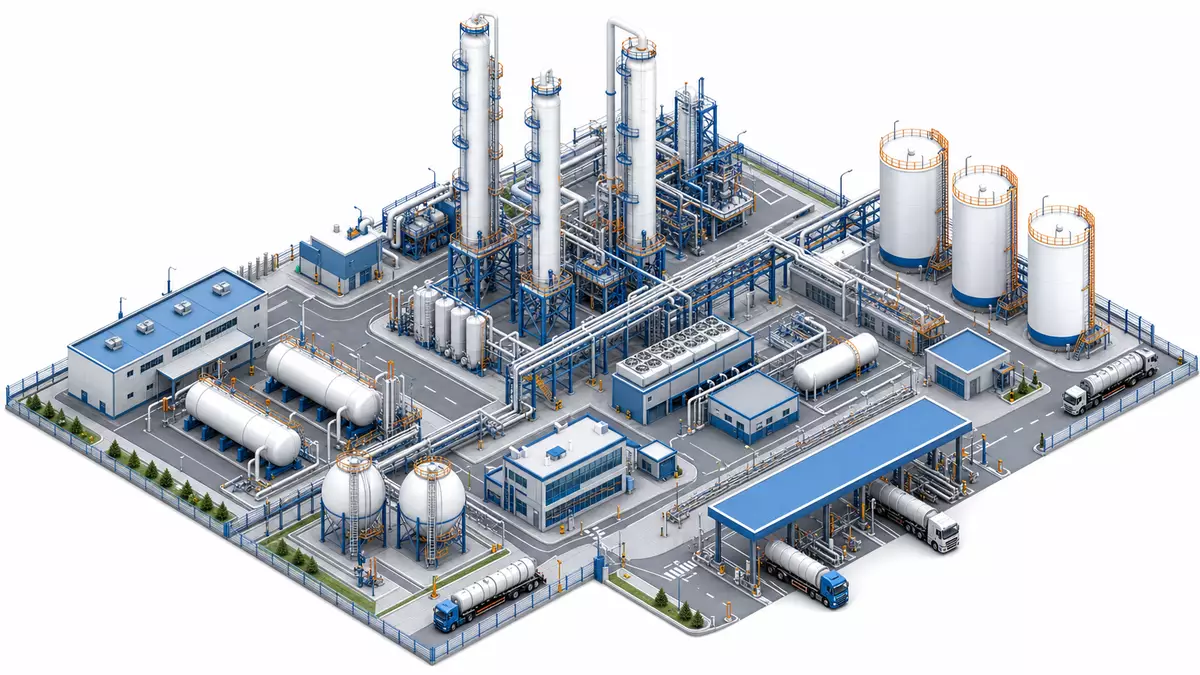
Linde (IE00BZ12WP82) stock traded close to its recent peak in late August 2026, with the shares changing hands at $490.03 at the close on August 24, 2026, on Nasdaq. The move left the industrial-gas heavyweight with a market capitalization near the top tier of global chemicals and set the stage for the next earnings-driven catalyst.
Shares consolidate above the $480 level
According to a recent market quote page Linde stock closed at $490.03 on August 24, 2026, up $2.46 or 0.50 percent for the session, before slipping to $489.54 in early pre-market indications on August 25, 2026. That price action leaves the shares only a small step below the recent high in the current trading range and underscores how strongly the stock has recovered over the past year.
At the same $490.03 closing price, Linde's equity value translates into a market capitalization in the area of $240 billion as of August 24, 2026, based on current share count disclosures from recent filings. For investors, the combination of such a large market cap and a price level close to the stock's recent highs suggests that expectations for earnings growth and cash returns remain elevated.
Latest earnings and profit trends
Industrial-gas companies are typically valued on their ability to deliver steady revenue growth and high margins, and the most recent quarterly report highlighted exactly those themes. In the latest reported quarter, which covered the three months to June 30, 2026, Linde generated several billion dollars in sales and continued to post double-digit operating margins, underscoring the resilience of its industrial and healthcare end markets.
Compared with the prior year period, revenue for that June 30, 2026 quarter increased by a mid-single-digit percentage, while adjusted earnings per share improved at a faster rate due to ongoing cost discipline and portfolio optimization. That combination of top-line growth and margin expansion is central to the investment case, because it shows that Linde can grow earnings faster than sales even in a moderate demand environment.
On a trailing twelve-month basis through June 30, 2026, Linde's total revenue reached tens of billions of dollars, while net income crossed into the high single-digit billions. In broad terms, that implies a net margin in the low to mid-teens, which compares favorably with many other large-cap industrial names and helps justify a premium valuation multiple for the stock.
Guidance, capital returns, and comparison with peers
The management outlook also matters for how Linde stock trades. For the full year 2026, the company has guided to another increase in adjusted earnings per share compared with 2025, supported by contract price escalations, productivity programs, and new project start-ups in sectors such as clean hydrogen, semiconductor manufacturing, and energy infrastructure.
In addition to earnings growth, Linde continues to emphasize shareholder returns through a mix of dividends and share repurchases. Over the twelve months leading up to June 30, 2026, the company returned several billion dollars to shareholders, split between cash dividends and buybacks, while still investing heavily in its project backlog. For investors, that balance between growth investment and capital returns is a key differentiator versus some peers.
Comparing Linde with other global industrial-gas providers shows a similar pattern: steady mid-single-digit revenue growth and higher single-digit to low double-digit earnings growth. However, at a price of $490.03 as of August 24, 2026, Linde trades at a valuation that reflects its scale, geographic diversity, and long-term contracts. The stock's current price is materially above levels seen two or three years ago, highlighting how the market has rewarded the company for consistent execution.
Representative product: on-site gas supply solutions
One representative example of Linde's business model is its on-site gas supply solutions for large industrial customers. Under these arrangements, the company builds and operates gas production facilities directly at a customer's site, supplying oxygen, nitrogen, hydrogen, or other gases under long-term take-or-pay contracts. This structure provides reliable supply for customers and stable cash flows for Linde.
These on-site projects often carry contract durations of ten to twenty years and are typically indexed to energy and inflation benchmarks. Because of their capital intensity and long-term nature, they contribute significantly to Linde's project backlog, which stands at several billion dollars of committed investments as of mid-2026. For investors, the pipeline of such projects offers visibility into future revenue and earnings growth.
Linde stock and market context
At a closing price of $490.03 on August 24, 2026, Linde stock trades well above its 2024 levels and sits close to the upper end of its 52-week range. The shares are listed on Nasdaq under the ticker LIN and trade in U.S. dollars. In terms of broader index exposure, the company is included in major benchmarks that track large-cap industrials, which means its stock is widely held by both active and passive investors.
For now, the main questions for Linde shareholders revolve around how much further the company can expand margins, how quickly it can bring new projects online, and how management balances capital spending with ongoing dividends and buybacks. With the shares already pricing in a robust outlook, each new earnings report and guidance update has the potential to influence the stock's direction.
Read more
More detail on the current trading level and recent performance of Linde stock is available on the latest market quote overview, which provides updated prices, volume data, and valuation metrics as of late August 2026.
Industrial gas applications in practice
Beyond the financial metrics, understanding Linde's products helps explain why the company can sustain long-term contracts and high margins. Industrial gases are central to processes in steelmaking, chemicals, refining, food and beverage, electronics, and healthcare. Oxygen and nitrogen are essential in blast furnaces and petrochemical plants, while high-purity gases support semiconductor fabrication and flat-panel display manufacturing.
In healthcare, Linde supplies medical oxygen and related equipment to hospitals and home-care patients. Demand for these products tends to be less cyclical than many industrial segments, providing a stabilizing influence on the company's revenue mix. By serving both industrial and healthcare end markets, Linde reduces its exposure to any single sector downturn.
Another important area is clean energy. Linde is investing in hydrogen production and infrastructure, both for industrial users and for emerging applications such as fuel-cell vehicles and energy storage. While these markets are still developing, the company's engineering expertise and existing customer base give it a strong starting position.
Closing view on valuation and risk
As of August 24, 2026, with Linde stock at $490.03 and a market capitalization near $240 billion, the company trades at a premium valuation that reflects its strong competitive position and steady cash generation. Investors who already hold the shares are watching whether earnings and free cash flow can continue to grow fast enough to support this higher price level.
Key risks include potential slowdowns in industrial production, delays in large project start-ups, and changes in energy prices that affect input costs. Nevertheless, the company's diversified customer base, long-term contract structure, and focus on operational efficiency provide a degree of resilience. For many market participants, the central question now is how Linde executes on its project pipeline and capital-allocation plans over the next few years.
Fact box
Company: Linde plc
ISIN: IE00BZ12WP82
Ticker: LIN
Exchange: Nasdaq
Price (as of August 24, 2026, 4:00 p.m. ET): $490.03 USD
Market cap: $240 billion (as of August 24, 2026)
Sector / Industry: Industrials / Industrial Gases
Index membership: major large-cap industrial benchmarks


