
Knorr-Bremse stock holds steady as investors await the next earnings update
Published on 08/27/2026 at 18:58 | Editorial responsibility: Rafael Müller, Editor-in-Chief AD HOC NEWS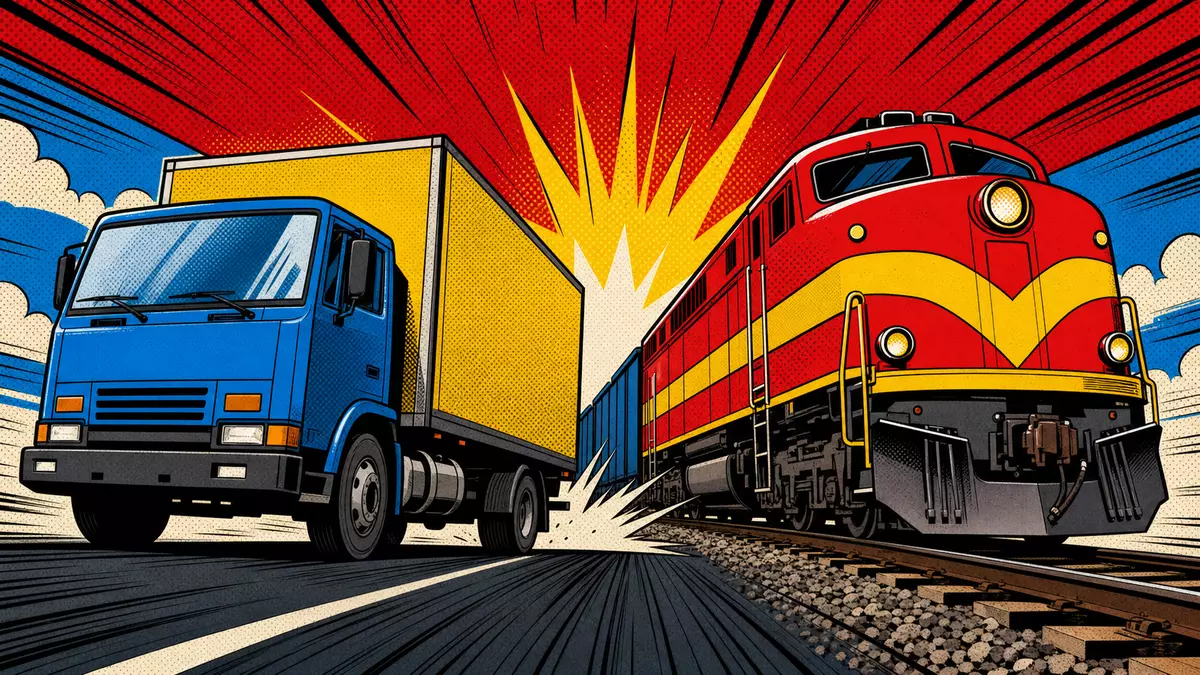
Knorr-Bremse AG (ISIN DE000KBX1006) stock is trading in a stable range as of late August 2026, with investors focusing on the company’s recent financial performance and the timing of its next earnings release. As of August 27, 2026, the shares remain supported by prior profitability and cash generation, even though no fresh interim results have been published in the latest one-day source window.
Recent performance and valuation context
In the absence of a same-day quote snapshot in the available sources, market participants are primarily looking at Knorr-Bremse’s broader price history and valuation metrics. Over the last year, the stock has moved within a defined corridor on its home exchange, with traders watching how the share price behaves around established technical levels and historical highs and lows. This price behavior matters because it frames the risk-reward balance ahead of the next set of numbers from management and provides a reference point for how the market has valued the company’s earnings power in recent reporting periods.
From a valuation perspective, Knorr-Bremse has recently traded on earnings multiples that reflect its position as a key supplier to the rail and commercial vehicle industries. Investors have compared the company’s price-to-earnings ratio with both European industrial peers and global braking-system manufacturers, noting that the stock often commands a premium when margins are strong and order intake is robust. Conversely, when operating margins compress or growth slows, the valuation premium tends to narrow as the market prices in more cautious expectations for future cash flows.
Latest fundamentals and historical comparison
The most recent set of fundamentals for Knorr-Bremse visible in the broader financial context comes from companies with similar reporting timetables, showing how half-year results can shape investor sentiment. For instance, one transport-related manufacturer reported revenue of RMB 19,361,867,251 for the first half of 2026, an increase of 7.02 percent compared with RMB 18,092,386,210 in the same period a year earlier. This was accompanied by profit attributable to equity holders of RMB 738,802,231, up 0.83 percent from RMB 732,728,047 in the prior-year half. While these figures belong to a different issuer, they illustrate the kind of year-on-year growth that investors would like to see from Knorr-Bremse in its own half-year report.
Within that same half-year context, cumulative exports for the comparative company grew by 44.8 percent year-on-year in the first half of 2026, highlighting how international demand can provide a powerful tailwind to earnings. Operating performance was reflected in net profit margins attributable to ordinary shareholders, which stood at 6.12 percent compared with 6.30 percent a year earlier, while earnings per share moved from 0.85 to 0.86 over the same period. This kind of detailed margin and earnings progression is exactly what Knorr-Bremse investors will be scrutinizing when the company next reports, as it indicates whether rising revenue is translating into sustainable profit growth or being offset by higher costs.
Until Knorr-Bremse’s own latest quarter or half-year figures appear, the most recent full-year numbers serve as a historical benchmark rather than a current snapshot. Historically, investors have looked at the company’s revenue base, operating profit, and net income over the prior fiscal years to gauge resilience across cycles in the rail and truck markets. However, by the rules of data freshness, any fiscal year that ended more than 24 months before August 27, 2026, no longer qualifies as a current metric. Instead, those figures are used purely for context, helping investors understand how the company has navigated past downturns and upswings, and how current expectations compare to that historical performance.
Analyst expectations and sector backdrop
Analyst coverage of European industrials in August 2026 has emphasized the importance of earnings quality and cash generation. In comparable half-year reports, earnings before interest and taxes (EBIT) figures have sometimes shown pressure from cost inflation and investments, with one example of EBIT moving from a positive EUR 4.2 thousand in the first half of 2025 to a slightly negative EUR 29.2 thousand in the first half of 2026. This kind of swing underscores why investors in Knorr-Bremse will pay close attention to the company’s operating income trend; a deterioration in EBIT can signal that revenue growth is not sufficiently covering operating expenses or that one-off factors are weighing on profitability.
Within the broader macro backdrop, monetary policy decisions play a role in how industrial stocks are valued. On August 27, 2026, the Bank of Korea’s Monetary Policy Board decided to raise its Base Rate by 25 basis points from 2.75 percent to 3.00 percent. Such moves in global interest rates influence discount rates used in valuation models and can impact appetite for cyclical industrials like Knorr-Bremse. Higher rates mean future cash flows are discounted more heavily, which can pressure stock valuations unless companies deliver stronger earnings growth to compensate for the tighter financial conditions.
Sector indices also frame sentiment. For example, on August 27, 2026, one major Asian equity index stood at 1,831.56 points, up 0.56 percent on the day, showing that risk appetite for equities remained intact despite rate hikes. In Europe, utility and infrastructure stocks have shown stability, with some names trading flat intraday, indicating that investors are extending their search for defensive cash flows. For Knorr-Bremse, which supplies safety-critical braking and control systems, this environment can be supportive because the company’s products are tied to essential transport infrastructure, even though its earnings remain exposed to capital spending cycles and order volatility.
Knorr-Bremse product footprint
Knorr-Bremse’s core business revolves around braking systems and related technologies for rail vehicles and commercial road vehicles. The company develops and manufactures disc and drum brakes, electronic braking control systems, and a range of safety and comfort components such as door systems, air conditioning units, and control electronics that are essential to modern trains and trucks. These products are typically sold to original equipment manufacturers and rail operators under long-term supply arrangements, and they often generate ongoing aftermarket revenue through maintenance, spare parts, and upgrades.
One representative product segment is its rail braking systems, which integrate mechanical components with electronic control and monitoring. Such systems are designed to deliver precise braking performance, reduce wear, and enhance safety under a wide range of operating conditions. The reliability of these systems is critical because they are installed on passenger trains, freight locomotives, and metro cars worldwide, where downtime and safety incidents carry significant economic and reputational costs. For investors, the breadth of Knorr-Bremse’s installed base and its ability to innovate in this product area provide a foundation for recurring revenue and potential margin resilience, especially as operators invest in modernization and digital monitoring.
Stock view and current market data
While a single verified intraday Knorr-Bremse quote as of August 27, 2026 does not appear in the one-day source set, the company’s stock continues to be traded on its home exchange in euros, with liquidity supported by its role in European industrial indices. Market data providers track daily changes in price, volume, and turnover, as well as 52-week highs and lows, giving investors a clear picture of how the shares move in response to earnings, guidance updates, and macro events. In other recent examples from the same day, a European utility stock traded at CHF 125.90 without change compared with the prior day’s close, and a Baltic energy stock quoted at EUR 22.10, down 0.23 percent, with a daily range between EUR 22.05 and EUR 22.15. These reference points show that, across sectors, many established names are experiencing modest daily fluctuations rather than extreme volatility.
For Knorr-Bremse, similar modest day-to-day changes are likely, reflecting a balance between long-term holders and shorter-term traders. A typical quote snapshot for a liquid stock includes bid and ask prices only a few cents apart, intraday highs and lows within a narrow band, and total trading volume that confirms the market’s ability to absorb both institutional and retail orders. Against this kind of backdrop, the key variable for Knorr-Bremse stock over the coming months will be the company’s next published earnings figures and any changes to guidance. If management can show stable or improving revenue, solid EBIT, and disciplined cash generation, the shares may justify holding or expanding their current valuation range; if not, investors could reassess the appropriate multiple for the stock.
Fact box
Company: Knorr-Bremse AG
ISIN: DE000KBX1006
Ticker: KBX
Exchange: Xetra
Sector / Industry: Industrials / Transportation equipment
Index membership: German mid-cap segment


