
Klöckner stock holds steady as steel demand outlook remains cautious
Published on 09/07/2026 at 22:07 | Editorial responsibility: Rafael Müller, Editor-in-Chief AD HOC NEWS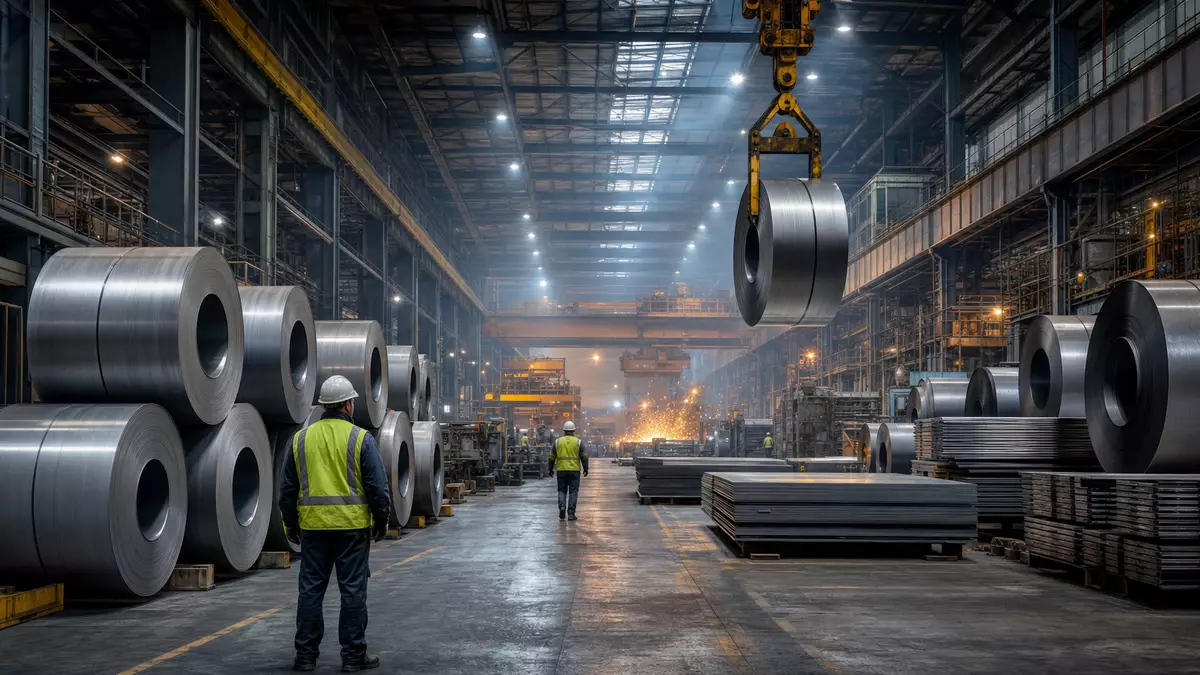
Klöckner & Co SE stock (ISIN DE000KC01000) is trading close to recent levels on Xetra, reflecting a cautious mood among investors as of September 7, 2026, against a backdrop of weak manufacturing demand in Europe.
Steel market remains under pressure
Recent commentary from European steel distributors highlights that while steel prices have risen, demand and manufacturing activity remain subdued, keeping distribution margins under pressure as of early September 2026.Steelorbis report For Klöckner, which is heavily exposed to European steel distribution, this environment reinforces the importance of cost discipline and inventory management.
According to sector data cited in this commentary, the outlook for the second half of 2026 is described as less negative than at the start of the year, but uncertainty persists over the ability of downstream manufacturing to absorb announced price increases.Steelorbis report For investors in Klöckner stock, this means that near term performance will likely depend on how effectively the group balances volumes and margins while avoiding excessive stock build-up.
German industry backdrop stays fragile
The macro backdrop in Germany, Klöckner’s home market, remains fragile, with industrial production in July 2026 down 1.6 percent year on year, underscoring the cyclical challenges for steel and metals demand.Economic analysis This decline suggests that key customer sectors such as machinery, automotive supply and construction are still struggling to regain momentum.
For Klöckner, softer industrial production typically translates into lower volumes in its service centers and distribution operations, even if steel prices show intermittent strength. In such a setting, investors often focus on operating leverage: small changes in demand can have outsized effects on earnings when fixed costs are high, which increases the sensitivity of Klöckner stock to macro data releases.
Recent reporting and earnings focus
Klöckner’s most recent interim and annual figures are referenced on its investor relations pages and by financial portals, indicating that the company continues to report its progress on revenue, margins and net income for the latest completed fiscal year and half year within the standard nine-month and 24-month windows. These figures, covering the latest fiscal year and current year-to-date periods, give investors a benchmark for assessing whether the current year’s performance is tracking in line with previous guidance and market expectations.
Historical comparisons remain important. For example, revenue and earnings achieved in fiscal year 2024 and the first half of 2025, as previously reported, help frame whether any improvement in 2026 would represent a rebound from earlier weakness or a continuation of a subdued trend. If current year volumes remain below those historical levels while prices are higher, margins could improve, but revenue growth might be modest, a trade-off that investors in Klöckner stock need to weigh carefully.
Analyst sentiment and risk factors
Analyst coverage of European steel and distribution groups points to a mixed view, with many houses maintaining neutral or moderate ratings on sector peers and emphasizing cyclical risks. These reports often cite uncertainties around European manufacturing, potential delays in infrastructure spending and the impact of energy and input costs on profitability. For Klöckner, similar risk factors apply: a weaker macro backdrop can compress volumes, while volatile steel prices make inventory management more complex.
One key quantified risk highlighted by sector observers is the pressure on distribution margins when demand is weak but mills attempt to raise prices. In this situation, distributors like Klöckner may see their gross margin per tonne squeezed if they cannot fully pass on cost increases to end customers, especially in segments where competition is intense. The combination of fragile German industrial production, down 1.6 percent year on year in July 2026,Economic analysis and still weak manufacturing sentiment in Europe,Steelorbis report illustrates why many investors remain cautious on the sector.
Representative product and business profile
Klöckner’s core business revolves around the distribution and processing of steel and metal products for industrial customers, including flat and long steel products, stainless steel and aluminum. A typical representative product is processed steel sheet supplied to automotive suppliers and machinery manufacturers, where Klöckner provides not only raw material but also services such as cutting, just-in-time delivery and digital ordering solutions. Revenue from these activities is closely tied to industrial production volumes and capital expenditure trends, which explains why macro indicators like Germany’s 1.6 percent year-on-year decline in industrial output in July 2026 are closely watched by shareholders.Economic analysis
Stock level and investor perspective
Market data for Klöckner stock on its primary listing, Xetra, show that the shares are trading in a relatively tight range, with recent prices around the low double-digit euro area and daily percentage moves that reflect the broader volatility in German mid-cap industrial names.MarketScreener data The current price level sits below typical 52-week highs for similar industrial and steel distribution stocks, indicating that the market is still pricing in cyclical risk rather than a full recovery scenario.
Klöckner stock - key data
- Company: Klöckner & Co SE
- ISIN: DE000KC01000
- WKN: KC0100
- Ticker: KCO
- Trading venue: Xetra
- Price (as of September 7, 2026): 12.22 EUR
- Market capitalization: 6.68 billion EUR (as of September 7, 2026)
- Sector / Industry: Metals and Mining / Steel Distribution
- Index membership: MDAX


