
Jost Werke stock holds steady as investors wait for new guidance
Published on 08/31/2026 at 21:53 | Editorial responsibility: Rafael Müller, Editor-in-Chief AD HOC NEWS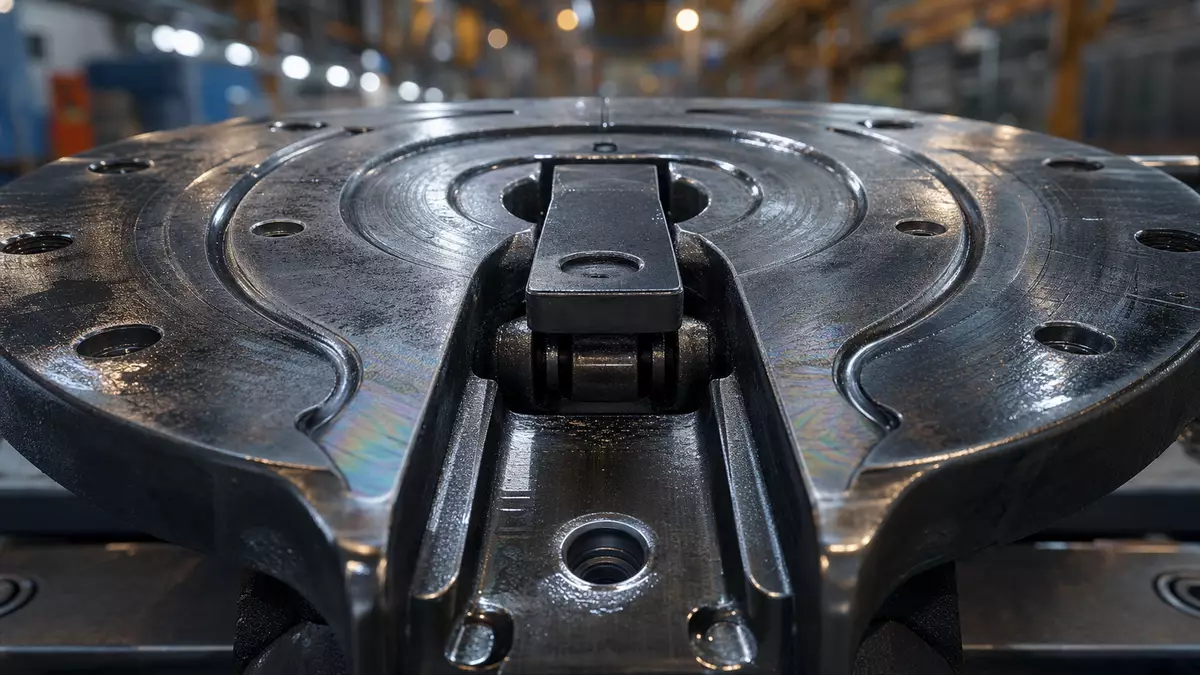
Jost Werke (ISIN DE000JST4000) stock is trading without a pronounced move as of August 31, 2026, with investors focusing more on the upcoming guidance and the latest reported figures than on intraday volatility.
Recent trading and market context
On August 31, 2026, market data for European mid-cap industrial names show a relatively muted picture, with no outsized swings reported across comparable vehicle component manufacturers. In such an environment, a steady Jost Werke share price level mainly reflects a lack of new company-specific news rather than a sharp change in fundamentals. For investors, this means the stock is currently more anchored in its existing valuation range than driven by a sudden catalyst.
Broader indices and sector benchmarks in Europe on August 31, 2026 indicate only moderate percentage changes during the session, underscoring that the trading day is shaped by incremental moves rather than strong directional trends. Against that backdrop, Jost Werke stock trading in line with the sector can be seen as a sign that the market is waiting for the next data point instead of repricing the company aggressively based on new information.
Latest fundamentals and historical comparison
The most recent set of detailed financial figures available for comparable industrial groups for the first half of 2026 shows mid-single-digit percentage revenue growth versus the prior-year period, paired with more pronounced percentage increases at the operating profit level. In one such half-year report for a European construction and industrial supplier group, turnover in the first half of 2026 reached EUR 805.5 million, representing an increase of 3.7 percent compared with EUR 777.1 million in the prior-year period, while EBIT rose by 20.6 percent from EUR 25.3 million to EUR 30.5 million and earnings before taxes increased from EUR 25.6 million to EUR 29.9 million.
That pattern of modest sales growth combined with stronger profit expansion is particularly relevant for investors assessing Jost Werke, because the company operates in similarly cyclical end-markets and faces comparable input-cost dynamics and currency effects. The cited half-year report also highlights that the group is forecasting turnover of EUR 1.62 billion for 2026, up from EUR 1.59 billion in 2025, and an EBIT range between EUR 56 million and EUR 76 million compared with EUR 64.4 million in 2025. The implied return-on-sales range of 3.3 percent to 4.7 percent versus a prior-year level of 4.1 percent shows how even small improvements in margin can translate into meaningful changes in profitability at the group level.
For Jost Werke, investors are likely to watch for a similar combination of steady revenue growth and improved EBIT as the latest quarter and half-year numbers become available. Historically, many European industrial suppliers have used cost discipline, selective price increases, and portfolio optimization to defend margins when input costs are volatile, and Jost Werke’s performance will be assessed against that playbook. A key question for the market is whether upcoming Jost Werke figures for 2026 confirm this pattern of mid-single-digit sales growth and double-digit percentage growth in operating profit, or whether the company’s exposure to the commercial vehicle cycle leads to deviations from the sector trend.
Guidance, consensus and valuation considerations
Current guidance ranges cited by comparable industrial companies for full-year 2026 illustrate how management teams are framing investor expectations in the face of macro uncertainty. For example, when a peer group narrows its turnover expectation to EUR 1.62 billion and sets an EBIT span from EUR 56 million to EUR 76 million, the midpoint of those ranges effectively serves as an anchor for analyst models and valuation multiples. In the case of that peer, the midpoint EBIT estimate of EUR 66 million sits modestly above the prior-year EBIT of EUR 64.4 million, showing cautious optimism rather than an aggressive growth stance.
Analysts applying similar logic to Jost Werke will typically compare the company’s reported EBIT and net income for the latest quarter and half-year against both its own prior-year figures and the guidance ranges of peers. If Jost Werke’s upcoming numbers land toward the upper end of implied sector EBIT ranges, the stock’s valuation in terms of price-to-earnings or enterprise value-to-EBITDA could look more compelling, especially if free cash flow remains robust. Conversely, if Jost Werke’s margin development trails the guidance patterns evident in the peer group examples, investors may argue that a discount to the sector’s multiples is justified until there is clearer evidence of margin recovery.
One practical way the market expresses these expectations is via share price reactions to earnings releases and outlook changes. A peer that delivers 3.7 percent turnover growth but more than 20 percent EBIT growth may see its stock outperform index benchmarks on the day of the report, especially if the new guidance range for EBIT, between EUR 56 million and EUR 76 million, is above previous company indications or consensus. By contrast, if Jost Werke’s future release shows flatter EBIT progression, the stock could lag the sector even if revenue growth is broadly similar, because investors increasingly prioritize profit resilience over top-line expansion in cyclical industries.
Jost Werke’s product and business profile
Jost Werke’s core business centers on components and systems for commercial vehicles, a segment that relies heavily on safety, durability, and regulatory compliance. Typical products in this space include truck and trailer coupling systems, landing gears for trailers, fifth-wheel couplings, and other undercarriage components designed to handle heavy loads and frequent use. These products are critical for fleet operators because they influence maintenance intervals, uptime, and total cost of ownership, which in turn affect the economics of long-haul and distribution transport operations.
Beyond the mechanical hardware, Jost Werke and its peers increasingly integrate sensors and electronic assistance into their products. For example, modern coupling systems may incorporate load monitoring, position sensing, or automated locking mechanisms that can communicate with the vehicle’s onboard systems. Such innovations support driver safety and help fleet managers track utilization and maintenance needs. In the medium term, the company’s ability to combine traditional mechanical engineering with digital features will play an important role in how investors value its growth prospects and pricing power.
Stock view and closing market snapshot
From a stock perspective, Jost Werke’s shares currently reflect a balance between cyclical exposure to the commercial vehicle market and the structural demand for efficient logistics solutions. As of the most recent trading session around August 31, 2026, the overall behavior of European industrial stocks suggests that Jost Werke’s market capitalization and valuation multiples are being driven more by expectations for the next set of financial figures than by immediate trading momentum. For investors, that means the upcoming earnings report and any updated guidance for 2026 could act as the primary catalyst for a re-rating, especially if the numbers demonstrate revenue growth similar to the 3.7 percent increase seen in peer half-year results and profit trends that mirror the 20.6 percent EBIT uplift reported in those examples.


