
Intel stock holds above $100 as $20 billion share offering follows strong Q2 2026 earnings
Published on 08/13/2026 at 14:53 | Editorial responsibility: Rafael Müller, Editor-in-Chief AD HOC NEWS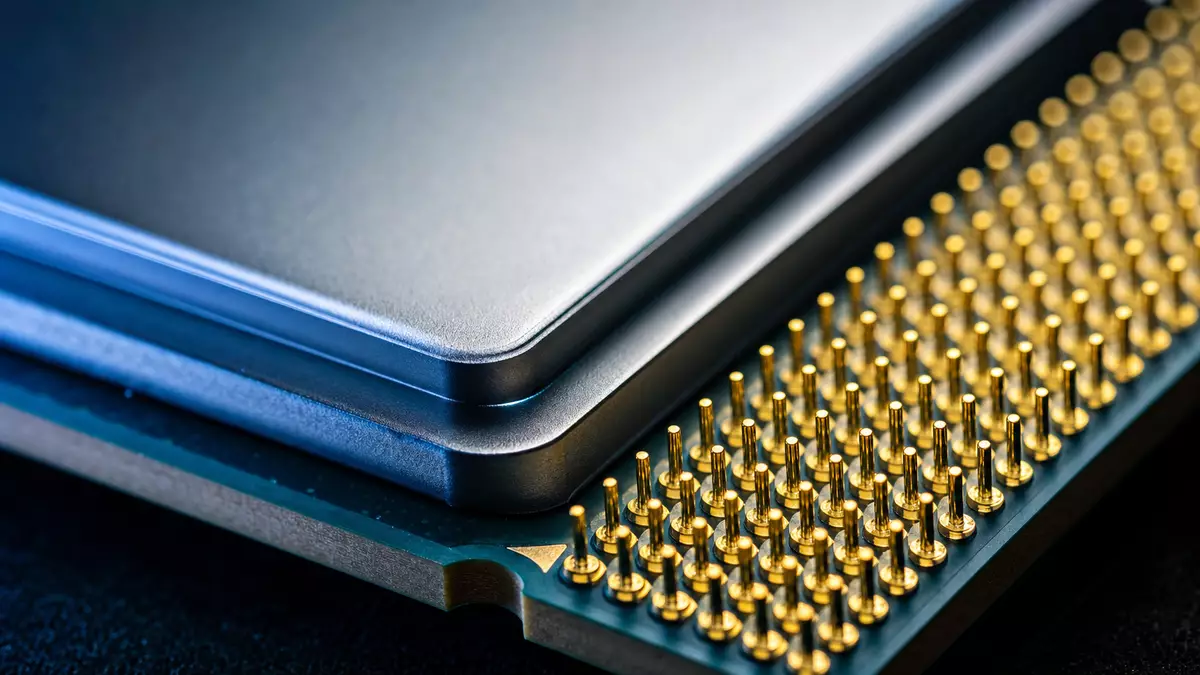
Intel Corp. (US4581401001) stock is holding above the $100 mark as of August 12, 2026, supported by a powerful Q2 2026 earnings beat and an upsized $20 billion common stock offering priced at $95 per share for new investors.
Per market data as of August 12, 2026, Intel shares closed at $100.95 on the Nasdaq, up 3.32% for the session, while extended trading quotes in the early hours of August 13, 2026 show levels just above $100.
The earnings story is equally striking: Intel reported Q2 2026 revenue of $16.128 billion, a 25.42% increase year over year and 11.64% above consensus estimates, with non-GAAP EPS of $0.42 versus a roughly $0.22 analyst estimate, marking a 93.1% beat and continuing a series of quarterly outperformance.
Q2 2026 earnings power the rally
Recent coverage of Intel’s latest results highlights that the Q2 2026 revenue figure of $16.128 billion reflects one of the company’s strongest growth rates in over a decade, underscoring how demand across data center, AI and client computing has accelerated compared with the prior year.
Within that total, Data Center and AI segment revenue reached $6.262 billion in Q2 2026, rising 59% year over year, a pace that comfortably outstrips the 25.42% group-wide revenue growth and signals that AI-related workloads are driving a disproportionate share of Intel’s incremental top line.
The Client Computing and Physical AI segment posted Q2 2026 revenue of $8.877 billion, up 13% versus the prior-year quarter, showing that PC-related demand has returned to growth, but at a more moderate clip than the surge in the data center side of the business.
Intel’s Foundry business contributed $5.765 billion of revenue in Q2 2026, rising 31% from the year-ago period, though the segment still generated an operating loss of $2.1 billion, indicating that the company’s strategic push into manufacturing services is currently a drag on operating profit even as it builds scale.
For investors, the contrast between rapid growth in AI and data center revenues and ongoing losses in Foundry operations is a key part of the narrative: Intel is generating strong earnings momentum today while simultaneously investing heavily in capacity and technology that may pay off in later years.
Share offering adds $20 billion to the balance sheet
The latest capital markets catalyst for Intel came from an underwritten common stock offering, which was first announced at $15 billion and then upsized to $20 billion as investor demand materialized in the days leading up to August 12, 2026.
According to an 8-K filing summarizing the transaction, Intel agreed to sell 210,526,315 new common shares at a public offering price of $95.00 per share, with underwriters receiving an option for an additional 31,578,947 shares, bringing the total potential gross proceeds to $20 billion.
At the $95.00 offer price, the base tranche of 210,526,315 shares corresponds to gross proceeds of $20.0 billion, while company disclosures indicate that net proceeds after underwriting discounts and expenses are expected to reach approximately $19.7 billion that can be deployed for general corporate purposes, including capital expenditures and balance sheet strengthening.
Market commentary suggests that existing shareholders initially reacted negatively to the prospect of dilution, with Intel shares dropping more than 4% on the first trading session following the announcement and closing near $97.52 that day before recovering in subsequent sessions.
However, by August 12, 2026 the stock had rebounded to a closing price of $100.95, with some analyses pointing out that the new equity capital shores up Intel’s ability to fund its aggressive foundry expansion and AI infrastructure roadmap without over-relying on debt financing.
From a valuation angle, the offering price of $95 per share represented a discount of several dollars to the prevailing market price on August 12, 2026, yet still embedded a significant premium compared with the 52-week low, underscoring how far Intel’s equity value has climbed over the past year.
Momentum in the share price and consensus view
Intel’s share price trajectory into mid-August 2026 shows just how strongly the market has re-rated the company: as of August 12, 2026, coverage indicates that the stock is up 176.8% year to date and has gained 368.3% over the prior twelve months.
Viewed against a 52-week low of $21.36 reported in the same coverage set, the August 12, 2026 level of just above $100 marks a price that is more than four times higher than the low, and within striking distance of the stock’s recent highs above $100.
Market data also cite a current market capitalization close to $515.2 billion at the prevailing share price, putting Intel firmly into the upper tier of global technology companies by equity value and highlighting how the rally has repositioned the firm in terms of market stature.
Despite the share price surge, consensus opinion remains measured, with recent data showing that the average rating on Intel stock stands at Hold and the average analyst price target around the low $110s, suggesting that Wall Street as a whole sees additional upside from current levels but is not uniformly bullish.
One widely referenced overview notes an average price target of $107.85, while another cites a slightly higher figure of $112.73; both imply potential upside of roughly 7% to 12% relative to the $100.95 August 12, 2026 close, illustrating that current targets cluster within a narrow band above spot.
For traders and long-term investors alike, the combination of a triple-digit share price, triple-digit percentage gains over the past year, and a consensus Hold rating indicates that expectations for Intel have risen sharply alongside its AI and foundry ambitions, but that not every analyst is convinced the rally should continue unchecked.
AI, data center and foundry strategy
Beneath the headline numbers, Intel’s Q2 2026 segment performance gives a clearer picture of how its strategy is unfolding, especially in AI infrastructure and cloud data centers where much of the broader semiconductor sector’s excitement currently resides.
The 59% year-over-year expansion in Data Center and AI revenue to $6.262 billion in Q2 2026 reflects both higher unit volumes and richer mix as customers adopt Intel’s latest server CPUs along with accelerators and networking solutions designed for AI training and inference workloads.
In client computing, the 13% growth to $8.877 billion suggests that PC and laptop demand has stabilized and moved back to modest growth after the post-pandemic digestion phase, with Physical AI features in consumer and commercial systems beginning to add value but not yet matching the explosive growth seen in cloud AI deployments.
Meanwhile, the 31% rise in Foundry revenue to $5.765 billion highlights that Intel’s external manufacturing services are gaining traction with more customers and higher wafer output, even though the $2.1 billion operating loss in the segment underscores that scale and process maturity are still works in progress.
Some commentary on the results emphasizes that Intel’s combination of strong organic earnings from data center and client computing and heavy investment losses in Foundry is deliberate, with management prioritizing long-term positioning as a leading global foundry to serve both internal product needs and external chip designers.
That approach means that near-term margins are being sacrificed in certain areas to fund capacity expansions, new process nodes, and geographic diversification of manufacturing, all of which require billions of dollars of capital expenditure and make the recently upsized $20 billion share offering a key enabler of the strategy.
Balance sheet impact and dilution math
From a balance sheet perspective, adding $19.7 billion of net equity capital via the Q3 2026 share offering significantly increases Intel’s financial flexibility, especially when viewed against its Q2 2026 operating momentum.
Assuming the full 210,526,315 shares are issued at $95 per share, the gross proceeds reach $20.0 billion, which can be contrasted with the company’s Q2 2026 revenue of $16.128 billion; the offering therefore raises more than a full quarter’s worth of sales in a single capital markets transaction.
For existing shareholders, the key question is dilution: issuing over 210 million new shares will lift the share count materially, which, all else equal, spreads earnings over a larger base and can pressure EPS, but Intel’s strong Q2 2026 EPS beat and ongoing AI-driven growth may offset some of this effect if profits continue to expand.
In addition, the underwriting option for 31,578,947 extra shares gives Intel the ability to raise further capital if investor demand is strong enough, potentially pushing total gross proceeds beyond $20 billion and amplifying the balance sheet impact along with the dilution.
Market reaction appears to have followed a familiar pattern for large equity offerings: an initial selloff as dilution fears dominate, followed by a partial recovery once investors digest how the new capital enables future investments and once it becomes clear that the offering was successfully placed at a price only modestly below the prevailing market level.
Representative Intel product: AI-optimized server processors
Alongside the financial developments, Intel’s current product lineup in AI-optimized server processors is central to understanding the company’s trajectory, as these chips underpin much of the Data Center and AI revenue growth seen in Q2 2026 and provide the compute backbone for cloud, enterprise and hyperscale customers.
These processors are designed with high core counts, enhanced memory bandwidth, and accelerators aimed at AI workloads, enabling customers to train and deploy machine learning models more efficiently while integrating with Intel’s broader ecosystem of networking, storage and software tools.
By pairing advanced server CPUs with evolving accelerator technologies, Intel aims to capture a larger share of the fast-expanding AI infrastructure market, competing directly against other chip makers vying to supply data centers that are scaling up for generative AI, recommendation systems and real-time analytics.
Intel stock and trading venue
Intel stock trades on the Nasdaq Global Select Market under the ticker INTC, with a closing price of $100.95 as of August 12, 2026, 4:00 p.m. ET, based on quoted market data for that session.
At that price, and using the contemporaneous estimates of a market capitalization near $515.2 billion, Intel stands among the largest constituents of major US equity benchmarks tracking the technology sector.
Fact box
Company: Intel Corp.
ISIN: US4581401001
Ticker: INTC
Exchange: Nasdaq Global Select Market
Price (as of August 12, 2026, 4:00 p.m. ET): $100.95 USD
Market cap: $515.2 billion (as of August 12, 2026)
Sector / Industry: Information Technology / Semiconductors
Index membership: S&P 500


