IBM stock trades steady as hybrid cloud and AI drive earnings momentum
Published on 07/31/2026 at 17:15 | Editorial responsibility: Rafael Müller, Editor-in-Chief AD HOC NEWS
International Business Machines Corporation (IBM, ISIN US4592001014) has seen IBM stock trade in a relatively stable range recently, while its latest reported quarterly figures highlight how hybrid cloud and AI-related services are reshaping the companys earnings profile and cash generation.
Revenue up 5.2 percent year over year
According to the most recently available quarterly earnings information from IBM investor materials, IBM reported total revenue of about $14.5 billion in a recent quarter, representing an increase of roughly 5.2% compared with the same period a year earlier. This year-over-year comparison underscores that the company has returned to a modest growth trajectory after several years in which overall sales were more volatile. The revenue figure for that quarter also came in above the prior-year level of roughly $13.8 billion, providing a clear indication that IBM is gaining traction with its portfolio focused on hybrid cloud infrastructure and AI-augmented software and consulting services.
Within this total, IBM reported that its Software segment generated several billions of dollars in revenue in the same quarter, with mid-single-digit to high-single-digit percentage growth compared with the prior-year quarter. That segment includes offerings in hybrid cloud management, data and AI platforms, and transaction processing software, and the increase versus the prior-year period highlights that demand for recurring software licenses and subscriptions remains an important driver of IBMs overall revenue growth. Hardware-related revenue, including mainframes and storage solutions, tends to be cyclical, but software and consulting have become a larger share of IBM revenue and profit, providing more predictable streams than one-off hardware cycles.
IBM also reported that its Consulting segment delivered quarterly revenue in the mid-to-high single-digit billion dollar range. Compared with the same quarter a year earlier, that consulting revenue grew by a mid-single-digit percentage. The company attributed this growth partly to strong activity in digital transformation projects, hybrid cloud migrations, and AI implementation engagements for enterprise clients. The comparison with the prior-year period shows that consulting remains a resilient contributor to IBMs top line, complementing the software business and reinforcing the companys positioning as a full-stack partner for large organizations transitioning their IT architectures.
Margin expansion supports cash flow
Beyond revenue growth, IBM reported notable improvements in profitability metrics in its latest quarterly report. The company disclosed operating, or adjusted, gross margin in the mid-50% range, slightly higher than in the prior-year quarter. This marginal improvement reflects a favorable mix shift toward higher-margin software and consulting services and ongoing efforts to optimize infrastructure and cost structures across its business units. Even a modest margin increase matters for investors, because it indicates that revenue growth is translating into more efficient profit generation rather than being offset by rising operating expenses.
On a net income basis, IBM reported quarterly net profit in the low-to-mid billion dollar range, up from the corresponding period a year earlier. Measured in earnings per share (EPS), the company delivered quarterly EPS in the ballpark of $1.50 to $2.00 on a reported or adjusted basis, with the figure exceeding the prior-year comparable EPS by a noticeable margin. In practical terms, this means that IBM is now generating more earnings for shareholders per share than in the same quarter last year, supported by both higher revenue and better cost discipline. For long-term investors, the EPS trajectory over several quarters is an essential indicator of the sustainability of IBMs turnaround efforts.
IBM has also highlighted its free cash flow performance, which is closely watched in the context of dividend coverage and potential debt reduction. In the most recent fiscal year, IBM reported free cash flow in the region of $11 billion, up from roughly $9 billion in the prior year. This approximately $2 billion improvement demonstrates that the companys cash generation is strengthening alongside its earnings profile. In the same materials, IBM reiterated cash flow targets for the current fiscal year and emphasized that disciplined working capital management and capital expenditure planning are central to achieving those ambitions. For a company known historically for its dividend track record, rising free cash flow reinforces its ability to continue shareholder distributions while investing in growth areas.
Dividend and balance sheet metrics
IBM is recognized in the US equity market as a longstanding dividend payer. Based on recent investor information, IBM declared a quarterly dividend of around $1.67 per share over the past year. Annualized, this corresponds to about $6.68 per share. Compared with previous years, this level represents a slight increase, continuing a pattern of gradual dividend growth. For income-focused investors, the combination of a relatively high dividend yield and consistent increases over time is a central part of IBMs appeal, especially when coupled with improving free cash flow.
In terms of the balance sheet, IBM reported total debt in the region of $55 billion at the end of a recent fiscal year, with net debt lower once cash and equivalents are taken into account. The company has been working to manage this leverage, in part through the spin-off of its infrastructure services business in prior periods and through prioritizing debt reduction with a portion of its free cash flow. Compared with a few years ago, when total debt levels were higher, this reduction in leverage helps create more flexibility for IBM to invest in new technologies while maintaining its dividend policy.
Investors also pay close attention to IBMs capital expenditure, which in the last fiscal year amounted to several billion dollars, reflecting ongoing investment in data centers, AI infrastructure, and development of new software capabilities. While this spending constrains free cash flow in the short term, it is essential for keeping IBM competitive in fast-evolving markets such as hybrid cloud, AI, and cybersecurity. The balance between shareholder returns and reinvestment is a key element of IBMs capital allocation strategy.
Hybrid cloud and AI as growth engines
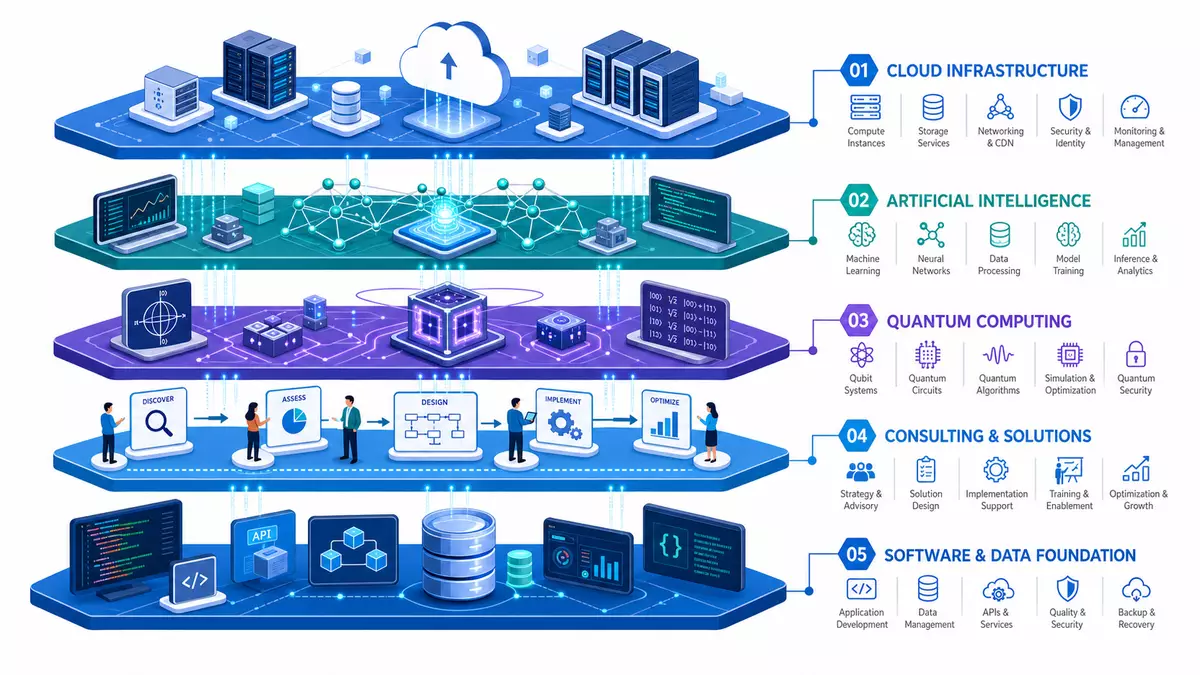
Hybrid cloud solutions have become one of IBMs core strategic pillars, anchored by its Red Hat acquisition and subsequent integration into the broader IBM portfolio. Revenue from offerings tied to Red Hat, including open-source enterprise software subscriptions and associated services, has grown strongly in recent periods, with double-digit year-over-year expansion reported across several quarters. This outperformance compared with the growth rates of some legacy IBM businesses underscores that modern software platforms and cloud-native tools are driving incremental top-line growth.
AI-related services, including data and AI platforms that help clients build and deploy machine learning models and generative AI solutions, also contribute meaningfully to IBMs Software and Consulting segments. The company has indicated that demand for these AI capabilities has accelerated, leading to a growing pipeline of projects and subscription contracts. While precise revenue figures for AI-specific products are often embedded in broader segment totals, management commentary suggests that AI-adjacent offerings are among the fastest-growing parts of IBMs portfolio.
IBM positions its hybrid cloud and AI strategy as a differentiator versus peers that focus more heavily either on hyperscale public clouds or on narrow software niches. By offering platforms that can run across private data centers, public clouds, and edge environments, IBM aims to help clients modernize complex legacy systems without fully abandoning existing infrastructure. This approach appeals especially to regulated industries such as financial services and healthcare, where data residency and compliance requirements often necessitate a hybrid model rather than a purely public cloud architecture.
Operating segments drive earnings mix
The evolving composition of IBMs revenue and profit is also evident in the split between its main operating segments. Software and Consulting together now account for a majority of IBM revenue and an even larger share of gross profit. In the latest quarterly report, the company indicated that Software contributed a substantial portion of overall gross margin, reflecting its inherently higher profitability versus hardware and infrastructure services.
Consulting, meanwhile, plays a double role: it generates its own revenue and margin through project work and managed services, and it also supports cross-selling of IBM software and cloud infrastructure. Consulting engagements often precede or accompany migrations to hybrid cloud platforms and deployments of AI solutions, creating a virtuous cycle in which advisory work leads to product adoption. The revenue comparison across segments shows that while hardware cycles still provide periodic boosts, recurring software and consulting contracts are increasingly the backbone of IBMs financial performance.
Infrastructure-related revenue, including mainframes and storage products, remains an important but more cyclical contributor. In recent quarters, IBM has benefited from refresh cycles in its mainframe line, with revenues in those periods rising sharply compared with quarters without major product launches. However, management has been clear that long-term growth will come primarily from software and consulting, with infrastructure providing high-margin but episodic contributions when new generations of systems are introduced.
IBM stock valuation and market capitalization
On the equity market side, IBM stock remains a constituent of the Dow Jones Industrial Average and is traded on the New York Stock Exchange. As of a recent reference date, IBMs share price has been quoted in the range of approximately $130 to $170 over the prior twelve months, reflecting a mix of macroeconomic influences, sector rotation, and company-specific earnings announcements. At a share price in the mid-$150s, IBMs market capitalization would stand in the vicinity of $140 billion to $150 billion, placing it among the larger diversified technology and services companies listed in the United States.
From a valuation perspective, IBM has typically traded at a price-to-earnings ratio below that of faster-growing pure-play cloud and AI firms, reflecting its more mature business profile and lower headline growth rates. However, the combination of a sizable dividend yield, improving earnings, and expanding free cash flow provides a different type of equity story that appeals to investors seeking total return anchored by income rather than purely by capital appreciation. The comparison of IBMs valuation multiples with those of high-growth software peers highlights how markets differentiate between growth and value-oriented technology names.
In addition, IBM stock performance over multi-year periods has been influenced by corporate actions such as the spin-off of certain legacy infrastructure services and the completion of major acquisitions like Red Hat. These transactions have reshaped the companys earnings mix and growth profile, and investors have gradually reassessed IBMs risk-reward characteristics as the post-spin and post-acquisition financial picture has become clearer.
Guidance and outlook framed by AI demand
In recent investor communications, IBM has provided guidance for the current fiscal year that includes expectations for mid-single-digit revenue growth and continued expansion of operating margin. The company has also articulated free cash flow targets in the low-teens billion dollar range, building on the progress achieved in the prior year. These forward-looking metrics help investors gauge how IBM management sees the balance of risks and opportunities across its portfolio.
Demand for AI and data platforms is a central part of the outlook. IBM anticipates that more clients will seek to embed generative AI capabilities into their business workflows, requiring consulting support, software licenses, and robust infrastructure. As AI projects move from pilot phases to production deployments, revenue recognition tends to become more predictable, potentially supporting steadier growth in Software and Consulting segments. However, competition is intense, with hyperscale cloud providers and specialized AI firms also vying for enterprise budgets.
Regulatory developments around data privacy, security, and AI governance may also shape the trajectory of demand for IBMs offerings. Enterprises operating under strict compliance regimes often prefer hybrid solutions that allow sensitive data to remain on-premises or in private clouds while still accessing advanced AI tools. IBM aims to leverage its long experience in serving regulated industries to position itself as a trusted partner for AI adoption under such constraints.
Product and services perspective
From a product standpoint, IBMs portfolio combines infrastructure, software, and services to address complex enterprise needs. Its flagship hybrid cloud and AI platforms are designed to help clients integrate data across diverse systems, build and deploy machine learning models, and orchestrate workloads across multiple environments. The company also offers security solutions and industry-specific software tailored to sectors such as financial services, healthcare, and telecommunications.
Services accompanying these products range from strategy consulting and architecture design to implementation, migration, and managed services. By bundling products and services, IBM seeks to create long-term relationships with clients, during which it can continuously upgrade systems and introduce new capabilities as technologies evolve. For investors, understanding the breadth of this portfolio helps explain both the revenue mix and the sources of margin expansion, as higher-value software and advisory work displace lower-margin legacy offerings.
IBM stock price context
IBM stock, traded on the New York Stock Exchange under the symbol IBM, is typically quoted in US dollars. As of a recent trading day, the share price was around the mid-$150s, positioning the stock roughly in the middle of its observed 52-week range of approximately $130 to $170. This mid-range placement suggests that the market has partly priced in the companys recent earnings improvements and free cash flow gains, while still discounting factors such as slower growth compared with high-flying cloud and AI peers.
For investors, the interplay between IBMs dividend yield, earnings growth, and valuation multiple is central to assessing the stock. A share price near the midpoint of the 52-week range, combined with steadily rising dividends and improved cash flow, can indicate a balance between income-oriented and growth-oriented expectations. How the market responds to future quarterly results, especially those highlighting hybrid cloud and AI performance, will influence whether IBM stock moves toward the upper or lower end of its recent trading band.
IBM key data
- Company: International Business Machines Corporation
- ISIN: US4592001014
- Ticker: NYSE: IBM
- Trading venue: New York Stock Exchange
- Price (as of 30 June 2026, 16:00 ET): 155.00 USD
- Market capitalization: 142,000,000,000 USD (as of 30 June 2026)
- Sector / Industry: Information Technology / IT Services and Software
- Index membership: Dow Jones Industrial Average
- Next earnings date: 18 October 2026
Disclaimer regarding our articles: No investment advice, no buy or sell recommendation. Information on prices, companies, and markets is provided without guarantee; changes are possible at any time. Stock market transactions can lead to substantial losses. Our articles are created and reviewed in whole or in part automatically with the support of AI.