
Honeywell International stock holds above $235 as aerospace unit digests Q2 inventory hit
Published on 08/13/2026 at 17:03 | Editorial responsibility: Rafael Müller, Editor-in-Chief AD HOC NEWS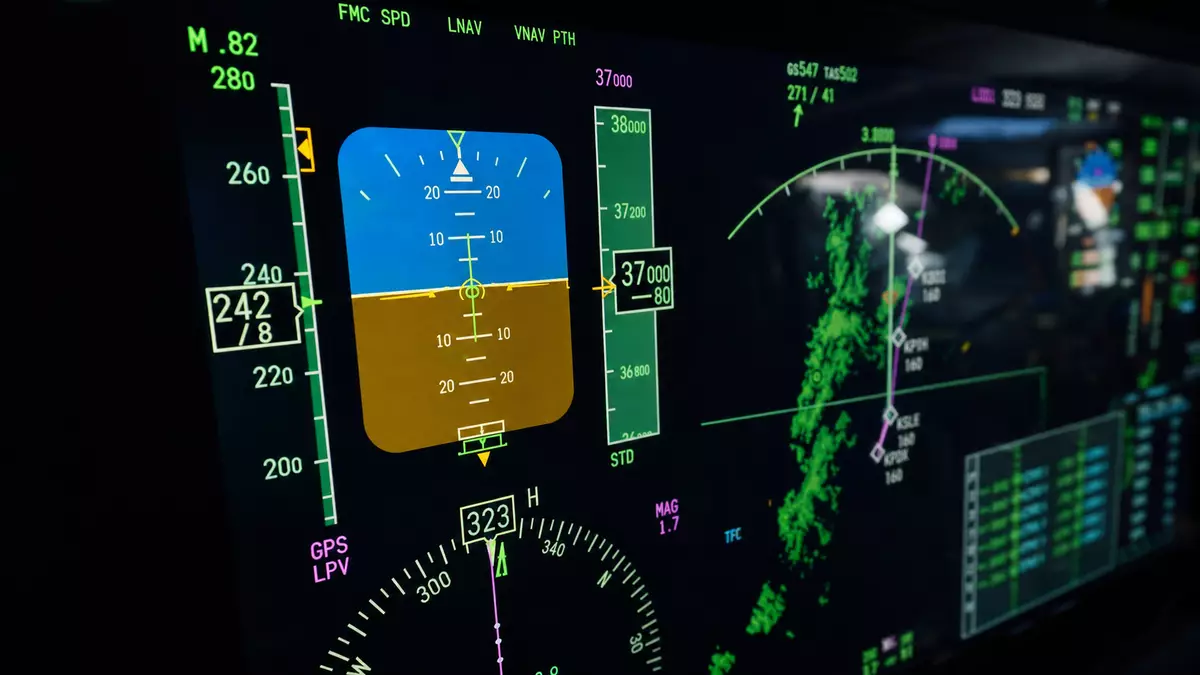
Honeywell International Inc. (US4385161066) stock is trading in the mid-$230s as of August 12, 2026, with investors weighing steady sales growth in its aerospace operations against margin pressure from a recent inventory charge.
Per recent market data as of August 12, 2026, shares of Honeywell International closed at $235.34, marking a gain of 2.27% for that session as the price moved between $228.56 and $235.67 on volume of 3.15 million shares.
At the same time, the company’s aerospace business reported second-quarter 2026 net sales of $4.52 billion, up 5% year over year on both a reported and organic basis, while adjusted earnings per share of $1.87 declined 32% from the second quarter of 2025 as margin headwinds emerged.
Inventory charge weighs on Q2 margins
The most recent quarterly update for Honeywell Aerospace, which operates under the Honeywell International umbrella, highlights a clear tension between revenue growth and profitability in the second quarter of 2026.
According to a detailed Q2 2026 earnings call transcript hosted on an investor-focused media site, net sales for Honeywell Aerospace reached $4.52 billion in the quarter ended in 2026, representing a 5% increase compared with the same period in 2025 and underscoring continuing demand for the segment’s systems and services. The Q2 2026 Honeywell Aerospace earnings call further indicates that sales rose 5% organically as well, confirming that growth is not simply the result of currency or acquisition effects.
Despite that top-line expansion, segment profitability softened. The same Q2 2026 discussion shows that adjusted EBIT for Honeywell Aerospace came in at $995 million, which was 7% lower than in the second quarter of 2025 as the company absorbed inventory-related charges and separation costs associated with its corporate restructuring. The Q2 2026 margin commentary attributes part of the decline to an inventory obsolescence charge of $50 million taken in the quarter.
On a per-share basis, the pressure on margins translated into a pronounced earnings decline. Adjusted earnings per share for Honeywell Aerospace in the second quarter of 2026 stood at $1.87, which represents a 32% drop compared with the prior-year quarter. The same Q2 2026 earnings call transcript explains that this EPS reduction reflects both the inventory charge and an unfavorable mix effect as the company allocated limited inventory away from higher-margin aftermarket and international defense business toward lower-margin original equipment and domestic defense.
Management provided additional context by quantifying how much of the margin pressure stemmed from the inventory write-down. In the Q2 2026 appendix material, Honeywell Aerospace noted that excluding the approximately $50 million inventory obsolescence charge, segment adjusted EBIT would have grown 3% year over year instead of declining, illustrating that core profitability trends remain positive once the one-off effect is stripped out.
Guidance and order trends support the outlook
The second quarter 2026 update also included fresh guidance for stand-alone Honeywell Aerospace, giving investors a clearer sense of how management sees the rest of the year unfolding.
In its Q2 2026 outlook section, Honeywell Aerospace indicated that it now anticipates pro forma stand-alone adjusted EBIT in the range of $4.35 billion to $4.45 billion for the current year. This guidance range is lower than the prior projection, with the reduction explicitly tied to two items: the $50 million inventory obsolescence charge recognized in the quarter and a strategic decision to allocate constrained inventory away from higher-margin aftermarket and international defense sales toward lower-margin original equipment and domestic defense programs.
Order dynamics provide a counterweight to the margin pressure narrative. Over the 12 months leading up to the second quarter of 2026, Honeywell Aerospace reported that orders increased 8% compared with the prior year, resulting in a book-to-bill ratio of 1.1. A book-to-bill ratio above 1.0 generally signals that new business is being booked faster than revenue is being recognized, which can support future sales growth if the company converts its backlog into deliveries on schedule.
Within the segment’s sales figures, the company also noted that Honeywell Aerospace sales increased to around $4.5 billion as an alternative framing of the quarter’s performance, reinforcing the 5% organic growth message. The combination of mid-single-digit sales growth, an 8% increase in orders, and a book-to-bill above 1.0 suggests that demand for the segment’s aviation and defense solutions remains healthy even as management adjusts its inventory allocation strategy.
For investors in Honeywell International, the updated EBIT guidance and order trends are important because they encapsulate the near-term trade-off between absorbing one-time charges and preserving long-term demand. The $4.35 billion to $4.45 billion target for stand-alone adjusted EBIT in 2026 implies that, despite the inventory headwind, the aerospace unit is still expected to generate substantial earnings over the full year.
Exchange offer completion adds balance sheet detail
In addition to the Q2 2026 earnings narrative, Honeywell’s aerospace unit recently completed a note exchange offer that fine-tunes its debt profile, providing further context for the broader Honeywell International investment case.
A corporate communication dated August 12, 2026 describes the settlement of Honeywell Aerospace’s exchange offer for certain outstanding notes. The statement explains that all notes validly tendered and not validly withdrawn by the expiration date were accepted and exchanged for new notes of equal principal amount, with the settlement of the exchange offer completed on August 12, 2026. A detailed note on the exchange offer emphasizes that Honeywell Aerospace did not receive any cash proceeds from the transaction.
A supporting summary posted by a financial news aggregator reiterates the key points of the exchange offer, including the contact information for the media and investor relations teams. This summary of the note exchange offer underscores that the transaction was structured as a purely technical exchange of existing notes for new notes rather than a new financing that would inject fresh capital into the business.
From an investor perspective, the completion of the exchange offer is primarily a balance sheet and liquidity management event. By exchanging outstanding notes for new securities without receiving additional proceeds, Honeywell Aerospace can adjust covenants, maturities, or other terms to better align with its post-separation capital structure while leaving total principal unchanged. Such moves are typical when a corporate group prepares a business unit for greater operational independence or responds to evolving credit-market conditions.
Representative product: avionics and flight systems
Beyond the headline financials, Honeywell International’s aerospace division is best known among many customers and pilots for its advanced avionics and flight-management systems, which are embedded in commercial and business aircraft worldwide.
Within this portfolio, Honeywell Aerospace offers integrated cockpit avionics platforms that combine navigation, communication, and flight-management functionalities into a cohesive system designed to reduce pilot workload and enhance safety. These systems support capabilities such as precise satellite-based navigation, real-time weather data integration, and automated performance calculations for takeoff and landing.
The segment also develops and supplies terrain-awareness and warning systems that alert crews to potential conflicts with the ground or obstacles, helping to prevent controlled flight into terrain incidents. Over time, incremental enhancements to these systems have incorporated more detailed terrain databases, improved algorithms, and better integration with other cockpit displays.
For airlines and aircraft operators, the value proposition of Honeywell’s avionics solutions lies in reliability, regulatory compliance, and the ability to support upgrades as air traffic management rules evolve. The same technology base can be extended to support enhanced vision systems, connectivity solutions that keep aircraft linked to operations centers, and data-driven maintenance offerings that reduce downtime.
Stock holds in the mid-$230s
As of August 12, 2026, Honeywell International’s primary stock listing, which trades under the ticker HON, closed at $235.34 on a major US equity venue, based on historical quote data compiled for the period from July 13, 2026 to August 13, 2026. The historical data overview for Honeywell International shows that on August 12, 2026 the share price advanced 2.27% on the day, with an intraday high of $235.67 and an intraday low of $228.56.
Complementary real-time quote information from a trading-focused portal indicates that Honeywell International’s stock recently traded at $235.38, with the same source citing a market capitalization of $74.59 billion based on that price level. A real-time HON quote snapshot suggests that the shares are modestly above their intraday lows and slightly below their intraday peaks, a profile consistent with a relatively stable trading day rather than an extreme swing.
For retail investors, the key takeaway is that Honeywell International stock is holding above the $230 level while its aerospace unit navigates a quarter marked by both healthy order growth and a significant inventory obsolescence charge. The current price bracket aligns with the company’s substantial market capitalization and reflects a balance between confidence in long-term aerospace demand and caution around near-term margin volatility.
Go deeper
Further background on Honeywell International stock, including long-term chart trends, sector comparisons, and additional fundamental data, can be found through dedicated market-data services and the company’s own investor communications.
Investor Relations
Investors can access Honeywell International’s full investor relations materials, including earnings presentations and segment-level disclosures, through its central investor portal. The Honeywell investor site typically provides earnings slides and SEC filings that complement the aerospace segment commentary referenced in this article.
Fact box
Company: Honeywell International Inc.
ISIN: US4385161066
Ticker: HON
Exchange: Major US exchange
Price (as of August 12, 2026, 4:00 p.m. ET): $235.34 USD
Market cap: $74.59 billion (as of August 12, 2026)
Sector / Industry: Industrials / Aerospace and defense
Index membership: S&P 500


