
Holcim stock steadies as investors weigh innovation push and recent deal activity
Published on 08/30/2026 at 17:02 | Editorial responsibility: Rafael Müller, Editor-in-Chief AD HOC NEWS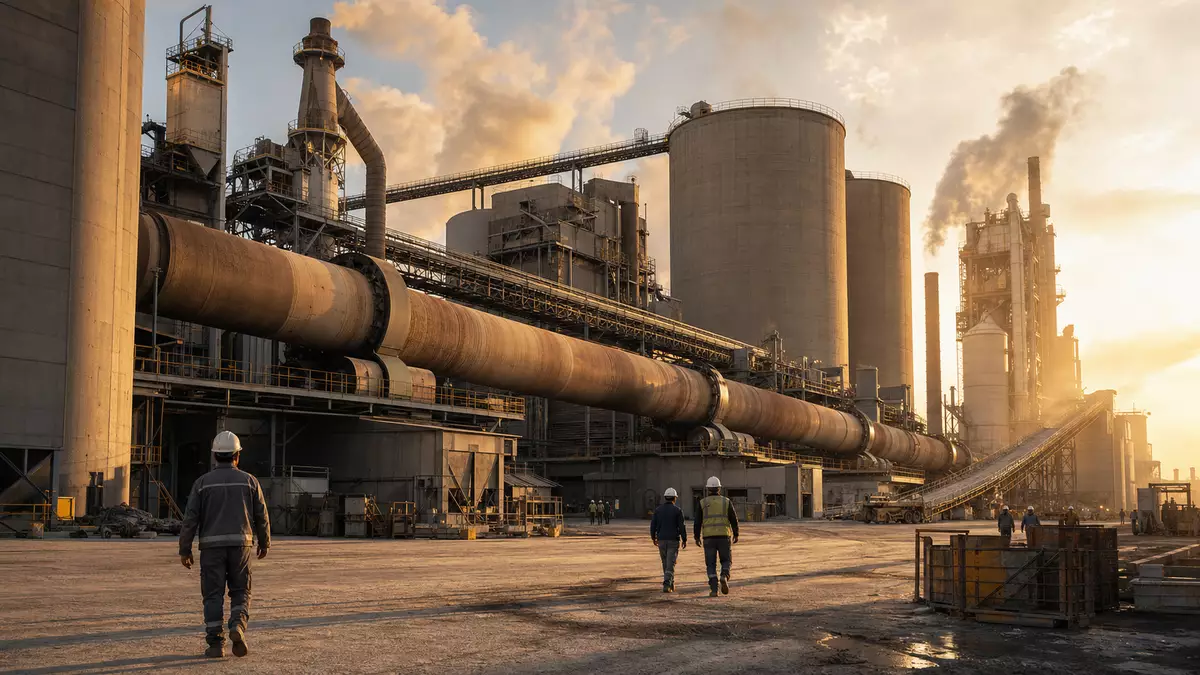
Holcim (ISIN CH0012214059) stock is trading steadily in late August 2026 as investors weigh a mix of solid recent financial performance and the companys continuing push into low-carbon construction solutions and selective technology investments as of August 30, 2026.
Recent commentary on the broader building materials and infrastructure space in August 2026 highlights how companies with diversified revenue streams and exposure to overseas projects have been able to deliver revenue growth and margin resilience even in a mixed macro backdrop. One mid-cap peer reporting its first half 2026 results cited strong overseas expansion as a key driver of earnings growth, with first half 2026 revenue reaching 194.97 units and net profit rising 55.22 percent year over year, while second quarter 2026 revenue grew 19.17 percent and net profit increased 24.51 percent compared with the prior year period.
For Holcim, investors are watching similar themes: the balance between mature cement and aggregates operations and faster growing segments such as low-carbon materials, advanced concrete solutions, and infrastructure services. In recent months the company has emphasized growth in segments tied to energy transition projects and sustainable construction, underpinned by an active pipeline of public and private infrastructure work. Revenue mixes like the peer example, where overseas business has become a core growth engine, are seen as a possible template for Holcim as it continues to expand in high-growth regions.
Margin performance across the sector has also attracted attention. The peer case with 2026 first half net profit jumping 55.22 percent on revenue growth of 21.5 percent shows how operating leverage and disciplined cost control can translate modest top line acceleration into stronger bottom line gains, especially when pricing and product mix are favorable. Investors infer that for Holcim, continued optimization of its industrial footprint, logistics networks, and energy sourcing could similarly support margin expansion if pricing holds and project volumes remain healthy into the second half of 2026.
Venture deals and innovation agenda
Beyond core financial metrics, Holcims strategy includes targeted investments in construction technology and materials innovation that aim to support long term growth and differentiate its solutions portfolio. Industry briefings on property and construction technology in August 2026 note that a funding round in November 2025 valued a related platform at $1 billion, with Holcim participating alongside other financial investors. That deal followed an earlier $23 million round in late 2025, illustrating how established building materials companies are stepping into venture style investments to gain exposure to digital tools and data driven services that complement traditional products.
For investors, the scale of such commitments matters in the context of Holcims broader capital allocation framework. A $1 billion valuation on a portfolio company is notable, but the actual cash outlay for Holcim is modest compared with the size of its balance sheet and annual capital expenditures. The sector example of a peer maintaining strong free cash flow while pursuing overseas expansion suggests that a disciplined approach to growth investments can coexist with shareholder friendly actions like dividends and, in some cases, share repurchases, provided leverage remains within manageable levels.
The venture and innovation agenda also connects directly to Holcims efforts to reduce the carbon intensity of its cement and concrete offerings. By supporting platforms that optimize design, materials selection, and project execution, Holcim can embed its low-carbon solutions deeper into customer workflows. Over time, this can translate into higher volumes of specialty products, better pricing power, and more durable customer relationships, which in turn can support revenue growth and profitability in future reporting periods beyond 2026.
Sector comparisons and earnings context
Sector data from other construction related groups reporting interim results in August 2026 provide useful context for Holcim investors assessing the companys recent and upcoming earnings. One engineering and construction peer disclosed first half 2026 revenue of 212.62 units, a 1.9 percent year over year decline, even as overseas revenue within that total rose 9 percent and reached 127.8 units. In that case, net profit for the first half 2026 came in at 9.34 units, down 34.3 percent year over year, highlighting how margin pressure and project mix can offset growth in specific regions.
That contrast underscores why the composition of Holcims order book and geographic footprint matters as much as headline revenue growth. Investors are keen to see the proportion of revenue coming from higher margin applications and from markets where pricing mechanisms allow cost inflation to be passed through. The peer data showing a decline in overall revenue but growth in overseas segments suggests that Holcim, with its global network, could see differing trends across regions, with some markets delivering volume growth while others remain subdued due to slower private construction activity or delayed public projects.
Dividend and distribution policies in the broader industrial and materials space also inform expectations for Holcim. Several companies announcing first half 2026 results in late August 2026 coupled revenue and earnings growth with planned cash dividends per share, framed off current year net income and payout ratios. Those moves reflect a balancing act between funding growth projects, such as overseas capacity expansions or technology platforms, and maintaining attractive cash returns. Holcim investors will be looking for similar clarity on how incremental cash flows from operations are allocated among capital expenditures, innovation investments, debt reduction, and shareholder distributions.
Where companies have delivered strong year over year gains in net profit in the first half of 2026, as in the peer case where net profit grew 55.22 percent on a 21.5 percent revenue increase, valuation multiples have tended to compress modestly as earnings catch up to prior share price performance. For Holcim, the same pattern could emerge if operating results continue to improve and net profit growth outpaces revenue, supporting lower forward price to earnings ratios even without dramatic share price moves. That scenario would be constructive for long term investors seeking both income and moderate capital appreciation.
Representative product: low-carbon concrete solutions
A representative example of Holcims product strategy is its portfolio of low-carbon concrete solutions designed for infrastructure and commercial projects. These products incorporate optimized cement blends, supplementary cementitious materials, and advanced admixtures to lower lifecycle emissions while maintaining structural performance. They are targeted at applications such as bridges, tunnels, high rise buildings, and renewable energy installations, where project owners are increasingly seeking verifiable reductions in embodied carbon.
Holcim typically supports these products with technical advisory services, including mix design optimization and on site support to ensure durability and quality standards are met. The goal is to embed low-carbon solutions not only as standalone products but as part of integrated offerings that combine materials, engineering know how, and digital tools. By aligning its product roadmap with regulatory trends and customer sustainability commitments, Holcim positions itself to capture a growing share of project budgets earmarked for greener construction materials.
Stock context and investor view
Holcim stock continues to reflect a blend of mature cash generating businesses and growth oriented initiatives as of August 30, 2026, with investors monitoring how recent earnings, sector comparisons, and innovation investments translate into future revenue and net profit trends.
Fact box
Company: Holcim Ltd.
ISIN: CH0012214059
Ticker: HOLN
Exchange: SIX Swiss Exchange
Sector / Industry: Materials / Construction materials
Index membership: SMI


