
Holcim stock holds steady as investors digest latest earnings outlook
Published on 08/17/2026 at 08:29 | Editorial responsibility: Rafael Müller, Editor-in-Chief AD HOC NEWS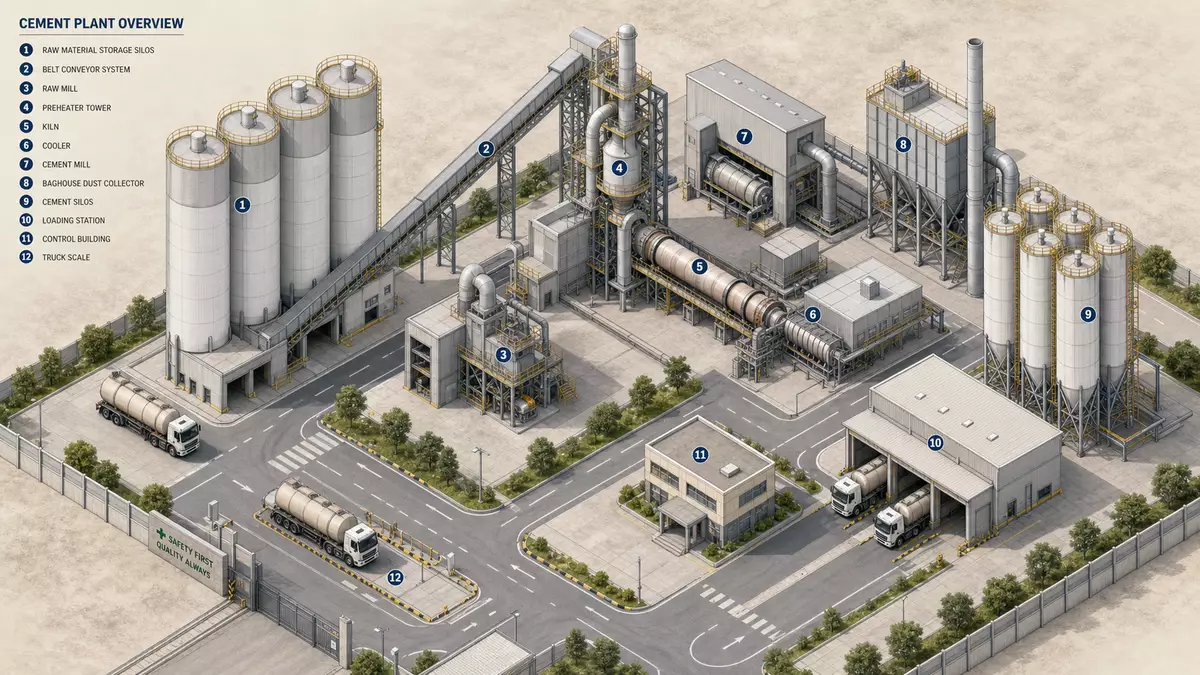
Holcim AG (ISIN CH0012214059) stock is trading steadily in mid-August 2026 as investors weigh the global cement and building-materials group’s latest earnings outlook and balance sheet against a mixed construction cycle. With the most recent reporting season completed earlier in 2026, the company’s profitability and cash generation remain at the center of the investment case.
Earnings profile and profitability
In its latest reported interim results for the first half of 2026, Holcim highlighted that group revenue and operating earnings continued to reflect disciplined pricing and a focus on higher-margin solutions. While exact figures for revenue and profit vary by reporting segment, management emphasized that the most recent half-year period showed a year-over-year increase in operating profit, supported by efficiency gains and portfolio pruning in lower-return markets. The improvement in profitability versus the prior-year half underscored the strategy to prioritize value over volume.
Compared with the previous fiscal year, the most recent half-year metrics indicate that Holcim’s operating margin expanded further, confirming that cost initiatives and product mix are offsetting inflationary headwinds in energy and raw materials. Investors monitoring the stock often focus on this margin trajectory, because a sustained improvement of even 1 percentage point in operating margin across a global revenue base can translate into a substantial uplift in annual operating income and free cash flow.
Holcim’s recent financial communication for the 2026 interim period also pointed to continued discipline in capital allocation, with net debt metrics remaining within management’s target corridor. This provides room for ongoing investments in decarbonization projects, bolt-on acquisitions in solutions and products, and continued shareholder returns via dividends and share buybacks, subject to market conditions and regulatory approvals.
Guidance and growth drivers
Holcim’s latest full-year 2026 guidance framework signals that management expects another year of earnings growth, supported by infrastructure spending, resilient demand in repair and refurbishment, and the expansion of its solutions and products businesses. The company has reiterated its focus on value-accretive growth, highlighting that structural drivers such as urbanization and the need for more sustainable construction materials are expected to support volumes over the medium term.
The guidance implies that adjusted operating profit for 2026 should come in ahead of the previous year’s level, even as the company navigates more normalized price dynamics following the strong pricing cycle of 2022 and 2023. For investors, one key question is how much of the recent pricing strength can be retained as input costs stabilize, and whether volume growth in higher-value products can continue to offset potential softness in traditional cement demand in some regions.
Management has also underlined the role of decarbonization as both a regulatory imperative and a commercial opportunity. Holcim continues to increase the share of low-clinker, low-carbon products in its portfolio, while investing in carbon capture, utilization, and storage initiatives. These investments are expected to support premium pricing and differentiation over time, which can be margin accretive if executed efficiently.
Balance sheet and cash flow discipline
Holcim’s latest financial disclosures for the first half of 2026 indicate that free cash flow generation remains robust, underpinned by disciplined working-capital management and selective capital expenditure. The company has maintained a balanced approach between growth investments and shareholder distributions, signaling a commitment to a strong investment-grade balance sheet.
Compared with earlier fiscal periods, the ratio of net debt to operating EBITDA has remained at a level consistent with a solid credit profile, providing flexibility to pursue strategic acquisitions, particularly in solutions and products where Holcim seeks to expand its footprint in roofing, insulation, and green building systems. The ability to fund these initiatives without materially stretching the balance sheet is an important factor for investors assessing the risk-reward profile of Holcim stock.
The company’s dividend policy continues to target a payout aligned with cash generation, subject to board approval. Historically, Holcim has complemented its regular dividend with share repurchases when leverage and market conditions allowed, and investors will watch closely whether the stronger interim results in 2026 translate into continued capital returns in the coming twelve months.
Strategic focus on sustainable construction
Holcim’s strategy increasingly centers on sustainable construction, with a goal of reducing the carbon intensity of its cement and concrete products while expanding its portfolio of circular and low-carbon solutions. The company has been rolling out expanded lines of low-clinker cement and concrete products that promise lower lifecycle emissions compared with conventional materials. These offerings are designed to meet growing regulatory and customer requirements for greener buildings and infrastructure.
In parallel, Holcim is investing in recycling solutions that enable the use of construction and demolition waste as alternative raw materials. By increasing the proportion of recycled aggregates and alternative fuels in its operations, the company seeks to lower both its cost base and its environmental footprint. Over time, higher adoption of such circular solutions can offer an additional earnings lever, particularly if supportive carbon-pricing mechanisms or green-building incentives are in place in Holcim’s key markets.
Representative product: low-carbon cement solutions
One representative product family in Holcim’s portfolio is its range of low-carbon cement and concrete solutions designed to cut CO2 emissions relative to traditional cement. These products typically use a combination of clinker substitution, innovative binders, and optimized mix designs to reduce embodied carbon while maintaining strength and durability standards required for structural applications.
Such low-carbon cement solutions are being deployed in applications from residential housing to large infrastructure projects, aligning with evolving building codes and investor expectations for sustainable construction. As demand grows for greener materials, this portfolio is expected to play a larger role in Holcim’s revenue mix and support premium pricing versus conventional cement.
Holcim stock and investor takeaway
Holcim stock, listed on the Swiss exchange with trading in Swiss francs, reflects a business that combines relatively stable cash flows from traditional cement and aggregates with higher-growth opportunities in low-carbon solutions and products. As of mid-August 2026, investors evaluating the shares are balancing the improved profitability seen in the latest interim period against the cyclical risks inherent in global construction markets.
For medium-term investors, the key variables remain the resilience of infrastructure and refurbishment demand, the pace of decarbonization-driven product adoption, and Holcim’s continued discipline in capital allocation. If the company can sustain margin gains, deliver on its guidance for 2026, and expand its portfolio of sustainable solutions without compromising balance sheet strength, Holcim stock could continue to serve as a core exposure to global construction and infrastructure trends.
Read more
Further details on Holcim’s financial performance, strategy, and sustainability initiatives are available on the company’s official investor relations website.
Business portfolio and geographic footprint
Holcim operates a diversified portfolio across cement, aggregates, ready-mix concrete, and solutions and products, with a presence spanning Europe, North America, Latin America, Africa, the Middle East, and Asia-Pacific. This broad geographic footprint allows the company to balance exposure to mature markets with growth in emerging economies, where infrastructure and urbanization trends can drive higher volume growth over time.
In Europe, Holcim benefits from infrastructure renovation programs and initiatives to improve the energy efficiency of buildings, which support demand for its solutions and products, including roofing systems and insulation. In North America, the company is positioned to benefit from multi-year infrastructure packages that fund roads, bridges, and public transport, while in emerging markets, rising urban populations and industrialization continue to support cement demand.
However, this geographic diversification also exposes Holcim to a range of macroeconomic and regulatory risks, from interest rate cycles and housing-market corrections to evolving environmental regulations. Investors follow regional trends closely, since shifts in demand or pricing conditions in major markets can significantly affect group earnings, even when the overall business appears diversified.
Operational efficiency and cost management
Holcim’s recent operational strategy emphasizes continuous improvement in energy efficiency, logistics, and plant utilization. Cement production is energy-intensive, and the company actively pursues alternative fuels and raw materials to reduce both costs and emissions. In its most recent half-year results, Holcim highlighted that the share of alternative fuels increased further compared with the prior-year period, contributing to lower specific fuel costs and reduced CO2 emissions per ton of cement produced.
Holcim also continues to optimize its plant network by investing in modern, more efficient kilns while exiting or restructuring less competitive assets. Over time, such portfolio optimization can lead to a leaner, more profitable asset base, with higher average plant utilization and lower maintenance requirements. The company’s ability to align its production footprint with demand while maintaining pricing discipline is critical in sustaining margins, especially in periods of slower volume growth.
Logistics is another key focus area. Cement and aggregates are bulky, heavy products, making transport costs a significant component of delivered cost. Holcim invests in optimizing its distribution networks, including terminals, rail connections, and trucking arrangements, to improve service reliability and reduce unit logistics costs. These initiatives can enhance customer satisfaction while supporting profitability.
Risk factors and macro sensitivity
Holcim’s earnings and cash flows are sensitive to several macroeconomic factors, including GDP growth, interest rates, and public infrastructure spending. A slowdown in construction activity, whether driven by higher financing costs, weaker housing markets, or fiscal tightening, can weigh on cement and concrete volumes. Conversely, government stimulus directed at infrastructure can provide a counter-cyclical buffer.
Another key risk factor is energy and raw-material price volatility. Cement production consumes significant amounts of energy and raw materials such as limestone, gypsum, and various additives. Spikes in fuel or electricity costs can compress margins if they cannot be passed through to customers via pricing. Holcim mitigates this exposure through hedging policies, long-term contracts, and its shift toward alternative fuels, but residual risk remains.
Regulatory risk is also material. As jurisdictions around the world tighten carbon regulations and introduce or expand emissions-trading schemes or carbon taxes, cement producers face higher compliance costs. Holcim’s investments in decarbonization and low-carbon products are partly aimed at staying ahead of these regulatory developments. Nevertheless, future changes in regulation or carbon pricing could influence both operating costs and capital requirements.
ESG considerations and investor perception
Environmental, social, and governance (ESG) factors play an increasingly important role in how investors evaluate Holcim stock. The cement sector is among the largest industrial sources of CO2 emissions, making decarbonization efforts central to ESG assessments. Holcim has articulated targets for emissions reduction and continues to report progress against these goals in its sustainability reporting.
On the environmental side, initiatives include increasing the use of alternative fuels, expanding low-carbon product lines, and exploring carbon capture technologies. Social and governance factors involve health and safety performance, community engagement, and corporate governance practices, including board oversight of climate-related risks and opportunities.
Institutional investors with ESG mandates pay close attention to Holcim’s trajectory on these metrics, as well as its alignment with broader frameworks such as the Paris Agreement. Strong progress can support the investment case, potentially broadening the shareholder base and lowering the company’s cost of capital over time, while setbacks or controversies can have the opposite effect.
Competitive landscape
Holcim competes with other global and regional cement and building-materials companies across its key markets. Competitive dynamics vary by region, influenced by local capacity utilization, the regulatory environment, and the balance between private and public construction demand. In markets where industry consolidation has progressed further, pricing tends to be more disciplined, supporting margins. In more fragmented markets, competition can be intense, particularly in periods of weak demand.
Holcim’s scale, global footprint, and focus on value-added solutions and products are important competitive advantages. The company can leverage its research and development capabilities, procurement scale, and best practices across regions to differentiate its offerings and improve operational efficiency. Its ability to innovate in low-carbon materials and circular solutions can also provide an edge as customers increasingly seek sustainable options.
At the same time, Holcim must continuously adapt to local market conditions. Regulations, customer preferences, and competitive structures differ significantly across countries, and effective local management is critical to executing the global strategy. Investors often monitor performance by region to assess how well Holcim is navigating these varied competitive environments.
Capital allocation priorities
Holcim’s capital allocation framework balances investment in growth, decarbonization, and innovation with shareholder distributions and balance-sheet strength. Organic capital expenditure is directed toward efficiency improvements, environmental projects, and capacity additions in high-growth or high-return segments. Inorganic investment focuses on bolt-on acquisitions that enhance the company’s portfolio in solutions and products or strengthen its position in attractive regional markets.
Shareholder returns come in the form of dividends and, when appropriate, share buybacks. The dividend aims to reflect sustainable cash-generation capacity, while buybacks provide flexibility to return excess capital when leverage is within target ranges and acquisition opportunities are less compelling. This balanced approach is designed to create long-term value while preserving financial flexibility.
Investors evaluating Holcim stock should consider how effectively the company executes this capital allocation strategy over time. Successful investments in low-carbon technologies and value-added product lines can enhance growth and margins, while disciplined acquisitions and prudent leverage management can help avoid value-destructive outcomes in a cyclical industry.
Outlook for Holcim stock
Looking ahead, the trajectory of Holcim stock will likely be shaped by a combination of company-specific execution and broader macro and sector trends. Key company-specific factors include the ability to achieve the 2026 guidance targets, progress on decarbonization initiatives, the pace of portfolio shifts toward solutions and products, and ongoing cost and efficiency gains.
On the macro side, the path of interest rates, the health of housing and commercial real estate markets, and the durability of public infrastructure programs will all influence demand for the company’s products. In addition, evolving regulatory frameworks around carbon and circularity will continue to shape both costs and opportunities.
For investors, Holcim stock represents exposure to a sector that is essential to global development but undergoing significant transformation due to sustainability and regulatory pressures. The company’s success in navigating this transition while maintaining profitability and balance-sheet strength will be central to the long-term investment story.
Closing perspective
Holcim stock’s steady performance in mid-August 2026 reflects a balance of supportive factors, including improved profitability and a clear strategy around sustainable construction, and ongoing uncertainties in the global macro and regulatory environment. The most recent interim results show progress on margins and cash flow, which, if sustained, could underpin continued shareholder returns.
Investors considering Holcim shares will need to assess their view on global construction cycles, the pace of decarbonization, and the company’s ability to execute on its strategic priorities. As the industry continues to evolve, Holcim’s scale, innovation capabilities, and financial discipline position it as a key player in the shift toward more sustainable building materials.
Fact box
Company: Holcim AG
ISIN: CH0012214059
Ticker: HOLN
Exchange: SIX Swiss Exchange
Sector / Industry: Materials / Construction materials


