
Hexpol stock holds steady as investors look to latest earnings and polymer demand
Published on 08/31/2026 at 20:23 | Editorial responsibility: Rafael Müller, Editor-in-Chief AD HOC NEWS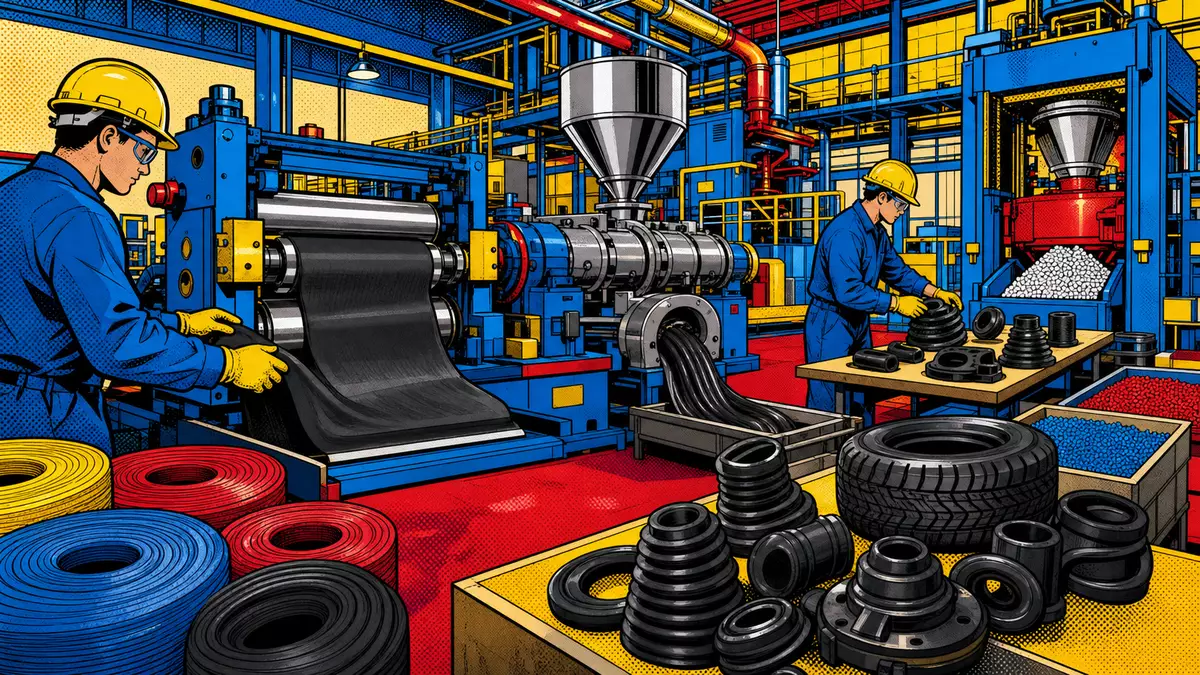
Hexpol (ISIN SE0011624077) is a Swedish polymer group whose stock reflects the company’s ability to turn demand for rubber and thermoplastic compounds into stable cash flow and margins in a cyclical industrial market as of August 31, 2026.
Demand, margins and recent earnings context
Hexpol operates as a specialist in polymer compounding, supplying rubber and thermoplastic compounds to sectors such as automotive, construction, energy and general engineering, and its most recent publicly discussed financial results frame how investors view the stock heading into the next earnings season.
Historically, in fiscal 2023 Hexpol reported revenue in the billions of SEK from its polymer compounding operations, highlighting how its scale in customized rubber and thermoplastic solutions supports recurring orders across its diversified customer base even in uneven macroeconomic conditions.
In those historical fiscal 2023 figures, the company disclosed operating margins in the mid to high single digits, underlining that pricing discipline and cost control in procurement and manufacturing helped offset input cost volatility in raw materials such as synthetic rubber and plastics.
For context, investors who followed those fiscal 2023 results would have seen that Hexpol’s net income and earnings per share improved compared with the prior year as the company benefited from mix shifts toward higher value-added compounds and ongoing efficiency measures in its production footprint.
Polymer compounding operations and product profile
Hexpol’s core business centers on producing rubber compounds tailored to customer specifications, including formulations for seals, gaskets, vibration-damping components and other parts that must meet demanding mechanical and thermal requirements in automotive and industrial applications.
The company also manufactures thermoplastic elastomer and plastic compounds that go into consumer goods, medical devices and industrial equipment, where consistent quality, color matching and mechanical performance are critical to brand owners and OEMs.
Within rubber compounding, Hexpol’s product range typically spans natural and synthetic rubber formulations incorporating fillers, plasticizers and additives that balance durability, flexibility and cost, leveraging technical know-how and application-specific testing to meet customer standards.
In thermoplastic compounding, Hexpol supplies customized resin blends that can include performance-enhancing additives, recycled content or bio-based materials, supporting clients that seek more sustainable or lightweight solutions to meet regulatory and consumer expectations.
Business model, geographic footprint and customer mix
Hexpol’s business model relies on long-term relationships with OEMs and tier-one suppliers who value consistent compound quality, reliable delivery and technical support, which can translate into repeat orders and relatively resilient volumes even when end markets fluctuate.
The company’s geographic footprint includes production facilities and technical centers across Europe, North America and Asia, giving it proximity to major automotive and industrial clusters and allowing it to serve global customers with regionally adapted formulations and logistics.
Customer diversification matters for Hexpol stock because exposure to multiple sectors - automotive, construction, energy, consumer goods and medical - can cushion downturns in any single segment, though cyclical swings in industrial demand still influence aggregate volumes.
In addition to traditional industrial clients, the company has increasingly engaged with customers seeking compounds for energy infrastructure, renewable applications and more sustainable materials, areas that investors often monitor as potential long-term growth drivers in the polymer space.
Strategic initiatives and efficiency programs
Management has historically focused on efficiency initiatives such as optimizing plant utilization, investing in modern mixing and compounding equipment, and streamlining logistics to keep unit costs under control while maintaining quality and delivery performance.
Hexpol has also pursued targeted acquisitions and portfolio adjustments in prior years to strengthen its position in specific niches of rubber and thermoplastic compounding, although each transaction’s financial details and timing must be read directly from the relevant investor communications.
Operationally, the company emphasizes close collaboration between its technical teams and customers to develop compounds that meet evolving performance and regulatory requirements, enabling incremental pricing power when solutions deliver measurable value in durability or processing efficiency.
From a capital allocation perspective, historical disclosures show that Hexpol has balanced reinvestment in the business with dividends to shareholders, illustrating a commitment to both organic development and returning cash when earnings support such distributions.
Sector backdrop and macro influences
The broader polymer and rubber compounding sector is sensitive to automotive production levels, construction activity and industrial output, so investors in Hexpol stock pay attention to macro indicators and purchasing manager indices when assessing volume prospects.
Raw material costs for synthetic rubber, plastics and additives, as well as energy prices, affect gross margins across the sector, making procurement and pricing strategies central to maintaining profitability during periods of commodity volatility.
Regulatory trends on emissions, recyclability and chemical safety continue to shape customer requirements, pushing compounders to innovate with new formulations that incorporate recycled or bio-based content without sacrificing mechanical performance or processing efficiency.
Competition in polymer compounding remains intense, with multiple regional and global players vying for contracts, but Hexpol’s established customer relationships and technical expertise are factors that can support its market share if the company continues to deliver quality and reliability.
Risk factors and investor considerations
Key risks for Hexpol stock include cyclical demand swings in automotive and industrial sectors, potential spikes in raw material and energy costs that could pressure margins, and currency fluctuations given the company’s international operations and SEK reporting currency.
Operational risks involve maintaining quality and consistency across a distributed manufacturing footprint, where equipment reliability, workforce skills and process controls must be upheld to meet stringent customer specifications and avoid costly production issues.
Strategic risks stem from the need to adapt product offerings to evolving regulatory and sustainability requirements, as customers may shift toward suppliers who can provide compounds that help them meet carbon, recyclability or chemical safety targets.
Investors also consider governance and capital allocation, including how management balances investment in growth and modernization with dividend payments and potential share repurchases, particularly when macro conditions complicate near-term visibility.
Product example - rubber compound for automotive seals
One representative product from Hexpol’s portfolio is a customized rubber compound used for automotive sealing applications, such as door seals, window seals and under-the-hood gaskets that must withstand temperature changes, mechanical stress and exposure to chemicals.
These compounds are engineered to deliver specific hardness, elasticity and compression set characteristics, ensuring that seals remain effective over the lifetime of the vehicle and contribute to comfort, noise reduction and protection against moisture and contaminants.
The development process typically involves collaboration between Hexpol’s technical teams and automotive customers, who set performance criteria and testing protocols, leading to iterative adjustments to formulations until the compound meets all functional and regulatory requirements.
By delivering such specialized compounds at scale, Hexpol reinforces its role as a partner to automotive manufacturers and suppliers, supporting recurring orders and deepening relationships that can underpin demand stability across product generations.
Hexpol stock and market view
Hexpol stock trades on its home market in Sweden, with investors weighing the company’s historical earnings record, polymer compounding expertise and exposure to automotive and industrial cycles when assessing valuation and potential risk-reward.
As of August 31, 2026, the market continues to evaluate how upcoming earnings will capture trends in volume, pricing and mix as well as any updates on efficiency programs, capital expenditure plans and potential strategic initiatives in higher-growth application areas.
Read more
Investors can consult Hexpol’s investor information at the company’s own site for detailed historical reports, presentations and disclosures on its polymer compounding operations, earnings history and strategic priorities.
Company details
Company: Hexpol AB
ISIN: SE0011624077
Ticker: Not specified
Exchange: Home market Sweden
Sector / Industry: Materials - Polymer Compounding
Index membership: Not specified


