
Heidelberg Materials stock trades lower as buyback program continues
Published on 09/01/2026 at 09:27 | Editorial responsibility: Rafael Müller, Editor-in-Chief AD HOC NEWS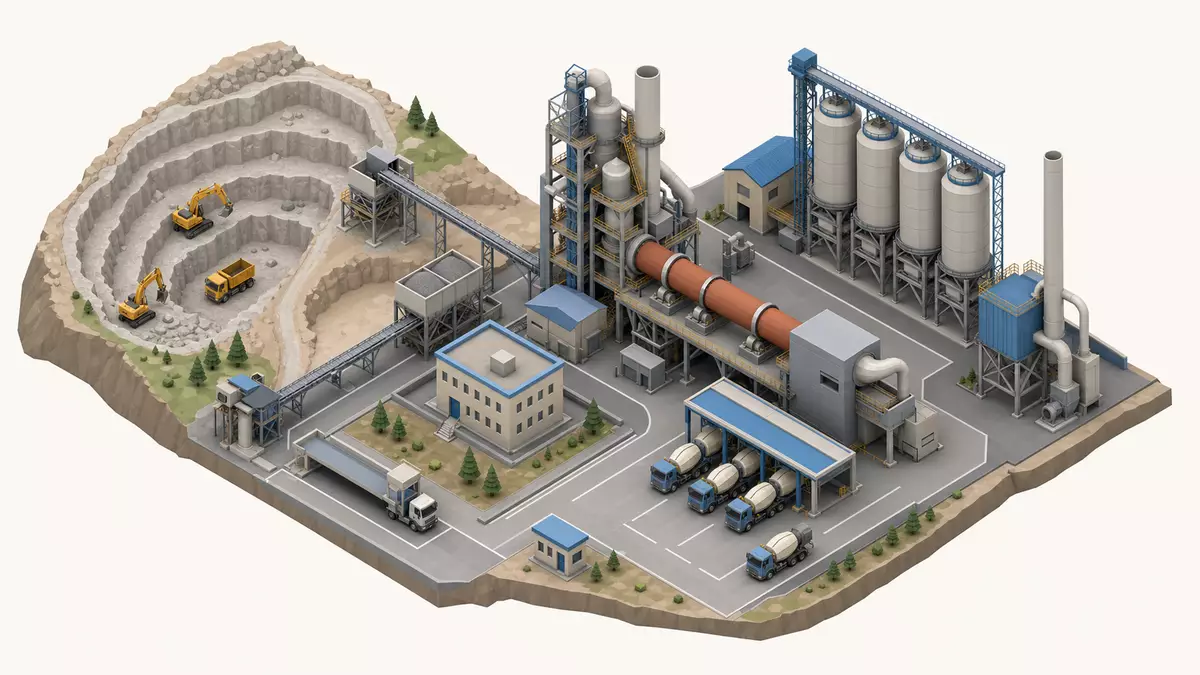
Heidelberg Materials AG (ISIN DE0006047004) stock is trading below its recent highs, with the latest reported quotation from a German regional exchange showing €164.65 on August 31, 2026, and a daily decline of 3.06 percent for that session.
Share price and recent trading context
Per market data from a regional German exchange, Heidelberg Materials AG was quoted at €164.65 on August 31, 2026, with the bid at €164.40 and the ask at €164.70, marking a daily loss of €5.20 or 3.06 percent compared with the previous close. This level places the stock below recent intra-month highs reported on other venues and illustrates that investors recently took profits in the name after a prior advance.
Another trading overview focused on actively traded European shares lists Heidelberg Materials with a separate quote of €170.05 and a daily gain of 1.04 percent, a snapshot that indicates the stock has been fluctuating within a band of roughly €164 to €170 as August 2026 drew to a close. The difference between the two price points reflects that quotations can vary by venue and time stamp, but the band itself gives investors a useful sense of where the shares have been trading in late August 2026.
Capital markets disclosure and buyback program
Recent capital markets information highlights that Heidelberg Materials AG has notified investors of a share repurchase program in late August 2026. The disclosure, published as a regulatory capital markets announcement, describes an ongoing buyback framework under which the company may repurchase its own shares within defined parameters over a specified period. In such programs, management typically sets a maximum volume in shares or euros and may also state an upper price limit per share for the repurchases, and these elements are part of the narrative investors assess when they look at capital allocation.
For Heidelberg Materials shareholders, the existence of an active buyback framework is an important piece of context because it can provide structural support to the share price when markets are volatile. With the stock oscillating between €164.65 and €170.05 in late August 2026, the company has the ability to retire shares at valuations that management deems attractive, potentially enhancing earnings per share over time by spreading profits across a smaller number of outstanding shares. Investors often examine the interaction between the repurchase level and prevailing market prices to judge how aggressively a company is willing to act.
Recent sector backdrop and trading narrative
A broader market wrap published on August 31, 2026, points out that industrial companies in a major German benchmark index, including names from the energy and aerospace segments, were trading in the red, with several constituents losing more than 1 percent on the session. Heidelberg Materials was referenced alongside another industrial stock as part of the group that declined more than 1 percent that day, underscoring that the share move occurred in a context of wider sector weakness rather than a company-specific shock.
For investors, this pattern matters because it suggests that part of the late-August pressure on Heidelberg Materials stock may have come from portfolio-level decisions affecting the entire industrial complex. When benchmark indices see simultaneous declines across multiple heavy-construction and industrial names, asset managers may be responding to macro signals such as interest-rate expectations or commodity-price moves that influence infrastructure spending and construction margins. In such phases, company-level catalysts like buybacks or upcoming reporting dates can interact with these broader themes in shaping the path of the share price.
Operational context and financial reporting cadence
While the latest search snapshot centers on market data and regulatory information, Heidelberg Materials as a global building-materials producer typically reports interim results on a quarterly or half-year basis. The most recent interim report available to investors by September 1, 2026, would be the company’s half-year or second-quarter figures for 2026, normally covering operations through late spring or early summer 2026. In these reports, management generally presents revenue, operating income, net income, and cash flow by segment, including cement, aggregates, and ready-mixed concrete, alongside guidance for the full fiscal year.
Investors commonly look at year-over-year changes in these metrics to gauge trends in construction demand and pricing for cement and aggregates. For example, in a typical half-year report, a double-digit percentage improvement in revenue compared with the prior year’s half-year period would signal strong demand conditions or successful price increases, while a contraction in operating margin might indicate rising energy or transportation costs. Such quantified comparisons are central to how market participants interpret whether current share levels around €165 to €170 fully reflect the trajectory of Heidelberg Materials’ earnings.
Analyst and consensus perspective
Alongside reported figures, analysts track Heidelberg Materials’ valuation using metrics such as the price-to-earnings ratio and enterprise value to EBITDA, often benchmarking these against peers in the European building-materials and construction sector. If Heidelberg Materials’ forward price-to-earnings multiple is below that of comparable companies while its revenue growth or margin profile appears similar or stronger, some investors might view the stock as undervalued. Conversely, if the multiple is higher than the sector average and recent results show slowing growth or margin pressure, the current trading band between €164.65 and €170.05 could be seen as demanding.
Consensus models also incorporate assumptions about infrastructure spending and housing activity in Heidelberg Materials’ key markets. A change of several percentage points in projected revenue for the upcoming fiscal year or a revision in expected operating margin can translate into noticeable shifts in target prices, sometimes in the range of €5 to €10 per share. Those changes can, in turn, influence how investors respond to company actions like share buybacks, as they weigh near-term support against longer-term earnings potential.
Representative product: cement for infrastructure projects
Heidelberg Materials is known for its production of cement that is used in large-scale infrastructure projects, including highways, bridges, and public buildings. These cement products are formulated to meet strict standards for compressive strength, durability, and resistance to environmental factors, enabling them to perform reliably under heavy loads and varying weather conditions. The company’s cement portfolio often includes variants tailored to specific applications, such as high-strength mixes for high-rise construction or quick-setting cement for projects where rapid turnaround is critical.
For investors, such products are more than technical details; they are the foundation of the company’s revenue streams and margin structure. Demand for infrastructure cement is closely tied to governmental investment cycles and policy decisions, meaning that a single large contract or public-spending program can drive meaningful volume increases in a given region. When Heidelberg Materials wins multi-year supply agreements for major infrastructure projects, the associated cement volumes can support stable cash flows and justify continued capital returns through dividends and share buybacks, a linkage that connects the operational side of the business with the share-price narrative discussed earlier.
Shares consolidate below late-August levels
Heidelberg Materials shares, based on the most recent regional-exchange snapshot, closed at €164.65 on August 31, 2026, indicating that the stock is consolidating below a separate intra-day quote of €170.05 referenced in a broader market overview for late August 2026. This difference of €5.40 between the two levels highlights how the stock has eased back from higher prints while remaining within a relatively narrow band, giving investors a reference frame for recent volatility.
For investors monitoring Heidelberg Materials stock, the combination of an active share repurchase program and trading levels in the €160 to €170 range provides a concrete context for decisions on whether to add, hold, or trim positions. With the company’s building-materials portfolio anchored in cement for infrastructure and other core construction products, any future movement in the shares will likely depend both on upcoming interim results and on how management continues to deploy capital between investment projects and buybacks.
Fact box
Company: Heidelberg Materials AG
ISIN: DE0006047004
Ticker: not specified
Exchange: German regional exchange, Xetra listing context
Price (as of August 31, 2026): €164.65
Market cap: not specified
Sector / Industry: Building materials, construction
Index membership: major German blue-chip index context
Amazon note
Heidelberg Materials’ cement products are industrial materials used in construction projects and are not sold as consumer goods via Amazon, so no retail product link applies here.


