
Grifols stock holds below $8 as half-year 2026 recovery gains traction
Published on 08/27/2026 at 11:42 | Editorial responsibility: Rafael Müller, Editor-in-Chief AD HOC NEWS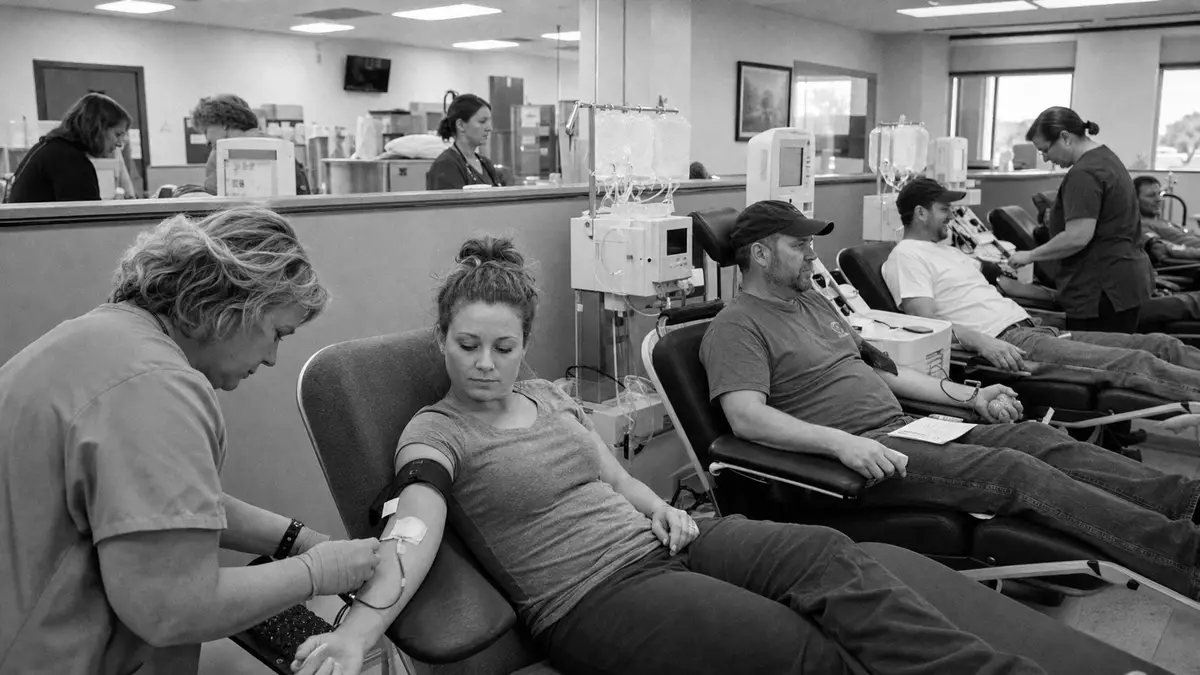
Grifols, S.A. (ISIN ES0171996087) stock is changing hands at $7.90 on the Nasdaq as of the August 26, 2026 close, down 2.35% on the day, leaving the shares below the $8 mark that many investors view as a short-term reference level. Per same-day market data, this price move comes as the market continues to absorb the blood-products specialist’s improved half-year 2026 results and ongoing balance sheet repair.
Half-year 2026 earnings show profit rebound
In its half-year 2026 update, Grifols reported that profit for the period increased versus the prior year, supported by refinancing measures that reduced financing costs and strengthened the company’s capital structure. According to the latest half-year 2026 summary shared in recent coverage, management highlighted that the refinancing program has helped lower interest expense and extend debt maturities, which in turn supported a jump in net profit compared with the half-year 2025 baseline.
While the detailed figures for half-year 2026 are not fully broken out in today’s brief market overview, previous quarterly data provide a reference point for the company’s earnings power. In one recent quarterly snapshot discussed in market analysis, Grifols was shown generating $1.43 billion in revenue in a single quarter with earnings per share of $0.21, compared with an analyst consensus of $0.22, implying a shortfall of $0.01 per share and a net margin of 5.54%. These historical figures illustrate that even before the half-year 2026 refinancing benefits, the business was delivering mid-single-digit net margins, and the latest half-year commentary suggests that profitability has improved further during 2026.
From an investor perspective, the key takeaway from the half-year 2026 narrative is that the company is trying to balance earnings growth with deleveraging. The refinancing effort improves liquidity and reduces near-term refinancing risk, but for equity holders, the ultimate test will be whether higher profit levels in half-year 2026 translate into stronger free cash flow and sustained margin expansion in the remaining quarters of the year.
Analyst context and historical performance metrics
Historical data compiled in market analysis on Grifols show that the company has previously delivered quarterly revenue of $1.43 billion alongside net margins of 5.54% and a trailing twelve-month return on equity of 6.21%. In that earlier period, the $0.21 quarterly EPS undershot a $0.22 consensus estimate by $0.01, underscoring that the company’s earnings profile has been sensitive to operational and financing costs. For investors looking at the half-year 2026 statement, the comparison underscores why the recent profit jump stands out; the business is trying to move from mid-single-digit net margins to a more robust profitability profile while still navigating a leveraged balance sheet.
The quantified gap between the $0.21 EPS and the $0.22 consensus in the historical quarter may appear small, but it encapsulates the broader story: prior to the latest half-year 2026 improvements, Grifols was modestly missing earnings expectations even as it maintained positive net income. Against that backdrop, the half-year 2026 commentary that profit has increased thanks to refinancing is important because it suggests that the company is working to close the gap between reported results and expectations by taking financial-engineering steps alongside operational initiatives.
For valuation-focused investors, the historical return on equity of 6.21% offers another yardstick. If the half-year 2026 profit expansion can lift ROE meaningfully above that level in subsequent quarters, the current share price around $7.90 could begin to reflect a more favorable risk-reward profile. Conversely, if margin gains prove transitory and ROE remains anchored near the mid-single-digit level highlighted in the earlier data, the market may continue to price Grifols as a cautious turnaround rather than a fully repaired growth story.
Debt refinancing and balance sheet strategy
The refinancing theme running through the half-year 2026 commentary matters because Grifols has historically carried a material debt load due to its acquisition-driven expansion and capital-intensive plasma collection network. In the latest half-year narrative, management emphasized that refinancing actions have bolstered the balance sheet by extending maturities and optimizing funding costs. Although precise debt and interest figures for half-year 2026 are not fully enumerated in today’s brief, the reference to a profit jump driven in part by refinancing implies that lower finance charges are feeding through to the income statement.
From a credit perspective, reducing near-term refinancing pressure and securing longer-dated funding can improve the company’s resilience through economic cycles. For equity holders, however, the benefits only become tangible if interest savings are significant enough to boost net income and free cash flow on a sustained basis. That is why investors will be looking closely at the detailed half-year 2026 financials and subsequent quarters to see how much of the profit increase comes from operational improvements in plasma collections and fractionation, and how much is purely a function of lowered financing costs.
The tension between leverage and growth is central to the Grifols investment case. On one hand, leverage has enabled the company to build a global footprint in plasma-derived medicines; on the other hand, high debt levels can constrain strategic flexibility and expose shareholders to refinancing risk. The half-year 2026 assertion that profit has increased thanks to refinancing is therefore a welcome signal that management is actively tackling the liability side of the balance sheet. Yet investors will continue to demand evidence that debt metrics are trending downward and that leverage ratios are compatible with a sustainable, shareholder-friendly capital structure.
Market reaction and technical context around $7.90
At a closing price of $7.90 on August 26, 2026, Grifols stock is down 2.35% on the day, reflecting a loss of $0.19 in that single session. In percentage terms, a 2.35% daily decline is notable but not extreme for a mid-cap healthcare stock, particularly against a backdrop where investors are reassessing leverage, refinancing outcomes, and the durability of earnings. The fact that the shares are trading below $8 creates a psychological threshold: a break above and sustained trading north of $8 could signal renewed confidence in the half-year 2026 trajectory, while repeated failures to hold that level may indicate lingering skepticism.
When mapped against historical performance figures, the $7.90 price also invites valuation comparisons. For instance, if investors benchmark today’s share price against the historical quarter where Grifols generated $1.43 billion in revenue and a net margin of 5.54%, they may infer that the market is assigning a modest multiple to the company’s earnings power, likely discounted for balance sheet risk. Any concrete evidence that half-year 2026 margins have improved materially above the historical 5.54% level would therefore be an important catalyst for re-rating, especially if accompanied by visible reductions in net debt.
Technically, the 2.35% drop in the most recent session can be interpreted in different ways depending on an investor’s time horizon. Short-term traders might see it as a continuation of a consolidation phase where the stock oscillates below $8 as new information on earnings and refinancing is priced in. Longer-term holders, by contrast, may focus less on the daily move and more on whether the emerging half-year 2026 profit story marks an inflection point relative to the earlier period when EPS undershot consensus by $0.01 and ROE sat at 6.21%. If subsequent data confirm that profitability and balance sheet quality are improving, short-term volatility around $7.90 may be viewed as noise rather than signal.
Plasma-derived therapies underpin the business
Grifols’ core business centers on collecting human plasma and manufacturing plasma-derived medicines that treat life-threatening and chronic conditions such as immunodeficiencies, bleeding disorders, and respiratory diseases. The company operates a broad network of plasma collection centers, mainly in North America and Europe, where donors provide plasma that is then processed in specialized facilities to isolate proteins like immunoglobulins, albumin, and alpha-1 antitrypsin. These proteins are formulated into therapeutic products that are distributed globally to hospitals, infusion centers, and specialty pharmacies.
Demand for plasma-derived therapies tends to be resilient because many of the conditions they address, such as primary immunodeficiency, require ongoing, often lifelong treatment. For Grifols, this creates a recurring revenue base that can support long-term investment in capacity expansion, research and development, and quality systems. However, the plasma business is also capital-intensive: collection centers must meet stringent regulatory and safety standards, fractionation plants require significant fixed investment, and inventory cycles are lengthy due to the time needed for testing and processing.
One of Grifols’ signature products in the respiratory space is Prolastin-C, an alpha-1 proteinase inhibitor used to treat alpha-1 antitrypsin deficiency-related emphysema. Recent clinical-program updates have indicated that the company completed follow-up in the SPARTA Phase 3 trial for Prolastin-C in alpha-1 emphysema, underscoring its commitment to strengthening the evidence base behind this therapy. For patients with alpha-1 deficiency, effective treatment can slow disease progression and improve quality of life, and for Grifols, a robust clinical dataset can support physician adoption and reimbursement discussions.
Beyond Prolastin-C, Grifols’ portfolio spans immunoglobulin products for immune system disorders, albumin for volume replacement and other indications, and a range of specialty products used in transfusion medicine and critical care. The breadth of this portfolio provides some diversification across indications and geographies, but the common thread is reliance on a steady, well-regulated flow of plasma and efficient fractionation operations. As investors assess the half-year 2026 profit narrative, they must therefore consider not only financial engineering via refinancing, but also the underlying operational strengths and bottlenecks in the plasma value chain.
Stock view and current trading level
Grifols stock, traded on the Nasdaq under the ticker GRFS, closed at $7.90 on August 26, 2026, after falling 2.35% in that session. This places the shares below the $8 threshold that many market participants watch as a short-term marker and reflects a modest daily loss of $0.19. For investors, the key question is whether the profit increase cited in the half-year 2026 update, aided by refinancing, can lead to sustained margin expansion beyond the historical net margin of 5.54% and improve return on equity above the prior 6.21% level.
Fact box
Company: Grifols, S.A.
ISIN: ES0171996087
Ticker: GRFS
Exchange: Nasdaq
Price (as of August 26, 2026, 4:00 p.m. ET): $7.90 USD
Sector / Industry: Healthcare / Biotechnology
Index membership: Not a member of major US large-cap indices


