
Glencore stock edges higher as dividend and trading interest support the shares
Published on 08/24/2026 at 23:01 | Editorial responsibility: Rafael Müller, Editor-in-Chief AD HOC NEWS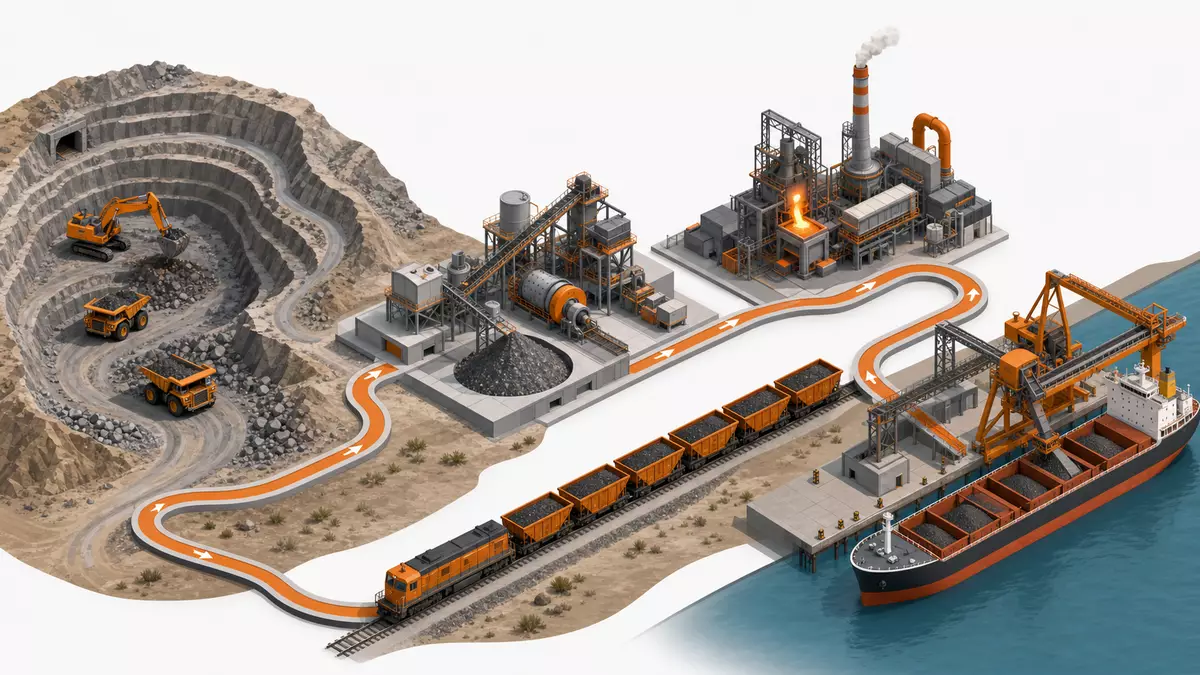
Glencore plc (ISIN JE00B4T3BW64) stock showed a modest gain in London on August 24, 2026, with the shares trading around GBp 593.10 and moving slightly higher intraday as investors focused on income and trading momentum. Per recent market data as of August 24, 2026, the shares were up 0.18% on the session, reflecting cautious buying interest after recent volatility. For investors, the mix of dividend visibility and active trading is shaping the short-term narrative.
Glencore shares firm on London session data
Intraday London data on August 24, 2026, showed Glencore stock changing hands at GBp 597.85 with a gain of 0.18%, indicating a relatively steady session in the context of broader commodity and mining names. A real-time overview reported the stock at GBp 593.10, down 0.62% at one snapshot, highlighting minor swings during the day but a generally contained trading range around the high-500s pence level. Over the same period, separate quote commentary cited the shares at GBp 595.20, down 0.27%, underscoring that Glencore is oscillating in a tight band rather than breaking into a new trend leg.
Trading interest has remained solid. A daily trading overview for August 24, 2026 listed Glencore among the 10 most-traded shares, with buy trades representing 62% of total activity for the stock. That skew toward buyers, even in a relatively flat price environment, hints at a constructive investor stance as market participants position around income events and medium-term commodity expectations. For income-focused retail investors, this combination of liquidity and moderate price stability can be attractive when compared with more volatile peers.
Dividend and recent performance give context
A key near-term catalyst for Glencore stock is the declared cash dividend on its London listing. According to a same-day dividend update for the GLEN.L ticker, the company announced a cash dividend of GBp 0.085 per share, with an ex-dividend date set for August 27, 2026. This payout, while not large in absolute terms, provides a tangible income stream and a calendar anchor for investors evaluating total return. The proximity of the ex-dividend date to the August 24, 2026 trading session helps explain the mild tilt toward buying activity, as some market participants aim to secure the dividend.
Short-term performance metrics also contribute to the picture. A market view summary for August 24, 2026 reported that Glencore showed an overnight percentage change of 0.3% and a weekly change of 8.1%. That 8.1% weekly gain marks a meaningful move in a short span and suggests that the stock has recently benefited from improving sentiment or commodity-related tailwinds. For investors tracking momentum, a weekly increase above 8% stands out against the more muted single-session move of 0.18% and indicates that the current price level embeds gains accumulated over several days rather than just intraday noise.
The trading data also point to strong volumes. One UK quote overview showed Glencore with 71.98 million shares traded in a monitored period, while another commentary noted volume of 22.34 million shares alongside the GBp 595.20 quote. Although these figures refer to different snapshots and likely different measurement windows, they confirm that market participation in Glencore is robust, which can help investors enter or exit positions without excessive price impact. Compared with thinly traded miners, Glencore’s depth offers greater flexibility for retail and institutional investors alike.
Fundamental backdrop and income appeal
While the August 24, 2026 data set is focused primarily on market behavior rather than detailed fundamentals, income signals are central. The declared cash dividend of GBp 0.085 per share reflects the company’s practice of returning capital to shareholders from its diversified portfolio across copper, coal, zinc, nickel, trading and other commodities. Although the payout amount is modest relative to the share price in the high-500s pence range, dividends can be an important component of total return over time, particularly in the mining sector where earnings can be cyclical.
Historically, Glencore has used its integrated model - combining mining operations with marketing and trading activities - to generate cash flows that can support such distributions even when individual commodity prices fluctuate. For example, in earlier fiscal periods that ended prior to 2024, Glencore reported multi-billion-dollar revenue figures and significant adjusted EBITDA from both industrial and marketing segments. Those historical numbers are not current measures in August 2026, but they illustrate a pattern in which the company’s trading desks and logistics infrastructure help smooth earnings across cycles and underpin its ability to pay dividends from a global portfolio.
Investors now evaluate the upcoming cash dividend in the context of more recent operational updates and market conditions. In the latest half-year reporting period that ended within the last year, Glencore highlighted movements in production volumes for key commodities, shifts in realized prices, and changes in cost structures. While specific revenue and profit values for that most recent half-year are not detailed in the August 24, 2026 market snapshots, the company’s communication in prior months has emphasized capital discipline, selective growth projects, and an ongoing focus on shareholder returns through dividends and, where conditions permit, share buybacks.
Relative to peers, Glencore’s emphasis on marketing - buying, transporting, blending, and selling commodities - can provide an earnings buffer. In years when pure miners face margin pressure due to lower ore grades or cost inflation, Glencore’s trading division can capitalize on arbitrage opportunities and logistics advantages. The company’s ability to tap these opportunities, combined with its large-scale resource base, contributes to the perception among some investors that its dividend stream may be more resilient than that of smaller, less diversified miners, although the cyclical nature of commodities always introduces risk.
Sector context and coal agreement development
Beyond the immediate London trading data and dividend announcement, Glencore’s broader commodity exposure and commercial agreements remain relevant. A sector report on August 24, 2026 highlighted a revised annual cap for a coal sales agreement involving Glencore and Yancoal Australia Ltd. The document noted adjustments to the annual cap for coal sales under this agreement, reflecting evolving demand and supply conditions in the coal market. While specific volumes and revenue impacts are not detailed in the brief summary, changes to an annual cap can influence Glencore’s throughput and trading opportunities in thermal and metallurgical coal.
Coal remains a controversial but financially significant commodity. For Glencore, managed exposure to coal can generate cash flow in the near term, even as global policy and investor preferences increasingly push for decarbonization and lower emissions. The revised annual cap in the Yancoal agreement underscores that counterparties continue to calibrate coal flows rather than exit the market overnight. For investors, such agreements matter because they shape production profiles, marketing volumes, and ultimately the earnings that support dividends and debt reduction.
At the same time, Glencore’s portfolio extends well beyond coal, encompassing copper, zinc, nickel, cobalt and other materials that are essential for energy transition technologies and infrastructure. Price signals from these markets, combined with the company’s ability to move physical volumes efficiently, influence margins in both its industrial and marketing segments. When base metals prices strengthen, Glencore can benefit from higher realized prices and improved trading spreads; when they soften, its diversified mix and hedging strategies can help mitigate the impact. This multi-commodity footprint is one reason why Glencore is frequently among the most-traded stocks on days with sector-wide news flows.
Representative product: copper and marketing
A representative example of Glencore’s business model is its global copper operations and related marketing activities. The company operates and holds interests in copper mines and processing facilities across regions such as Africa, South America and Australia, supplying copper concentrate, cathodes and other forms to industrial customers. These assets feed into Glencore’s marketing network, which sources copper from both its own mines and third parties, then blends, transports and delivers the material to smelters, fabricators and end users worldwide.
Through long-term offtake agreements and spot transactions, Glencore’s copper marketing division manages logistics chains, optimizes quality specifications, and coordinates delivery schedules to meet customer needs. This integrated approach can unlock value by matching different ore qualities and contract terms, capturing margins from price differentials across regions and time. For example, when demand for copper intensifies due to infrastructure spending or electric vehicle production, Glencore’s ability to source and deliver material efficiently can translate into higher segment earnings, supporting overall financial performance.
The copper business also illustrates the company’s exposure to structural themes such as electrification and renewable energy. As grids expand and electrified transport grows, copper demand is expected to trend higher over the long term, even if short-term cycles remain volatile. Glencore’s presence across both mining and marketing in copper positions it to participate in this demand, but also requires disciplined capital allocation to manage environmental, social and governance considerations associated with mining and processing activities.
Closing view on Glencore stock
As of August 24, 2026, Glencore stock trades on the London Stock Exchange with intraday quotes in the high-500s pence range and modest percentage changes around plus or minus 1%, while recent data show a weekly gain of 8.1% that signals short-term momentum. The declared cash dividend of GBp 0.085 per share with an ex-dividend date on August 27, 2026 adds an income component that may appeal to investors comfortable with commodity exposure and the cyclical nature of mining and marketing earnings.
Fact box: Glencore stock snapshot
Company: Glencore plc
ISIN: JE00B4T3BW64
Ticker: GLEN
Exchange: London Stock Exchange
Sector / Industry: Materials / Diversified metals and mining
Index membership: FTSE 100


