
Fraport stock steadies as Frankfurt’s new Terminal 3 boosts capacity
Published on 08/31/2026 at 09:01 | Editorial responsibility: Rafael Müller, Editor-in-Chief AD HOC NEWS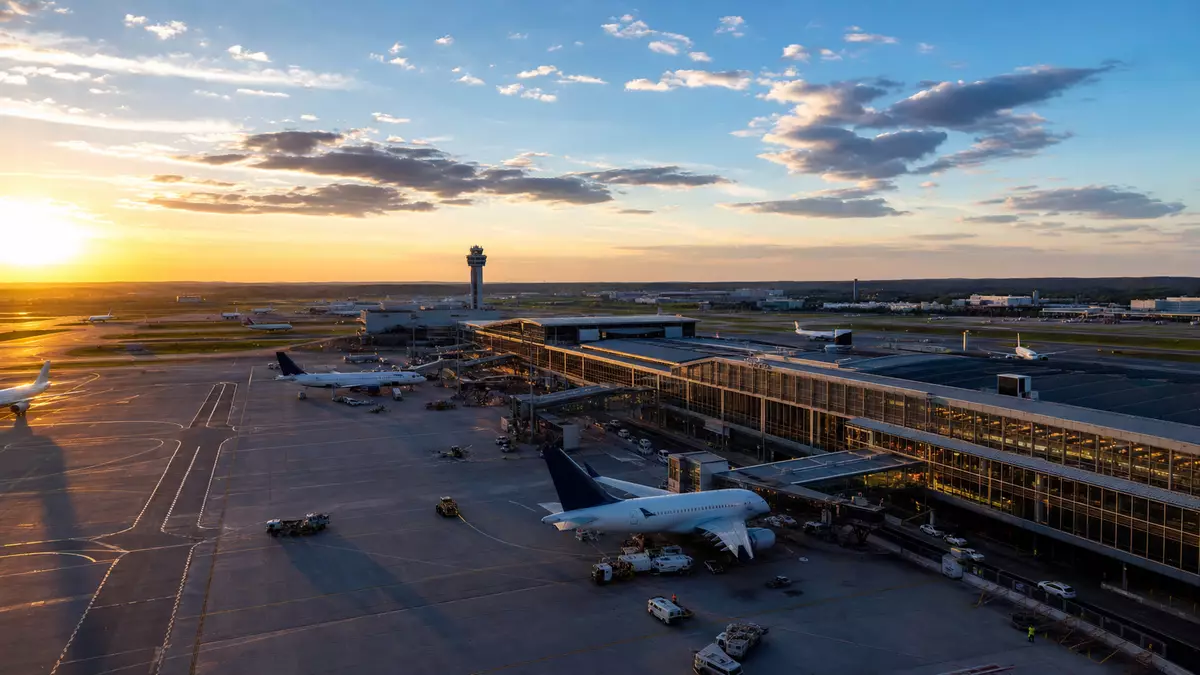
Fraport AG (ISIN DE0005773303) stock is trading against the backdrop of a major infrastructure milestone, as Frankfurt Airport’s new Terminal 3 came on line in April 2026 with capacity for 19 million passengers a year and a project cost of 4 billion euros, strengthening the long-term traffic and earnings profile as of August 31, 2026.
Terminal 3 brings a step-change in capacity
Frankfurt Airport’s Terminal 3 entered operations on April 22, 2026, giving Fraport a substantial boost in capacity at its home hub. The new facility is designed to handle 19 million passengers annually, a figure that materially expands the airport’s ability to capture future traffic growth compared with the existing terminals. Per a recent infrastructure overview Terminal 3 was built at a cost of 4 billion euros and is described as the largest privately funded airport infrastructure project in Europe, underlining the strategic importance of this investment for Fraport’s long-term business model and balance sheet. The same overview highlights Fraport’s role as the operator of Frankfurt Airport and as a publicly listed company with stakes in airports worldwide, which means the added capacity can be leveraged across airline and route partners.
The scale of the project stands out when viewed against typical airport expansions. A cost base of 4 billion euros for a single terminal complex and a design capacity of 19 million passengers per year imply an investment intensity of slightly more than 200 euros per designed annual passenger, indicating that Fraport has committed to a high-specification facility intended for long-term use. That level of spending, combined with the privately funded structure, suggests that management expects traffic and commercial revenues to support both the financing costs and an attractive return on capital over time.
Strategic implications for Fraport’s traffic and earnings
The commissioning of Terminal 3 in April 2026 gives Fraport new flexibility in managing airline portfolios, peak traffic, and route development. With 19 million passengers per year of additional capacity, Fraport can accommodate incremental long-haul and short-haul services while relieving congestion in older terminals, which may support higher service quality and non-aviation revenues such as retail, food and beverage, and parking in future reporting periods. As passenger numbers recover and grow, the incremental capacity should translate into higher passenger-related fees and commercial income in Fraport’s most recent and upcoming quarters.
For investors, a key point is that the new terminal shifts part of Fraport’s earnings story from purely cyclical traffic recovery toward structural capacity-led growth. The 4 billion euro investment is now a tangible asset that, once fully ramped up, could contribute meaningfully to cash flows. If traffic grows to fill the 19 million passenger design capacity in a future year, that would represent a clear uplift compared with historical traffic baselines before the project, and the difference between pre-Terminal 3 peak throughput and a scenario with the new terminal at full utilization can be interpreted as a multi-million passenger addition to Fraport’s fee base.
Fraport’s broader airport portfolio and competitive position
Beyond Frankfurt, Fraport is involved in managing or holding stakes in airports in multiple countries, and the successful delivery of Terminal 3 enhances its credentials as a builder and operator of complex infrastructure. A 4 billion euro privately funded project that opens on schedule in April 2026 demonstrates execution capability and may strengthen Fraport’s position in bidding for or negotiating further concessions. The ability to finance and deliver a facility with capacity for 19 million passengers per year, while keeping the company listed and diversified, can be a competitive advantage.
From a comparative perspective, there are few privately funded airport projects in Europe of comparable scale, so the designation of Terminal 3 as the largest privately financed airport infrastructure project in Europe makes Fraport’s home hub stand out in sector discussions. That status could give the company additional visibility with institutional investors who focus on infrastructure and long-duration assets, potentially influencing Fraport’s valuation multiples once the financial contribution of Terminal 3 is visible in reported numbers.
Passenger experience and commercial potential at Terminal 3
The opening of a new terminal is not only an operational event but also a product development moment for Fraport. With 19 million passengers per year in design capacity, Terminal 3 provides an opportunity to introduce new retail concepts, upgraded lounges, and more efficient check-in and security processes. Each passenger passing through the terminal represents potential non-aviation revenue, and the larger and more modern space can support a higher average spend than older facilities.
For example, if average commercial revenue per passenger in the new terminal proves higher than historical averages at older terminals, the incremental commercial income from filling the 19 million passenger capacity could represent a significant contribution to Fraport’s earnings in future years. The combination of passenger-related fees, retail, and other services means that the new terminal is central to Fraport’s efforts to optimize revenue per passenger, a key metric for airport operators globally.
Representative product: Frankfurt Airport’s Terminal 3
A concrete representative product of Fraport’s business today is the newly opened Terminal 3 at Frankfurt Airport. This terminal serves as a physical embodiment of the company’s strategy to expand capacity, improve passenger experience, and diversify revenue streams. As a modern facility designed for 19 million passengers a year, it reflects Fraport’s focus on long-term infrastructure investments and its confidence in the continued demand for air travel through its main hub.
Stock view anchored in infrastructure expansion
Against this backdrop, Fraport stock reflects ownership in a company that operates Frankfurt Airport and has recently brought a major 4 billion euro terminal online as of April 22, 2026. The combination of added capacity for 19 million passengers per year and the project’s scale as Europe’s largest privately funded airport infrastructure development provides a structural support for Fraport’s long-term earnings outlook beyond day-to-day market moves.
Fact box
Company: Fraport AG
ISIN: DE0005773303
Ticker: Not specified
Exchange: Frankfurt Stock Exchange
Sector / Industry: Transportation / Airports
Index membership: Not specified


