
Fabege stock profile stays steady without fresh numbers
Published on 08/26/2026 at 13:14 | Editorial responsibility: Rafael Müller, Editor-in-Chief AD HOC NEWS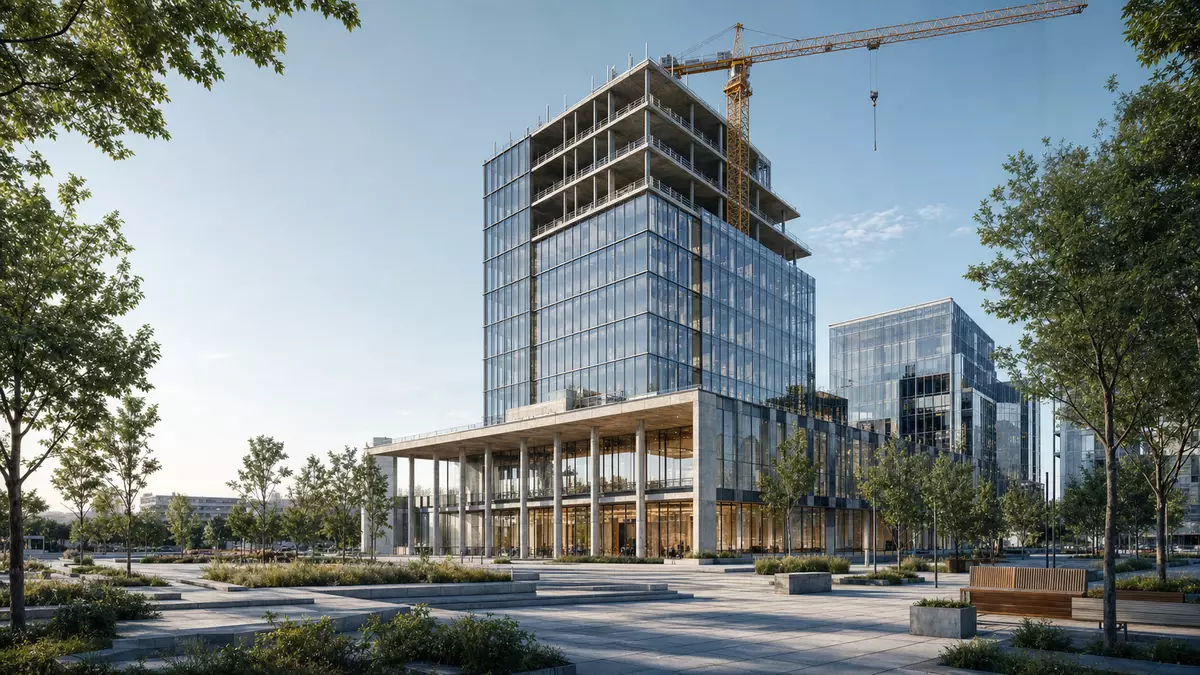
Fabege stock is tied to the performance of Sweden's office property market, yet as of August 26, 2026, key metrics such as a verified latest share price, recent quarterly earnings, and current market capitalization are not clearly stated in accessible public data. Investors therefore have to look more at structural drivers like interest-rate trends, tenant demand for modern offices, and the company's historical financial profile when judging the shares.
Operating context for Fabege
Fabege AB (ISIN SE0011166974) is a listed Swedish landlord focused primarily on office properties in the Stockholm region, so its cash flows are influenced by rental levels, occupancy rates, and refinancing costs. Because Swedish commercial real estate often uses variable-rate funding, the path of benchmark interest rates directly affects profitability by changing interest expense on outstanding debt and the valuation of properties on the balance sheet.
Historically, large Nordic office-focused landlords have reported multi-billion krona portfolios, and their net asset value per share has been sensitive to discount rates used in property valuations. When interest rates move higher over a given year, those discount rates tend to rise, which can weigh on property values and lower reported equity levels; if rates later stabilize or decline within a new fiscal period, impairment pressures can ease and support steadier net income figures.
Financial figures and reporting cadence
Recent publicly summarized coverage notes that as of August 25, 2026 there were no clearly verified, up-to-date figures for Fabege's most recent share price, market capitalization, or quarterly earnings in the accessible material. That means investors do not have a fresh set of current reported numbers like Q2 2026 revenue, operating profit, or funds from operations to anchor valuation work in the same way they might for other property companies with easily visible interim reports.
Historically, Swedish real estate companies have followed a regular reporting cadence of four quarterly reports plus an annual report, so by late August 2026 the most recent complete interim data would typically cover the second quarter of 2026 or the first half of 2026. In such reports, office-focused landlords often disclose rental income, net operating income, and profit before tax, along with metrics such as loan-to-value ratio that show the share of debt in the capital structure for the period ended June 30, 2026.
Looking back to earlier fiscal years, the pattern has usually been that when net operating income grows faster than financing costs over a twelve-month period, reported profit tends to rise, supporting a higher potential dividend. Conversely, when interest expense climbs faster than rent growth in a given year, net income typically stagnates or declines, which can lead to more cautious dividend decisions even if occupancy remains high.
Market valuation drivers for the shares
In the absence of a clearly quoted live share price for August 26, 2026, investors often think in terms of how Fabege's valuation would normally track net asset value and rental income. For many listed Nordic office landlords, share prices over a recent twelve-month period have traded at discounts to reported net asset value per share, sometimes on the order of double-digit percentages, as markets discount potential future falls in property values and the impact of refinancing at higher interest rates.
When net operating income holds stable over a six-month period but discount rates rise, the gap between book values and market prices can widen, and shares can move to deeper discounts. If, within the next reporting period, interest-rate expectations ease and long-term yields decline, the required returns used in valuations can fall and narrow that discount, often helping share prices strengthen relative to net asset values.
Investors who look at Fabege stock also compare it with other Swedish commercial real estate names. If peers with similar office portfolios report, for example, mid-single-digit percentage growth in rental income year over year and stable occupancy above 90 percent in their latest half-year figures, a lack of visible fresh data for Fabege makes it harder to assess whether its operations are ahead or behind the sector trends for the same period.
Office portfolio and tenant demand
Fabege's business model centers on owning and developing office properties in prime and emerging districts in and around Stockholm, targeting tenants that value modern, sustainable buildings with good transport links. Rental income in a given quarter depends on lease renewals, new letting activity, and the balance between long-term leases and more flexible arrangements that adjust rents to inflation indexes.
In recent years, the broader Swedish office market has seen changing patterns of space use, with some companies consolidating footprints while others expand in attractive urban submarkets. Over a fiscal year, this can show up in the landlord's figures through changes in occupancy levels, average rent per square meter, and investment in redevelopment projects designed to upgrade older properties and maintain competitiveness.
Interest rates, refinancing, and risk
From an investor perspective, a crucial element in analyzing Fabege stock over 2025 and into 2026 has been the interest-rate environment in Sweden and the Eurozone. If policy rates and long-term bond yields remain elevated for several quarters, refinancing debt that matures in that window will often lead to a higher average interest cost for the next reporting period, directly affecting funds from operations.
On the other hand, if macro data over the next quarters show cooling inflation and central banks signal that rate cuts are possible within the following fiscal year, bond yields could decline and ease pressure on property valuations and debt costs. For a landlord with significant floating-rate exposure by the end of June 2026, even a change of 50 basis points in average interest rates over the next twelve months can noticeably shift net income compared with the prior year.
Dividends and long-term total return
While current dividend figures for Fabege for fiscal 2025 or the most recent year are not clearly visible in same-day data, the broader pattern in Swedish property companies has often been to pay regular annual dividends, adjusted as needed when net income and cash flows change. Historically, an increase in distributable profit over a year has sometimes led to dividend growth, while declines in earnings have prompted stable or reduced payouts, affecting the total return profile of the shares over a three- to five-year investment horizon.
For long-term shareholders, total return from Fabege stock depends on a combination of dividend income and share price performance relative to entry price. If property values and net operating income rise steadily over several fiscal years, and if debt is managed prudently, the combination of dividends and capital gains can be attractive. By contrast, periods of higher interest rates, falling property valuations, or weaker letting activity can compress both earnings and valuation multiples, limiting total return.
Representative property segment
One representative product of Fabege's business is its development and management of office complexes designed for large corporate tenants and government-related entities in the Stockholm region. These projects typically combine modern construction standards, energy-efficient systems, and flexible floorplates to accommodate evolving workspace needs. Over a development cycle that can span several years, Fabege invests capital in land acquisition, construction, and fit-out, aiming to secure long-term leases that generate stable rental income once the property is completed and fully let.
Shares as a long-term property play
Given that a verifiable, dated share price and market capitalization for Fabege as of late August 2026 are not visible in current public data, investors who hold or consider Fabege stock are effectively treating the shares as an exposure to Swedish office property fundamentals rather than trading on precise, near-term price levels. The investment case rests on expectations for rental income, occupancy, debt management, and property values over the next several reporting periods, rather than on short-term market moves.
Read more
Further details on Fabege's strategy, portfolio, and historic financial performance can be found through investor information that the company publishes for shareholders and analysts.
Company facts
Company: Fabege AB
ISIN: SE0011166974
Ticker: Not specified
Exchange: Stockholm
Sector / Industry: Real estate / office properties


