ENGIE stock holds steady after H1 2026 objective upgrade
Published on 08/18/2026 at 16:46 | Editorial responsibility: Rafael Müller, Editor-in-Chief AD HOC NEWS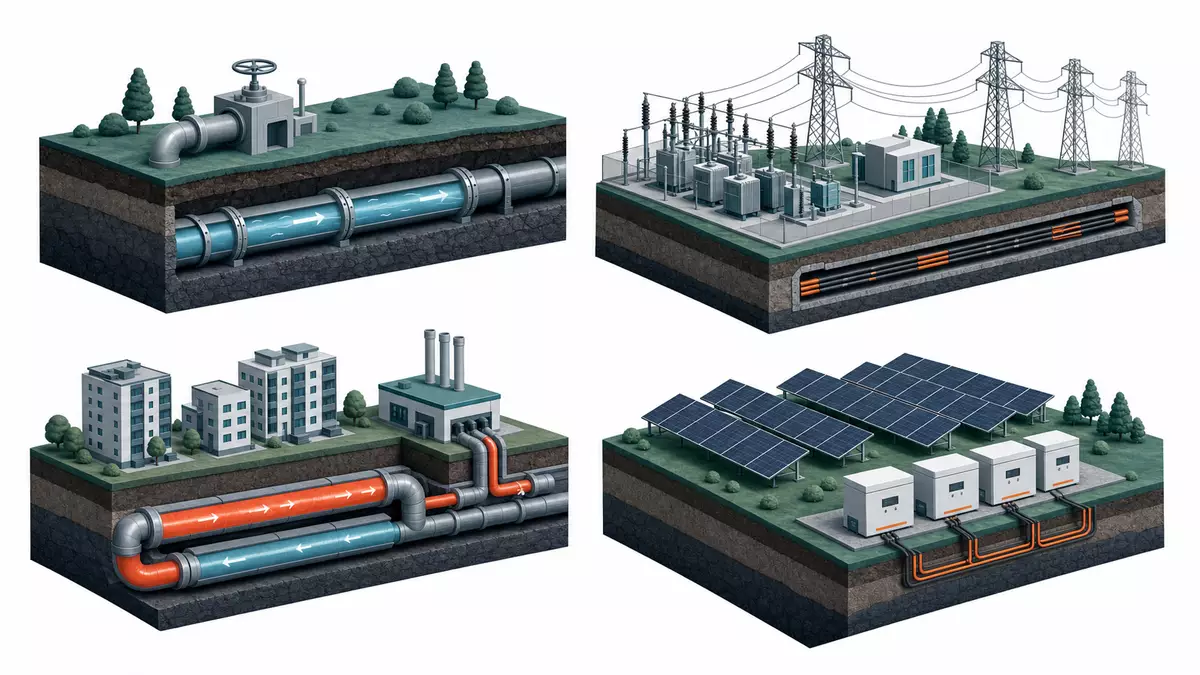
ENGIE stock (ISIN FR0010208488) traded at EUR 25.72 on Euronext Paris as of August 17, 2026, giving the French energy group a market capitalization of EUR 66.4 billion according to recent market data. Recent coverage highlights that this level follows stronger half-year results and a fresh upgrade to the companys 2026 objectives.
H1 2026 results underpin higher objectives
ENGIE reported its H1 2026 results on July 31, 2026, detailing the latest performance trends for the period, as referenced in the companys newsroom. The H1 2026 results entry confirms that the update relates to the first half of 2026, which is now the most recent interim reporting period. While the full set of figures is contained in the detailed release, market analysis notes that the combination of resilient earnings and cash generation allowed management to lift its 2026 financial objectives.
According to valuation data compiled on August 17, 2026, ENGIE shares around EUR 25.7 represent a modest pullback from a recent close of EUR 26.44 earlier in August 2026, with that higher level recorded in prior trading sessions. Market valuation tables show a last close at EUR 26.44 on August 10, 2026, implying that the current quote is EUR 0.72 below that recent high and equates to a short-term decline of 2.7 percent versus that earlier level.
Consensus metrics and valuation context
Beyond the headline price, investors also track the stocks US-traded depositary receipts. As of August 17, 2026, ENGIEs ADR traded at $29.71 on the US over-the-counter market, with a trading range for the session between $29.54 and $29.87 and a 52-week range from $20.18 to $35.16. The ADR overview indicates a market capitalization of $75.54 billion and a dividend yield of 2.93 percent based on recent distributions.
Analyst data compiled in the same overview point to earnings per share expectations rising from $2.41 to $2.50 in the coming year, an anticipated increase of 3.73 percent. This projected growth helps contextualize ENGIEs valuation multiples and underpins a consensus rating categorized as Moderate Buy, based on a mix of strong buy, buy and hold evaluations. For investors, the notable point is that the projected 3.73 percent earnings increase now sits alongside the upgraded 2026 objectives, creating a clearer link between guidance and forecasted profit growth.
Looking at broader fundamental trends, a valuation grid sourced on August 18, 2026, shows that ENGIE generated revenue of EUR 73.812 billion in 2024, compared with EUR 82.565 billion in 2023, a historical decline of EUR 8.753 billion year-on-year for those fiscal periods. The same grid reports net income for 2024 at EUR 4.106 billion versus EUR 2.208 billion in 2023, a historical increase of EUR 1.898 billion, underlining that profitability improved even as top-line revenue stepped down from the prior year.
H1 2026 performance in a longer-term frame
Because H1 2026 is now the latest interim period, investors often compare its performance against these recent full-year figures and prior half-year baselines. The July 31, 2026 H1 release indicates that ENGIEs profitability in the first half of 2026 was strong enough to support raising 2026 objectives, suggesting that management sees a path to sustaining or improving on the profitability trends evident in 2024. That linkage between mid-year momentum and full-year guidance is central to the current investment debate.
Historically, revenue in 2023 stood at EUR 82.565 billion, and by 2024 it had declined to EUR 73.812 billion, highlighting that the company has already undergone a recalibration of its top line in recent years. At the same time, the expansion of net income from EUR 2.208 billion in 2023 to EUR 4.106 billion in 2024 shows that prior efficiency and margin initiatives yielded tangible results over a one-year period. For H1 2026, the raised objectives signal that management aims to continue building on those profitability gains even if revenue growth remains selective.
The valuation grid also outlines historical EBITDA and EBIT tracks, with EBITDA listed at EUR 15.017 billion in 2023 and EUR 15.600 billion in 2024, an increase of EUR 0.583 billion across those fiscal years. These figures provide context for understanding the H1 2026 narrative: if EBITDA grew over those earlier periods while revenue declined, then margin discipline was a key driver, and the upgraded objectives now need to be read through that same lens of capital allocation and efficiency.
Dividend and income profile
Income-focused investors pay close attention to the yield profile implied by ENGIE securities. The ADR overview as of August 17, 2026 shows a dividend yield of 2.93 percent, based on recent annualized distributions and the ADR price of $29.71. Since the ADR represents exposure to the same underlying cash flows as the Paris-listed shares, this yield metric provides an additional lens for evaluating total shareholder return potential when combined with expected earnings growth of 3.73 percent over the coming year.
ENGIEs historical net income progression between 2023 and 2024 suggests that the company has capacity to sustain dividends even through periods of revenue normalization. An increase in net income of EUR 1.898 billion year-on-year during that interval, as highlighted in the valuation tables, strengthens the foundation for mid-term payout strategies. The raised 2026 objectives, anchored by the H1 2026 performance, are therefore particularly relevant for dividend investors assessing the durability of future distributions.
At the Paris listing price of EUR 25.72 as of August 17, 2026, the stock sits within a broader 52-week range inferred from the ADRs trading band of $20.18 to $35.16, adjusted for the ADR structure. When mapped qualitatively onto the home-market shares, the current level represents a position closer to the upper half of that band, signaling that the market has already priced in a degree of recovery and strategic progress over the past year.
ENGIEs energy solutions and services
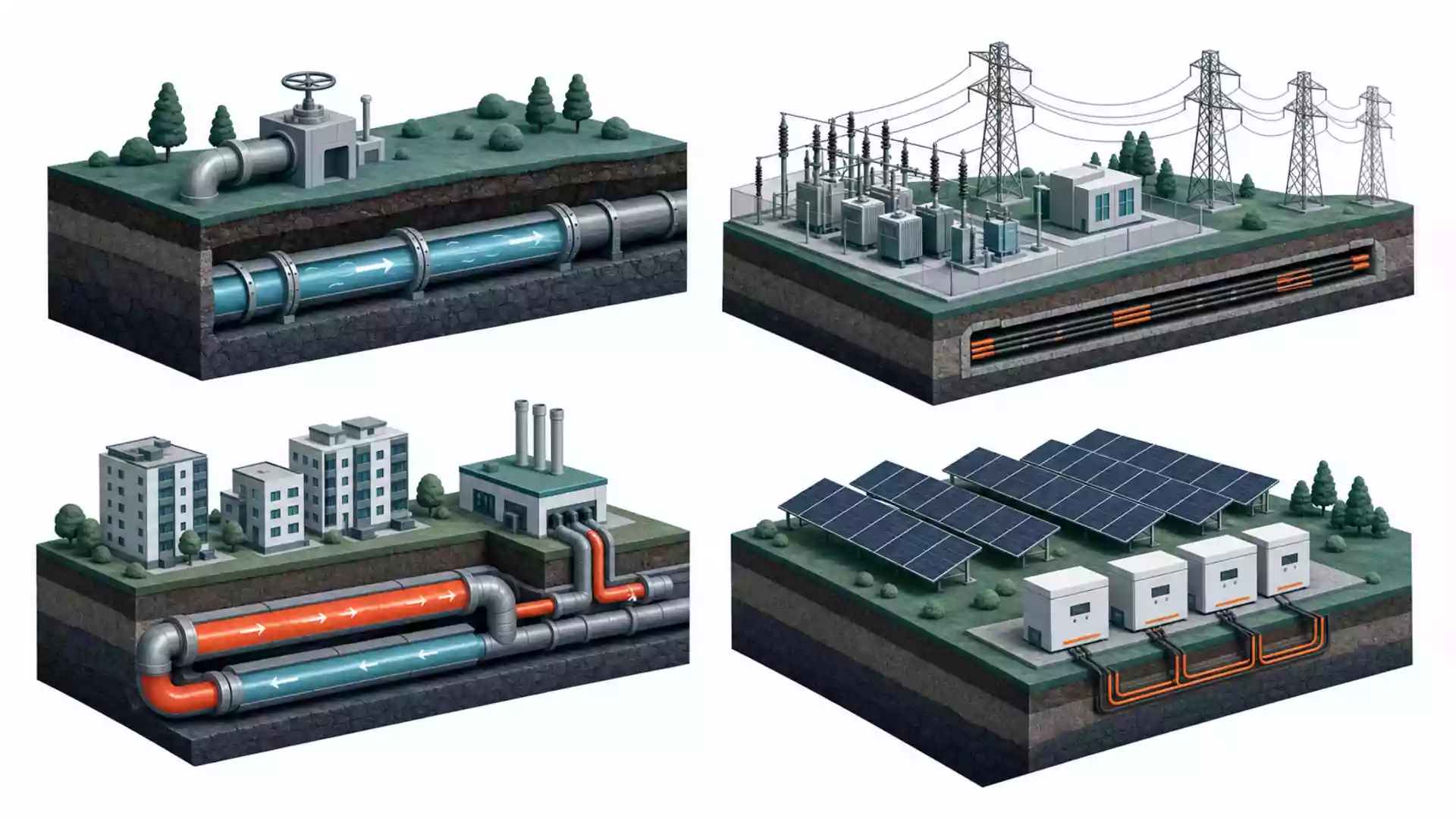
Beyond the headline figures, ENGIEs business model centers on low-carbon electricity generation, energy infrastructure and client solutions that help industrial and municipal customers decarbonize. The group operates across activities such as gas and power networks, renewable generation, flexible generation and storage, and on-site energy services. This portfolio strategy means that the financial metrics referenced for H1 2026 and fiscal 2024 are underpinned by a mix of regulated and contracted cash flows as well as competitive-market exposures.
In practical terms, ENGIE develops and operates assets like wind farms, solar parks and high-efficiency gas plants, while also deploying distributed solutions such as district heating networks and on-site cogeneration for large campuses. These installations feed into long-term contracts, often indexed to inflation or energy price benchmarks, which in turn support predictable revenue streams that can be matched against the companys upgraded 2026 objectives. Investors evaluating the recent guidance increase therefore pay attention to the pipeline of such projects and the pace of commissioning new assets.
The companys client solutions arm provides services that include energy efficiency retrofits, digital monitoring of consumption and integrated facility management. Revenue from these activities contributes to overall top-line figures and offers a pathway to incremental margin expansion when bundled with infrastructure offerings. Seen through this lens, the H1 2026 results and upgraded objectives do not stand in isolation; they represent a snapshot of how ENGIEs integrated model is expected to deliver earnings growth and cash generation across multiple business lines.
ENGIEs role in Europes energy transition
ENGIE occupies a significant position in Europes evolving energy landscape, particularly through its commitments to decarbonization and the deployment of renewable capacity. The company has historically targeted additions of wind and solar capacity each year, with the intent of reducing the carbon intensity of its generation fleet. The trajectory of net income between 2023 and 2024, combined with the raised 2026 objectives, suggests that management views the energy transition not only as a regulatory obligation but also as a profitability opportunity.
In markets such as France and neighboring European countries, ENGIE participates in long-duration contracts and tenders that secure revenue visibility over years or even decades. This framework influences how investors interpret the H1 2026 performance: a solid half-year showing, when backed by long-term contracts, can justify lifting medium-term financial objectives without materially increasing risk. The companys exposure to regulated networks and infrastructure, as reflected in its valuation metrics, helps reduce volatility relative to purely merchant energy players.
At the same time, ENGIE must manage risks related to commodity prices, regulatory shifts and capital-intensive investment needs. The historical decline in revenue from EUR 82.565 billion in 2023 to EUR 73.812 billion in 2024 shows that the company is not immune to changes in market conditions and portfolio reshaping. However, the concurrent rise in net income and the H1 2026-driven objective upgrade indicate that the strategic focus on value over volume may be paying off, at least in the near to medium term.
Investor takeaways from current data
For equity investors, one of the key takeaway metrics is the relationship between the current share price of EUR 25.72 as of August 17, 2026 and the historical close of EUR 26.44 on August 10, 2026. The EUR 0.72 difference marks a short-term pullback of 2.7 percent, which, when set against the backdrop of upgraded 2026 objectives and earnings projections increasing by 3.73 percent, suggests that valuation may not have fully reflected the latest guidance yet. This kind of comparison between short-term price movements and forward-looking fundamentals often shapes trading decisions around large utilities.
Another key point is the scale of ENGIEs market capitalization across both its Paris listing and US-traded ADRs. With a market cap of EUR 66.4 billion as of August 17, 2026 on Euronext Paris and $75.54 billion in the ADR context, the company ranks among the larger integrated energy groups globally. That scale provides flexibility to fund capital expenditure programs related to renewable capacity and grid infrastructure, which in turn feed into future revenue and earnings pipelines that investors hope will sustain or expand the dividend over time.
From a risk perspective, the historical pattern of revenue and net income between 2023 and 2024 offers both cautionary and encouraging signals. The decline in revenue of EUR 8.753 billion over that period underscores the need to monitor volumes and pricing in ENGIEs markets carefully, while the gain in net income of EUR 1.898 billion illustrates that margin enhancement and portfolio optimization can offset topline pressure. The H1 2026 results and upgraded objectives now sit atop that historical base, serving as a test of whether the positive profitability trend can be sustained without sacrificing long-term growth investments.
Representative product and services example
One representative example of ENGIEs offering is its integrated renewable energy and services solutions for industrial clients, where the company designs, finances and operates on-site solar installations combined with energy management systems. In such projects, ENGIE may build rooftop or ground-mounted solar arrays on a clients facilities, connect them to advanced monitoring platforms and integrate them with existing grid connections to optimize consumption. This type of product illustrates how ENGIE translates its broader energy transition strategy into concrete contracts that generate recurring revenue.
Through these solutions, clients can reduce their electricity bills and carbon emissions, while ENGIE earns returns on the capital invested in the assets over the life of the contract. The H1 2026 results and upgraded 2026 objectives can be viewed as aggregate outcomes of hundreds of such projects across different regions and customer segments. For investors, understanding how these offerings contribute to earnings and cash flow is key to interpreting the numbers cited in recent market and valuation reports.
ENGIE stock price context
ENGIE stock closed at EUR 25.72 on Euronext Paris as of August 17, 2026, with the session ending at 5:35 p.m. local time according to detailed quote data. At that price and market capitalization of EUR 66.4 billion, the shares trade with an implied valuation that reflects both the companys role in Europes energy transition and the near-term uplift from the H1 2026 results and upgraded 2026 financial objectives. For US investors accessing the stock through the ENGIE ADR at $29.71 as of 3:59 p.m. Eastern Time on August 17, 2026, the same underlying fundamentals apply, adjusted for the ADR structure.
These price points and valuation snapshots, viewed together with the projected 3.73 percent earnings increase and the historical net income rise of EUR 1.898 billion between 2023 and 2024, frame the current investment narrative around ENGIE stock. The key question for many investors is how the raised 2026 objectives, backed by H1 2026 performance, will translate into future price and dividend trajectories relative to this current mid-20s euro trading band and the ADRs recent 52-week range.
Read more
ENGIE energy solutions in focus
ENGIE continues to expand its portfolio of energy solutions, from large-scale renewables to tailored services for cities and companies, using its balance sheet strength and market capitalization of EUR 66.4 billion as of August 17, 2026 to fund growth projects.
ENGIE stock on Euronext Paris
ENGIE stock traded at EUR 25.72 on Euronext Paris as of August 17, 2026, corresponding to a market capitalization of EUR 66.4 billion and reflecting investor reactions to the latest H1 2026 results and upgraded 2026 objectives.
Fact box
Company: ENGIE S.A.
ISIN: FR0010208488
Ticker: ENGI
Exchange: Euronext Paris
Price (as of August 17, 2026, 5:35 p.m. local time): EUR 25.72
Market cap: EUR 66.4 billion (as of August 17, 2026)
Sector / Industry: Utilities / Multi-utilities
Index membership: CAC 40