
Engie stock holds below 25 euros as guidance lift supports 2026 outlook
Published on 08/29/2026 at 10:41 | Editorial responsibility: Rafael Müller, Editor-in-Chief AD HOC NEWS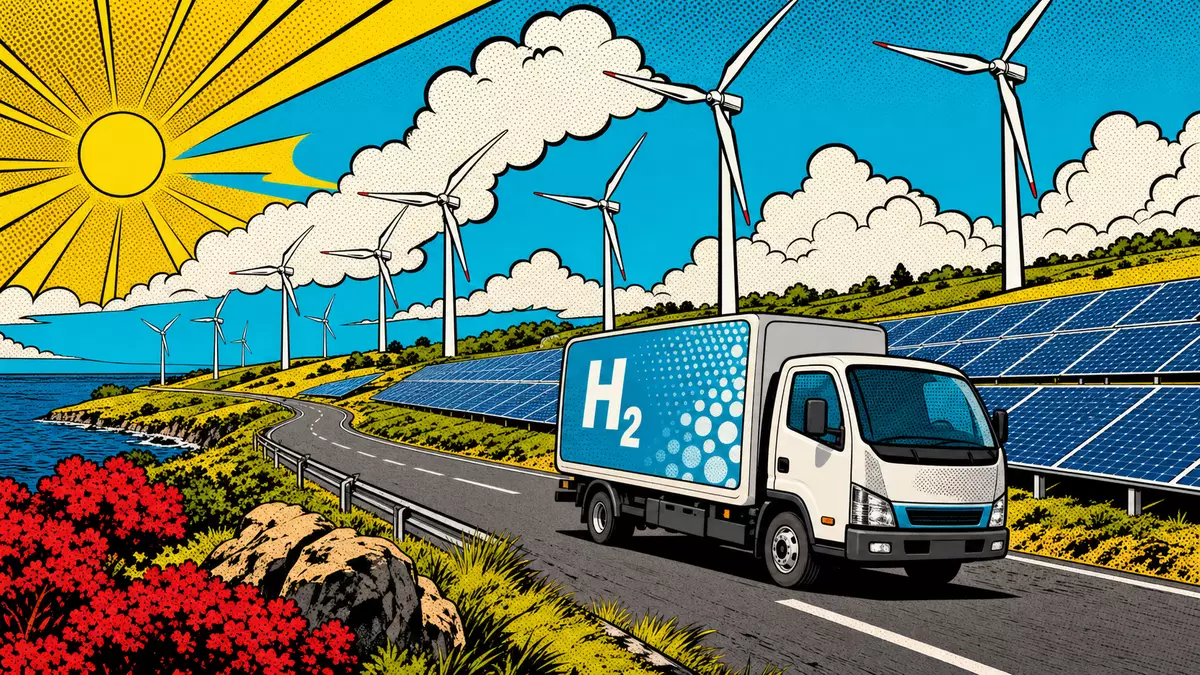
Engie SA (ISIN FR0000125307) stock on Euronext Paris has been trading below 25 euros in late August 2026, with a recent closing level of 24.10 EUR as of August 27, 2026 that reflects investor consolidation after the company raised its full-year guidance on the back of its H1 2026 results reported on July 31, 2026. An updated overview of the shares shows that Engie closed at 24.50 EUR on August 28, 2026, marking a 1.66 percent gain on the day and leaving the stock still below the psychologically important 25 euro threshold as investors digest the new earnings outlook. Per the company’s H1 2026 disclosure, EBIT excluding nuclear activities reached 5.3 billion EUR in the first half of 2026, representing an organic increase of 1.2 percent compared with H1 2025 and providing the numerical basis for management’s decision to lift recurring net income guidance for the full year.
Engie’s 2026 guidance lift after H1 figures
Recent reporting on Engie’s first-half performance explains that the company’s H1 2026 update dated July 31, 2026 highlighted EBIT excluding nuclear activities of 5.3 billion EUR for the first six months of the year, with this figure representing a 1.2 percent organic increase compared with H1 2025. This increment, while modest in absolute terms, signals that Engie was able to grow operating profitability in its core activities versus the prior year period despite a less favorable power price environment, and it is this progress that underpins the decision to raise full-year 2026 recurring net income guidance. The same H1 2026 communication made clear that the improved EBIT trajectory supports stronger expected bottom-line delivery in 2026, linking this operating trend directly to upgraded earnings expectations.
The numerical comparison embedded in the H1 2026 EBIT figure is particularly important for investors, as it frames Engie’s performance against its own recent history. A 1.2 percent organic increase in EBIT excluding nuclear activities between H1 2025 and H1 2026 demonstrates that the company has moved from stability into incremental growth rather than experiencing a decline at the operating level, and this shift helps explain why management felt confident in lifting guidance. In practical terms, the raised full-year 2026 recurring net income guidance gives equity investors a higher earnings base against which to assess valuation, suggesting that if the company delivers on its upgraded outlook, the current share price in the mid-20 euro range could imply a more undemanding earnings multiple than previously assumed.
Share price levels and analyst expectations
On the market side, quote data for Engie’s ENGI ticker indicate that the stock closed at 24.10 EUR on Euronext Paris on August 27, 2026, down from a reference level of 25.29 EUR on August 21, 2026, which corresponds to a decline of 1.19 EUR or 4.7 percent over less than a week. This quantified move shows how the shares have pulled back from above 25 euros into the mid-24 euro area even after the guidance lift, suggesting that some investors have been locking in earlier gains or reassessing the risk-reward profile following the H1 2026 report. At the same time, updated quote tables show that Engie then closed at 24.50 EUR on August 28, 2026, advancing by 0.40 EUR or 1.66 percent in that session, an intraday move that hints at renewed buying interest as the stock consolidates just below 25 euros.
Further context from a detailed market-data snapshot shows that Engie’s trailing twelve-month earnings per share (EPS) are currently indicated at 1.63 in local currency terms, while the forward dividend is set at 1.35 with a forward dividend yield of 5.60 percent based on recent pricing. Taken together, these figures suggest that the shares are being valued with a relatively high cash distribution component, and that the updated earnings guidance from H1 2026 could help to maintain or enhance this dividend profile if execution remains on track. Consensus information from the same snapshot points to an average analyst target price of 30.86 for Engie, significantly above the 24.50 EUR spot price as of the August 28, 2026 close, a gap of 6.36 EUR that translates into a potential upside of nearly 26 percent if the average target were eventually reached.
The interplay between these numbers gives investors a more granular view of how current market pricing compares with both historical levels and forward expectations. On the one hand, the drop from 25.29 EUR on August 21, 2026 to 24.10 EUR on August 27, 2026 shows that Engie shares can still be vulnerable to short-horizon profit-taking despite improved guidance, with a 4.7 percent pullback providing a concrete measure of that volatility. On the other hand, the subsequent rise to 24.50 EUR on August 28, 2026, coupled with a forward dividend yield of 5.60 percent and a consensus target at 30.86, indicates that a segment of the market remains constructive on the medium-term earnings and cash return story implied by the H1 2026 figures and guidance.
Go deeper
A recent market-data overview for Engie provides the latest closing price, dividend yield indications, and analyst consensus metrics, helping investors cross-check the valuation context derived from the H1 2026 numbers.
Operational profile and energy transition projects
Beyond the headline earnings and price metrics, Engie’s operations are heavily shaped by its strategy in the energy transition, with the company positioned as a large European utilities and multi-utilities group focused on power generation, energy infrastructure, and services that support decarbonization goals. In recent years, Engie has invested in renewable generation assets, including onshore wind, solar, and hydroelectric capacity, aiming to increase the share of low-carbon and renewable energy in its portfolio compared with legacy thermal generation. This transition is not only strategic but also financial, because the profitability and regulatory frameworks associated with these assets influence both EBIT trajectories and the stability of recurring net income over time, which in turn feed into management’s guidance and investors’ expectations.
The H1 2026 EBIT excluding nuclear activities figure of 5.3 billion EUR, with its 1.2 percent organic increase versus H1 2025, is both an operational and a financial indicator in this context. It suggests that, at least in the first half of the year, Engie’s mix of regulated infrastructure, contracted renewable generation, and energy services was able to deliver incremental operating profit growth despite market volatility, and that this performance was robust enough for management to commit to higher full-year recurring net income. As Engie continues to allocate capital to its energy transition projects, including grid-scale renewable developments and efficiency services for industrial and public sector clients, investors will watch whether this positive EBIT dynamic can be sustained or accelerated in subsequent reporting periods, since continued growth in this metric would provide a stronger foundation for both dividends and potential re-rating of the stock.
Representative product Engie home energy services
One representative example of Engie’s broader business model is its home energy services offering for residential customers, which typically bundles electricity and gas supply contracts with energy efficiency solutions such as smart thermostats, insulation services, and sometimes rooftop solar installations or electric vehicle charging solutions. Through such offerings, Engie seeks to deepen its relationship with end customers by moving beyond commodity energy supply into value-added services that can reduce energy consumption, lower emissions, and improve comfort. For the company, this type of product has the potential to generate more stable, recurring revenue streams while also supporting its strategic positioning as a key player in the energy transition at the household level, complementing its large-scale renewable and infrastructure activities.
Engie stock price context and investor view
As of the completed trading session on August 28, 2026, Engie stock on Euronext Paris closed at 24.50 EUR, while trailing twelve-month EPS stood at 1.63 and the indicated forward dividend was 1.35 with a forward yield of 5.60 percent, all in local currency terms. In combination with the H1 2026 EBIT excluding nuclear activities of 5.3 billion EUR, up 1.2 percent organically versus H1 2025, and the raised full-year 2026 recurring net income guidance, these figures suggest that investors are currently weighing a balance between the appeal of a relatively high cash yield and the uncertainties inherent in the evolving European energy landscape, with the shares consolidating below 25 euros even as consensus target prices stand materially higher.
Fact box
Company: Engie SA
ISIN: FR0000125307
Ticker: ENGI
Exchange: Euronext Paris
Price (as of August 28, 2026, 5:37 p.m. CET): 24.50 EUR
Sector / Industry: Utilities / Multi-utilities


