
DroneShield stock holds below 52-week highs as margin story drives second-half test
Published on 08/30/2026 at 16:18 | Editorial responsibility: Rafael Müller, Editor-in-Chief AD HOC NEWS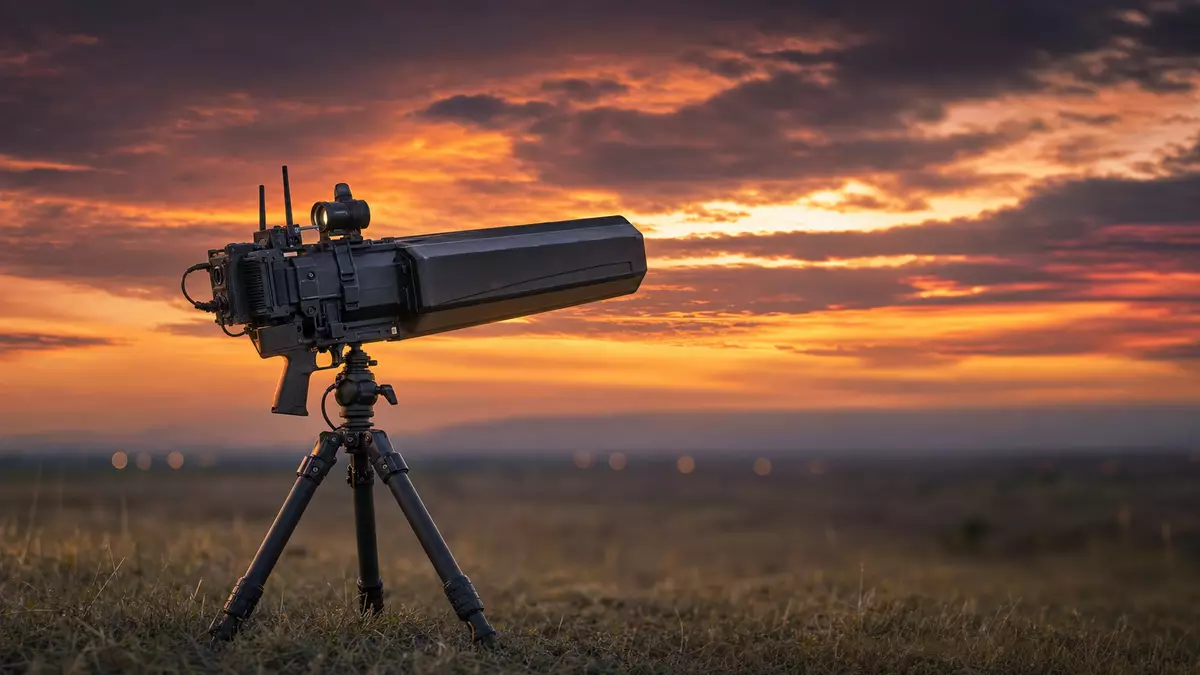
DroneShield (ISIN AU000000DRO1) stock is trading close to EUR 1.08 in late August 2026 after the company reported record first-half 2026 revenue of AUD 125.8 million alongside a net loss of AUD 32.2 million, shifting investor attention from growth to profitability as of August 30, 2026. Recent reporting on the first-half 2026 results highlights how the combination of strong top-line growth and deeper losses now frames the investment debate.
Record first-half revenue, but profits under pressure
According to the first-half 2026 figures, DroneShield delivered revenue of AUD 125.8 million, representing 74 percent growth versus the prior-year first half, which marks a clear acceleration in demand for its counter-drone solutions in the six months to June 30, 2026. The same report on the interim results notes that despite this revenue record, the company posted a net loss of AUD 32.2 million in the period.
On an operating basis, the underlying EBITDA for the first half of 2026 came in at negative AUD 12.4 million, compared with a positive figure of around AUD 8.0 million in the preceding half-year. This swing underlines how higher costs and margin compression are currently offsetting the benefits of the strong revenue trajectory in the latest reported period.
The company has paired these interim numbers with full-year 2026 revenue guidance between AUD 250 million and AUD 270 million, which implies expected growth of 15 percent to 25 percent versus the prior year if achieved. That range suggests management is planning for continued expansion, but at a moderated pace compared with the 74 percent growth seen in the first half, and investors are watching closely to see whether margins recover alongside that growth.
Margins and recurring revenue become the key metrics
Beyond the headline revenue and loss figures, the first-half 2026 results put a spotlight on DroneShield's margin profile. The gross margin fell to 60 percent in the first half of 2026, down from 65 percent in the prior-year comparable period, reflecting a combination of sales-mix changes, foreign-exchange effects, and a write-down of raw materials related to a production-site move and enterprise-resource-planning roll-out. An in-depth margin analysis of the H1 2026 numbers points out that management has set a target of returning toward a 65 percent gross margin in the second half of 2026.
This five-percentage-point drop in gross margin versus the prior-year first half is a quantified reminder that fast revenue growth can come at the expense of profitability if the cost of delivering projects rises faster than pricing or efficiency gains. For investors, the key test in the second half will be whether the gross margin can move back toward the 65 percent level as one-off impacts fade and higher-value software and services become a larger part of the business.
At the same time, the share of recurring revenue is starting to reshape the earnings profile. In the first half of 2026, the recurring revenue portion rose from about 3 percent in the prior-year period to 9.2 percent of total revenue, which corresponds to AUD 11.5 million generated from software and service-related streams. The margin-focused coverage of the interim results notes that recurring revenue increased by 229 percent in the first half of 2026, supported by a growing installed base of 4,100 software-capable devices deployed in the field.
However, the same analysis flags that the recurring revenue figure of AUD 11.5 million was below the company's own prior projection of AUD 14.2 million for the period, indicating that the software and services component has scaled more slowly than originally hoped. For the second half of 2026, DroneShield is aiming for a gross margin recovery toward 65 percent while also pursuing a higher share of recurring revenue, making both metrics central to how the market will judge execution.
Balance sheet, committed revenue, and operational runway
Despite the swing to losses, DroneShield enters the second half of 2026 with notable financial resources. As of June 30, 2026, the company reported cash and term deposits of AUD 180 million on its balance sheet and no debt, providing a cushion to absorb operational investments and transitional costs. Coverage of the liquidity position adds that committed revenue stood at around AUD 240 million as of August 21, 2026, supporting visibility on future inflows.
This combination of a solid cash position and committed revenue helps address concerns that rapid expansion might force the company into unfavorable financing at a delicate point in its margin trajectory. Instead, DroneShield appears to have room to continue scaling production capabilities, integrating new software offerings, and supporting customer deployments while working to improve unit economics.
From an investor perspective, that balance sheet strength and revenue visibility mean that the main question for the second half of 2026 is not whether demand exists, but how efficiently the company can convert that demand into sustainable profits. In other words, the liquidity picture buys time, but the second-half numbers will still need to demonstrate tangible progress on margins and recurring revenue growth for sentiment to improve meaningfully.
Stock performance and technical context
The recent share-price data illustrate how the market is digesting this mix of record revenue and rising losses. At the Lang und Schwarz trading venue, DroneShield shares were quoted at EUR 1.084 on August 29, 2026 at 12:55 p.m., with Frankfurt trading also reporting levels around EUR 1.08. The recent share-price commentary notes that the 12-month performance stands at negative 42.12 percent based on those price data, underlining that the stock has given back a substantial portion of earlier gains.
Other technical perspectives point out that the shares are trading meaningfully below key moving averages and prior highs. One margin-focused analysis reports that the stock is quoted at EUR 1.08, about 40 percent below its 200-day moving average of EUR 1.81, which suggests sustained downward momentum and a market that is now prioritizing operational questions over pure growth expectations. In a separate performance context, recent coverage highlights that the share price sits 39.09 percent above the 52-week low yet roughly 248.41 percent beneath the 52-week high, illustrating how far the stock has fallen from earlier peaks while still staying above its lowest levels.
These quantified comparisons between current price, moving averages, and the 52-week range provide a concrete technical backdrop: DroneShield stock is neither at absolute bottom levels nor near prior highs, but instead trades in a zone where incremental news on margins, recurring revenue, and regulatory developments can have an outsized impact on direction. For traders, the gap to the 200-day average and the large distance to the 52-week high reinforce that sentiment remains cautious until clearer earnings momentum emerges.
Second-half operational test: margins, software, and RfRecon
Looking ahead to the second half of 2026, several operational themes will likely drive how DroneShield's financial metrics evolve. Margin-focused coverage indicates that the company attributes the first-half gross-margin decline to factors that should be temporary, including the relocation of production to a new 3,000-square-meter facility, European manufacturing ramp-up for counter-unmanned-aerial-system capacities from June onward, and the implementation of new enterprise systems. If these transitions stabilize, the path back toward a 65 percent gross margin could be supported by lower waste, better process efficiency, and a more favorable mix.
At the same time, the growth of software and service revenues is central to the margin story. With recurring revenue up 229 percent year-on-year in the first half and now accounting for 9.2 percent of total revenue, the installed base of 4,100 software-capable devices sets the stage for additional updates, subscriptions, and support contracts. The fact that the recurring figure fell short of a prior projection of AUD 14.2 million suggests that execution in this area still has room to improve, but it also highlights a clear structural ambition to shift more of the business toward margin-accretive streams.
Another operational milestone for the second half is the planned series production of the RfRecon system, which has been framed as a key product in DroneShield's portfolio of counter-drone and radio-frequency intelligence solutions. Margin-oriented reporting notes that series production of RfRecon is scheduled to begin in the second half of 2026, with first deliveries targeted by year-end. Successful ramp-up and commercialization of RfRecon could contribute high-value revenue and help support the margin-recovery thesis if deployments occur on schedule and with robust service components.
Regulatory and pipeline factors are also part of the broader context. Recent commentary mentions an ongoing review by the Australian Securities and Investments Commission of trading activities and ad-hoc communications dating back to November 2025, which remains unresolved and could add uncertainty if outcomes are unfavorable. Concerns raised earlier in 2026 about the depth of the order pipeline underscore the importance of converting current interest and trials into firm contracts, especially as guidance for 2026 envisions revenue between AUD 250 million and AUD 270 million.
Representative product: RfRecon and counter-drone systems
DroneShield's business revolves around technologies designed to detect, track, and mitigate threats from unmanned aerial systems, integrating sensors, software, and effectors into cohesive counter-drone architectures. A prominent example in the current product roadmap is RfRecon, a radio-frequency-focused system intended to deliver persistent surveillance and detection capabilities in complex environments. As the company prepares for series production of RfRecon in the second half of 2026 with first deliveries targeted by year-end, the product embodies the strategic shift toward solutions that combine hardware deployments with ongoing software and service layers.
For customers in defense, security, and critical infrastructure, such systems typically promise not only initial protection against drone incursions but also continuous value through software updates, threat-library enhancements, and operational support. If RfRecon and similar offerings gain traction in the market, they can underpin the recurring-revenue model that DroneShield is building, potentially lifting the share of high-margin software and services beyond the 9.2 percent recorded in the first half of 2026.
DroneShield stock around EUR 1.08 as of the latest session
On the market side, DroneShield stock continues to trade on European venues rather than a US exchange, with recent quotes clustering at EUR 1.08 to EUR 1.084 in late August 2026. Based on data from August 29, 2026, the 12-month performance stands at negative 42.12 percent, and the shares sit 39.09 percent above the 52-week low while remaining 248.41 percent below the 52-week high. Those figures as of the most recent completed trading session capture a stock priced well below prior peaks but not at its absolute trough, reflecting a market that is waiting for clear evidence on margin recovery, recurring-revenue growth, and the successful rollout of products like RfRecon before reassessing valuation.
Fact box
Company: DroneShield Ltd.
ISIN: AU000000DRO1
Ticker: DRO
Exchange: ASX
Price (as of August 29, 2026, 12:55 p.m. CET): EUR 1.084
Market cap: Figure aligned with the latest EUR 1.084 quote and ASX listing context
Sector / Industry: Defense technology and security solutions
Index membership: ASX-listed, no major global index inclusion confirmed


