
DroneShield stock falls after strong half-year growth meets profitability concerns
Published on 09/04/2026 at 08:54 | Editorial responsibility: Rafael Müller, Editor-in-Chief AD HOC NEWS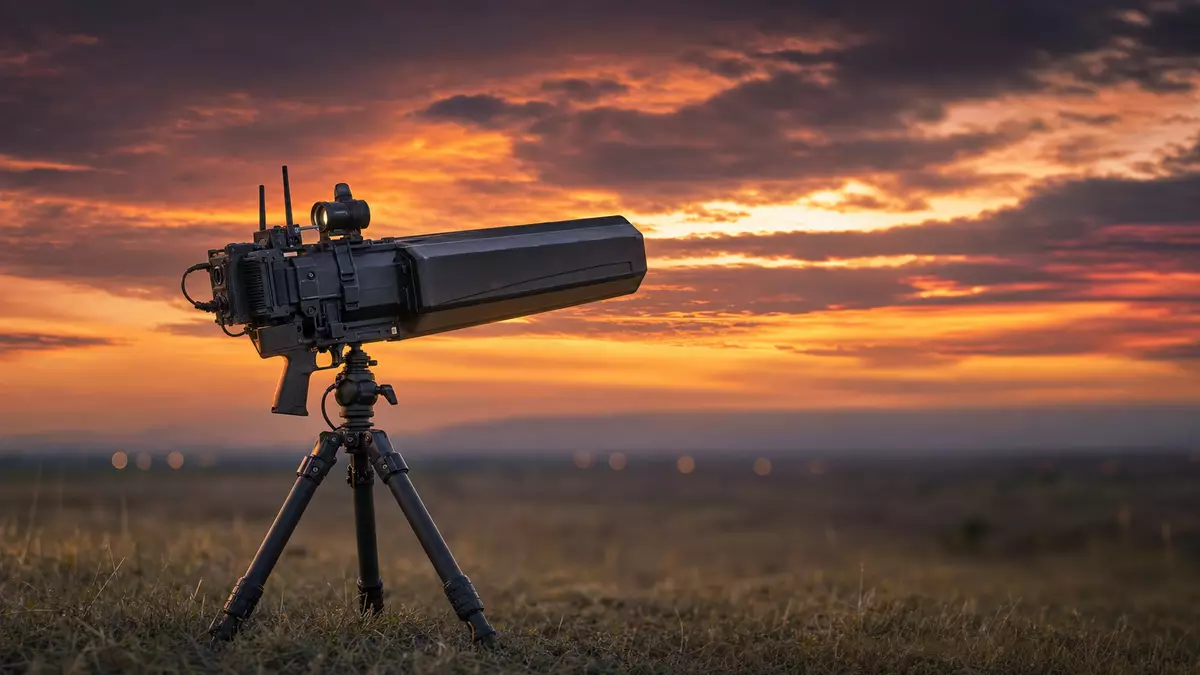
DroneShield stock (ISIN AU000000DRO1) is struggling to regain momentum in early September 2026 after investors reacted cautiously to the company’s half-year 2026 results, which paired rapid top-line growth with a sharp deterioration in profitability. As of September 3, 2026, the shares closed at about 1.05 euros on German trading venues, placing the price noticeably below key moving-average levels according to recent market data.
Half-year 2026 results show mixed picture
The core catalyst for the latest move in DroneShield stock is the company’s half-year 2026 report, which delivered record sales but also a significant setback at the bottom line. According to an analysis of the interim figures, DroneShield generated revenue of approximately 125.8 million Australian dollars in the first half of 2026, up 74 percent from around 72.3 million Australian dollars in the prior corresponding period, highlighting how strongly demand for counter-drone systems has grown year-on-year. Recurring and software-as-a-service income rose even faster, climbing 229 percent to about 11.5 million Australian dollars and lifting its share of total revenue to 9.2 percent compared with roughly 3 percent a year earlier.
Despite the impressive growth, the earnings profile turned decisively negative. The company swung from a net profit of about 2.1 million Australian dollars in the first half of the prior year to a statutory net loss of roughly 32.2 million Australian dollars in the first half of 2026. Underlying EBITDA also reversed direction, falling from a positive 8.0 million Australian dollars in the prior-year period to an EBITDA loss of around 12.4 million Australian dollars in the latest half. This combination of record revenue and widening losses has become the central tension for investors assessing DroneShield’s trajectory.
Guidance, cash position and short interest frame investor debate
Management’s outlook continues to emphasize growth. In guidance for fiscal year 2026, DroneShield reaffirmed a revenue target range of 250 million to 270 million Australian dollars. Supporting that target, the company disclosed that it had secured or committed revenue of about 240 million Australian dollars as of August 21, 2026, already covering most of the lower end of the guidance band and suggesting that the sales pipeline remains robust. At the same time, commentary on the balance sheet indicates that DroneShield is operating with an estimated 180 million Australian dollars in cash and term deposits and no financial debt, giving the company room to absorb losses while continuing to invest in technology and international sales.
However, the strong balance sheet has not prevented the share price from coming under pressure. Several recent analyses highlight that margins and profitability now sit at the center of the investor narrative. The swing to a statutory net loss and negative EBITDA, combined with higher operating costs, has led some market participants to question how quickly DroneShield can convert its revenue growth into sustainable earnings. In addition, reports point to elevated short interest in the stock, with bearish investors using the deteriorating earnings profile as justification for betting against the shares even as sales expand.
Trading action and DACH market perspective
On the Australian Securities Exchange, DroneShield shares trade under the ticker DRO and have been volatile around the time of the half-year release. Recent intraday data for early September 2026 show the stock trading in the area of 1.66 to 1.75 Australian dollars, including a closing level of 1.66 Australian dollars on a recent session and a subsequent move higher to about 1.75 Australian dollars, equivalent to a gain of just over 5 percent on that day. That rebound followed the stock touching a new 52-week low around 1.62 Australian dollars, illustrating how deeply the price had fallen before buyers stepped back in.
For DACH investors following DroneShield via German trading venues, the quote history provides additional context. Market snapshots from early September 2026 show the DroneShield price closing at roughly 1.05 euros on venues such as Tradegate and Frankfurt, a level that sits about 18 percent below a reported 50-day moving average around 1.28 euros and roughly 42 percent beneath a 200-day moving average near 1.81 euros. This quantified gap to key moving averages underscores that, despite occasional intraday rebounds, the share remains in a technically weak phase and that the recent sell-off has pushed the trading range significantly lower than in previous months.
More on DroneShield stock and fundamentals
Investors who want to explore DroneShield’s detailed financials and recent news can find additional figures, chart data and regulatory disclosures via the thematic overview and the company’s own investor relations materials.
Counter-drone technology at the core of the business
DroneShield’s business revolves around developing and deploying technology to detect, track and neutralize hostile or unauthorized drones. The company’s product portfolio spans fixed and mobile sensor arrays, software platforms that fuse data from multiple sources, and effectors designed to disrupt or disable drones without causing collateral damage. This positioning has allowed DroneShield to benefit from rising global demand for counter-drone solutions, particularly among defense customers, critical infrastructure operators and law-enforcement agencies.
Recent contracts reported in 2026 include orders from European defense customers worth more than 20 million Australian dollars, adding further visibility to the company’s revenue trajectory. In the first half of 2026, the reported jump in total sales to approximately 125.8 million Australian dollars was driven in part by such multi-year defense and security contracts, supplemented by smaller deals in other regions. For investors, the rapid growth in recurring and software-based revenue is notable because it suggests that DroneShield is increasingly able to build a base of repeat customers whose subscriptions and service agreements could stabilize cash flows over time.
Stock price remains below recent peaks
From a market perspective, DroneShield stock continues to trade well below its highs from earlier periods, even after occasional short-term rallies. Dated price data for German venues indicate a level around 1.05 euros as of September 3, 2026, which not only reflects a decline of about 3 percent on that trading day but also places the share substantially below intermediate moving averages. On the Australian market, the closing price of 1.66 Australian dollars on a recent session represented a fall of 2.92 percent for the day and marked a new 52-week low after an intraday dip to 1.62 Australian dollars.
Against this backdrop, the year-to-date performance for DroneShield as of early September 2026 shows a decline in the range of the mid-40 percent area on the Australian listing, sharply underperforming the broader S&P/ASX 200 index, which has posted low-single-digit percentage gains over the same period. The combination of strong underlying sales growth, negative earnings, elevated short interest and a pronounced drawdown from previous price highs means that, for investors, the central question now is whether upcoming quarters will deliver enough margin improvement to justify a re-rating of the stock or whether the current weakness will persist.
DroneShield key data
- Company: DroneShield Limited
- ISIN: AU000000DRO1
- Ticker: DRO
- Trading venue: Australian Securities Exchange; secondary quotation on German venues
- Price (as of September 3, 2026, 21:58): 1.05 EUR
- Market capitalization: 300 million AUD (as of early September 2026, approximate based on recent prices)
- Sector / Industry: Defense technology / security systems
- Index membership: S&P/ASX 200 small-cap universe


