
DroneShield stock faces pressure despite record H1 2026 revenue and strong backlog
Published on 09/01/2026 at 08:16 | Editorial responsibility: Rafael Müller, Editor-in-Chief AD HOC NEWS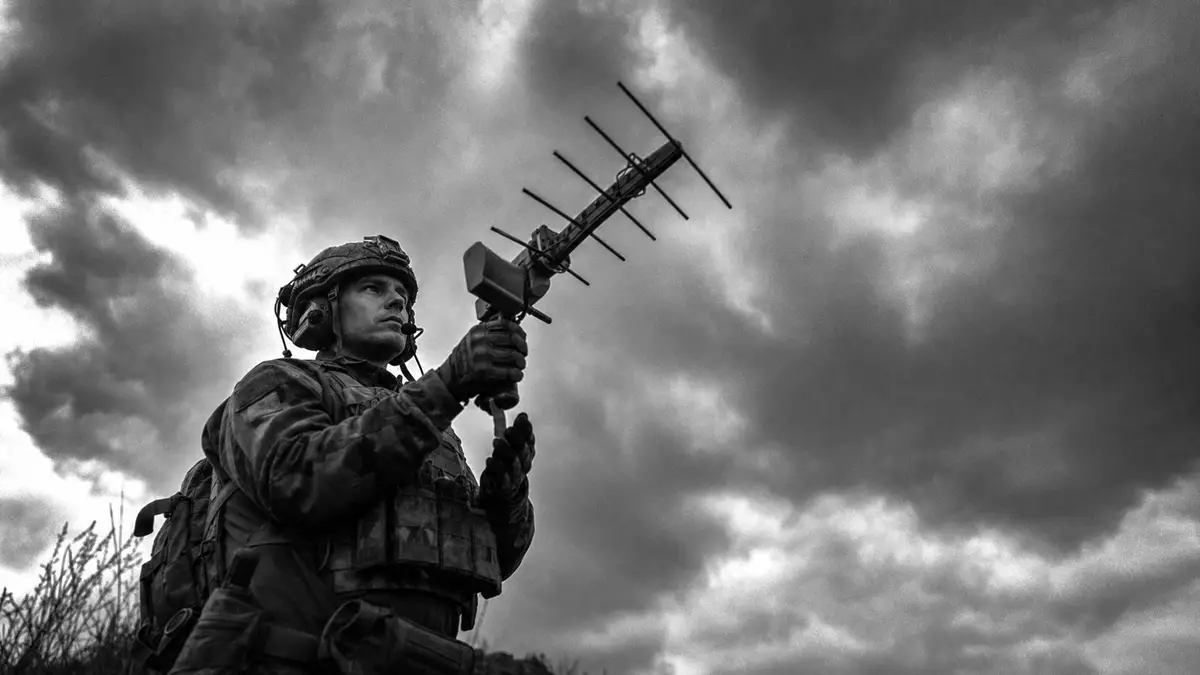
DroneShield Ltd. (ISIN AU000000DRO1) has delivered a striking mix of growth and strain in its latest numbers, with first-half 2026 revenue surging while profitability swung into the red and the share price came under sustained pressure as of late August 2026.
Record first-half revenue but profits reverse
Recent coverage of DroneShield's interim results shows that in the first half of 2026, the company reported record revenue of AUD125.8 million, an increase of 74 percent compared with the same period a year earlier, signaling rapid expansion in demand for its counter-drone and electronic warfare solutions. This earnings review notes that the strong top-line growth reflects a larger pipeline of government and defense customers.
The same interim figures highlight that underlying EBITDA moved from a positive AUD8.0 million in the prior-year half to a loss of AUD12.4 million in the first half of 2026, underlining how higher operating costs and investment for scale are weighing on profitability at this stage of growth. One detailed German-language article points out that DroneShield also recorded a statutory net loss of AUD32.2 million for the half, versus a profit of AUD2.1 million in the same period of the previous year, illustrating a marked reversal in the bottom line.
The shift from a small profit a year earlier to a multi-million-dollar loss in the first half of 2026 means the company is effectively spending ahead of revenue to cement its position in the defense technology market, a strategy that can support long-term growth but raises near-term questions about cash burn and the path back to profitability.
Backlog and committed revenue support guidance
Despite the setback in earnings, DroneShield's order book and committed revenue for 2026 present a more supportive picture for long-term investors. Reporting on the company's backlog indicates that as of August 21, 2026, DroneShield had secured committed revenue of AUD240.4 million for the 2026 financial year, a level that gives significant visibility into future cash flows from signed contracts. An equity-market overview emphasizes that this backlog is spread across multiple regions and platforms.
Comparing this committed revenue figure with earlier internal data shows that DroneShield's contract base has expanded rapidly over the summer of 2026. A recent summary of the company's situation explains that committed revenue for the year stood at AUD206 million at the end of July 2026 and rose to AUD240 million by August 21, 2026, representing a gain of AUD34 million in less than one month as new deals were signed and existing frameworks deepened. The same analysis adds that recurring revenue reached AUD11.5 million after a 229 percent increase year-on-year, indicating growing subscription or service elements within the portfolio.
The backlog figures underpin DroneShield's full-year 2026 guidance. Commentators on the company's earnings state that management has maintained a revenue guidance range of AUD250 million to AUD270 million for the 2026 financial year, suggesting confidence that the existing backlog and anticipated orders will largely cover the target. The recent earnings commentary also points out that DroneShield held cash of AUD180 million at the end of the half and had no debt on its balance sheet, an important buffer that allows the company to absorb current losses while continuing to invest in research, production, and international expansion.
For investors, the combination of a rapidly growing backlog, solid cash reserves, and confirmed guidance means the long-term revenue picture looks relatively robust, even as the near-term operating results are under pressure from higher expenses and the cost of scaling up.
Short interest and technical pressure on the stock
On the equity side, DroneShield stock has endured a period of pronounced volatility and downward pressure as traders and short sellers respond to the mixed fundamental picture. A recent technical and sentiment-oriented article explains that the shares were trading at EUR1.11 in late August 2026 on a European venue, a level that stood 39 percent below the 200-day moving average, highlighting how the stock had fallen significantly from earlier in the year and was trading in a weak technical setup. This chart-focused piece observes that this discount to the long-term average reflects growing divergence among analysts and elevated short interest.
Market data for late August 2026 from an Australian trading overview shows DroneShield shares changing hands around AUD1.71 on the home market, with a single-day decline of 2.29 percent at the close and indications that both profit-takers and short sellers are active in the name. In the same overview, another snapshot from an investment portal lists a last traded price of AUD1.775, up 1.43 percent over that session, while separate data notes a level of AUD1.760 with a gain of 0.57 percent and trading volume of 6.48 million shares, confirming that the stock remains highly liquid amid the opposing forces of buyers and sellers. The same market snapshot indicates that short interest has reached 14.9 percent of the free float, a relatively high level that can amplify price swings in either direction.
This blend of heavy shorting and strong daily liquidity means that the share price reacts quickly to new information, whether it concerns contract wins, regulatory developments, or changes in guidance, and that technical traders are likely to watch levels around AUD1.70 to AUD1.80 as key zones for either support or further breakdown.
Commentary on the broader reporting season in Australia also notes that DroneShield shares are down 45 percent year-to-date in 2026, underscoring the magnitude of the drawdown since the start of the year and contextualizing the current price below the 200-day average. This broader market piece frames DroneShield within a group of companies whose valuations have compressed as investors reassess high-growth, technology-focused names.
Risk factors: profitability and governance concerns
While the operational metrics and backlog provide a constructive backdrop, recent commentary aimed at retail investors has raised questions over profitability and governance at DroneShield, contributing to caution in the market. A new article focused on short-selling in Australian shares explains that some traders and investors are targeting companies where strong revenue growth is not yet matched by reliable profits, and where governance issues could still emerge as the business scales. In the case of DroneShield, this commentary points directly to the swing from profit to loss in the latest half-year numbers and notes that governance concerns, including board oversight and disclosure practices, are among the reasons for a more careful approach to the stock.
This focus on risk does not negate the operational achievements but reinforces that the investment case now rests on whether management can translate the sizeable backlog and cash position into sustainable profitability while maintaining robust governance standards that satisfy regulators and institutional investors. For DroneShield stock, this means the near-term path may continue to be volatile as market participants weigh the upside from defense contracts against these perceived risks.
Counter-drone solutions as the core product
DroneShield's business centers on hardware and software designed to detect, track, and neutralize hostile or unauthorized drones in complex environments. The company offers a portfolio that typically includes fixed-site and mobile sensor arrays, radio frequency analytics, and electronic countermeasures capable of disrupting or disabling drones that pose a threat to infrastructure, events, or military assets. These systems are often deployed around airports, prisons, critical industrial sites, and battlefield perimeters, where the ability to identify and stop small unmanned aircraft has become essential.
In recent years, the growing use of commercial and improvised drones in conflict zones, cross-border smuggling, and potential terrorist activity has created a broad market for such counter-drone solutions. Within this context, DroneShield's platforms form part of integrated defense architectures that work alongside radar, optical surveillance, and other air-defense layers. The company's recurring revenue base of AUD11.5 million in the first half of 2026 reflects not only the sale of hardware but also ongoing software licenses, updates, and support agreements that maintain effectiveness against evolving threats.
As large state-level defense initiatives such as multi-layered air-defense shields are announced in regions like Europe and the Mediterranean, the overarching demand narrative for advanced counter-drone and air-defense technology strengthens, even if individual companies like DroneShield must compete for specific contract opportunities within that broader trend.
Shares trade below long-term averages
For now, DroneShield stock trades at levels that are markedly below its longer-term averages, reflecting both investor skepticism and the weight of elevated short interest. Late in August 2026, a technical snapshot placed the shares at EUR1.11 on a European trading venue, a price point 39 percent under the 200-day moving average, indicating that the stock has not yet staged a sustained recovery from its year-to-date decline. At similar times, Australian market data showed DroneShield around AUD1.71 to AUD1.775, with intraday moves between gains of 0.57 percent and 1.43 percent, demonstrating that the stock can move quickly even within a relatively narrow nominal price band.
As of the most recent completed trading sessions in late August 2026, these price levels and the associated short-interest figures form the backdrop against which new information is interpreted. Investors who follow the company closely will likely focus on how the next set of quarterly or annual results align with the guidance range of AUD250 million to AUD270 million in revenue for 2026, and whether profitability metrics start to improve from the first-half losses toward more sustainable margins.
Read more
Key counter-drone platform in focus
A representative example of DroneShield's offering is its vehicle-mounted counter-drone platform, which combines detection sensors and electronic countermeasures on a mobile chassis to protect convoys, temporary forward operating bases, and critical transport routes. Recent contract disclosures highlighted in market coverage mention European defense orders for such vehicle-mounted counter-drone systems valued at AUD23.2 million, which are expected to feed into the 2026 committed revenue figure and broaden the deployment of these platforms across several countries. The same backlog overview stresses that these systems are part of a larger suite of hardware and software designed to integrate with existing military command-and-control networks.
These vehicle-based platforms typically feature modular sensor packages that can be tailored to a customer's threat environment, as well as scalable software that allows operators to adjust detection and mitigation parameters as drone technology evolves. For a defense customer, the appeal lies in being able to deploy counter-drone protection wherever needed rather than relying solely on fixed installations, an advantage that has become more important as small drones are used in fast-changing and asymmetric ways.
Stock position heading into the next results cycle
Heading into the next results cycle, DroneShield stock remains closely tied to the narrative of whether high growth in revenue and backlog can converge with improving profitability and strong governance. The first-half 2026 numbers show revenue up 74 percent to AUD125.8 million and committed revenue for the full year at AUD240.4 million as of August 21, 2026, yet they also reveal a statutory net loss of AUD32.2 million and a negative underlying EBITDA of AUD12.4 million. At the same time, the shares trade around AUD1.71 to AUD1.775 in late August 2026 and sit well below the 200-day moving average, with short interest near 14.9 percent and year-to-date performance down 45 percent.
For investors, these figures collectively suggest that the company's operational momentum is real but that the market is demanding clearer evidence of profitability and stability before repricing the stock higher. As new contracts such as the AUD23.2 million in European vehicle-mounted counter-drone orders contribute to the backlog and as management works to convert guidance into delivered revenue, DroneShield's share price is likely to remain sensitive to each new data point on margins, cash usage, and governance outcomes.
Fact box
Company: DroneShield Ltd.
ISIN: AU000000DRO1
Ticker: DRO
Exchange: ASX
Sector / Industry: Defense technology / counter-drone systems
Index membership: ASX small-cap universe
Market cap: Not disclosed in recent summary data


