
Diamondback Energy stock hits new highs as Q2 2026 beat and upbeat targets support the rally
Published on 08/20/2026 at 21:24 | Editorial responsibility: Rafael Müller, Editor-in-Chief AD HOC NEWS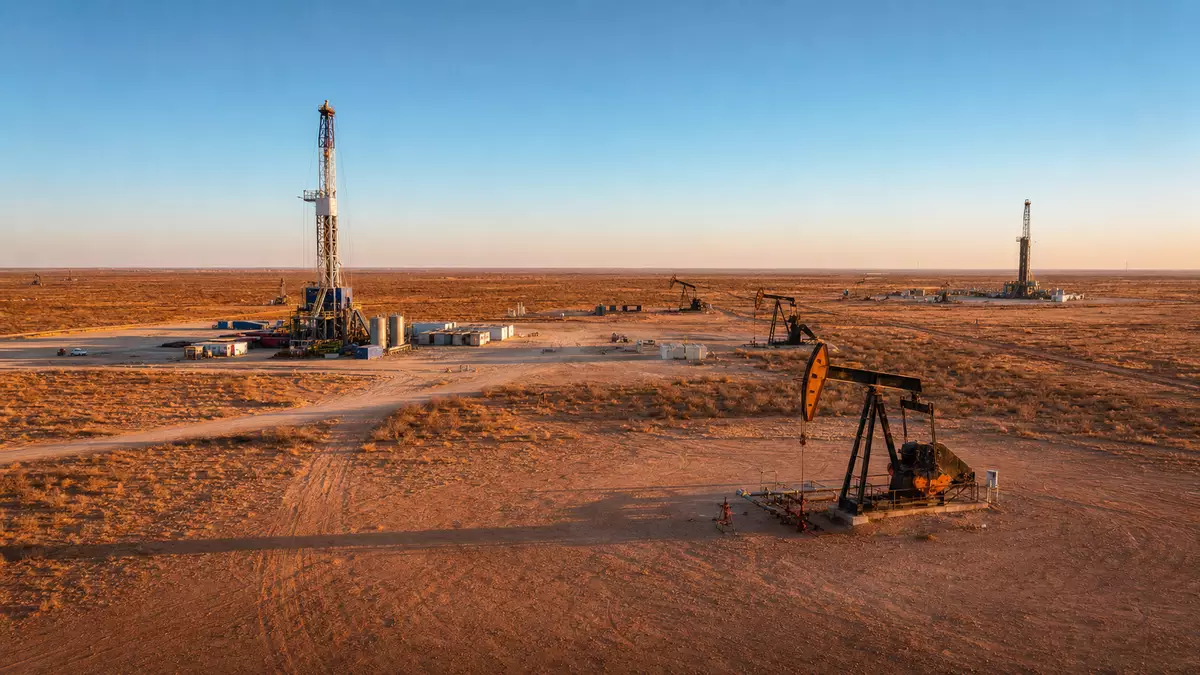
Diamondback Energy Inc. (ISIN US25278X1090) stock is trading at elevated levels in late August 2026 after a Q2 2026 earnings beat and a series of positive analyst actions pushed the shares to a new all-time high on August 20, 2026.
Per a recent overview of top oil and gas stocks, Diamondback Energy reported second-quarter 2026 revenue and earnings that exceeded analyst expectations, with the upside driven by stronger-than-expected production volumes in its core Permian Basin operations. This Investing.com note on Goldman top oil & gas picks highlights that the company’s Q2 2026 results came in above consensus, setting the stage for the current rally.
Q2 2026 beat underpins the valuation
The Q2 2026 reporting period is central to understanding the current strength in Diamondback Energy stock because it provides the latest detailed snapshot of the company’s fundamentals and operational performance.
According to the Goldman-focused analysis summarized by Investing.com, Diamondback Energy delivered second-quarter 2026 revenue and earnings that both surpassed analyst expectations, reflecting stronger-than-anticipated production in the period. The same Investing.com coverage notes that production outperformance was a key driver of the beat, indicating that the company’s capital allocation and drilling program are currently generating efficient growth.
The analysis also points out that Diamondback Energy’s capital efficiency compares favorably with many peers in the oil and gas sector, an important consideration for investors evaluating how well incremental spending translates into incremental barrels of oil equivalent. In the Investing.com assessment, the company stands out as one of the higher capital-efficiency names in Goldman’s preferred oil and gas list, reinforcing the idea that the current valuation is supported by robust operating metrics.
While the article does not enumerate every line item from the Q2 2026 income statement, the key message is that both revenue and earnings exceeded the consensus figures compiled ahead of the release, meaning the company not only grew its business but did so more strongly than the market had forecast for that quarter. This consensus-beat characterization is crucial because it often prompts analysts to revisit their assumptions on future cash flows and, in turn, their price targets.
Analyst targets signal upside from current levels
Alongside the Q2 2026 beat, Diamondback Energy is benefiting from a supportive analyst backdrop that points to further potential share-price gains from current trading levels.
A same-day rating and target summary shows that the stock carries a consensus rating in the “Moderate Buy” area, with an average 12-month price target in the low-to-mid-$220 range. One MarketBeat filing update reports an average target price of $222.21 for Diamondback Energy as of August 20, 2026, while a separate consensus overview cites an average price target of $221.75 with a range from $173 to $263, implying upside of around 6 percent from recent prices referenced in that note. The MarketBeat article on Diamondback hitting a milestone underscores that the average 12-month target of $221.75 sits several dollars above the share price used in its analysis.
In addition, an MT Newswires item relayed via a market data platform indicates that one large bank raised its price target on Diamondback Energy from $212 to $220 while keeping a positive rating on the shares, reinforcing the notion that the fundamental story supports incremental upside. The MarketScreener report notes that this target hike to $220 aligns with an overall average target of $231.89 cited in the same data snapshot, which is roughly 11 percent above the last close price used in that context.
The analyst community is not uniformly aggressive, however. The Investing.com analysis mentions that Morgan Stanley moved Diamondback Energy to an Equalweight rating after the Q2 2026 results, indicating a more neutral stance on future performance, even as other firms lifted or reiterated positive price targets. The same Investing.com note describes this rating change in the context of broader sector volatility, suggesting that while Diamondback’s fundamentals are strong, macro factors such as oil price trajectories and regulatory risks still influence the risk-reward calculus.
For investors, the key quantitative takeaway is that the current average target cluster in the low-$220s sits above the latest observed share prices. With one dataset citing $222.21 and another $221.75, the consensus corridor is reasonably tight, pointing to a view that Diamondback Energy can generate mid-single-digit percentage upside from the levels referenced in those analyses if it continues to execute on its production and capital-efficiency plans.
Stock hits new all-time and 52-week highs
The favorable fundamental and analyst backdrop has coincided with a notable technical milestone: Diamondback Energy’s shares have pushed through prior resistance to set fresh record levels in August 2026.
A real-time market update on August 20, 2026 notes that Diamondback Energy stock reached an all-time high of $214.71, with the shares recently quoted at $215.07 and the company’s market capitalization standing at $59.89 billion. The Investing.com report emphasizes that this $214.71 print marked a new peak for the stock, a figure that surpasses prior 52-week highs referenced in other trading alerts.
On the same day, a separate trading note highlights that Diamondback Energy shares traded as high as $216.90, with the last trade recorded at $215.5680 on volume of 116,689 shares, compared to a previous close of $208.55. This MarketBeat alert frames the move as a new 52-week high and shows that the intraday peak of $216.90 lies over $8 above the prior close of $208.55, representing a gain of more than 4 percent from that reference level.
Another market-data snapshot from a trading portal lists the last close at $208.55, with the stock indicated as down 0.7 percent in that particular update, while year-to-date performance was shown at +38.73 percent and the five-day change at +3.84 percent. The MarketScreener overview situates this $208.55 close in the context of the broader run, noting that the share price is up nearly 39 percent since the beginning of 2026 and has seen a mid-single-digit percentage advance over the most recent five-day span.
For investors watching technical levels, the juxtaposition of these figures is instructive: with an all-time high of $214.71 documented in one source and an intraday peak of $216.90 highlighted in another, Diamondback Energy stock is effectively trading at or just below record territory as of August 20, 2026. The current average analyst target range in the low-$220s therefore sits only a few dollars above the latest highs, suggesting the stock is closing part of the gap to consensus expectations but has not yet fully matched them.
Dividend stream adds to total return
Beyond price appreciation, Diamondback Energy offers shareholders a meaningful dividend component that contributes to total return and can provide a cushion in volatile commodity markets.
Recent filings and news summaries repeatedly note that the company has declared a quarterly dividend of $1.10 per share for the second quarter of 2026, payable on August 20, 2026 to shareholders of record as of August 13, 2026, with an ex-dividend date also set for August 13, 2026. One MarketBeat institutional-investor filing presents this dividend in detail, explaining that the $1.10 quarterly payout translates into an annualized dividend of $4.40 per share and a yield of 2.1 percent based on the share price referenced in that note.
Similar language appears in other institutional-position updates, which describe the same $1.10 quarterly dividend, the August 20, 2026 payment date, and the associated 2.1 percent yield. Another MarketBeat alert reinforces that this dividend policy is a current feature of Diamondback Energy’s shareholder return framework, underscoring that the company is distributing cash in addition to reinvesting in its asset base.
From a quantitative perspective, the existence of a $4.40 annualized dividend and a yield of 2.1 percent is notable because it supplements the significant year-to-date share-price gain cited in market-data snapshots. Considering that the stock has gained nearly 39 percent since the start of 2026, the dividend yield adds a modest but tangible income layer on top of the capital appreciation that investors have experienced so far this year.
Institutional flows and insider activity
Institutional investors have also been active in Diamondback Energy in 2026, building positions that reflect confidence in the company’s operational and financial trajectory.
Multiple filings dated August 20, 2026 describe new or expanded holdings by institutions allocating capital to Diamondback Energy. One filing mentions a position valued at $2.24 million, opened by a US bank, while another notes a separate investor committing $1.86 million, both in the context of diversified portfolios that include the company as a core energy holding. The First National Bank of Omaha filing lists the $2.24 million exposure, and the E Fund Management Co. Ltd. update cites the $1.86 million stake.
These filings often pair the position details with reiterations of the consensus rating and target-price corridor, reinforcing that institutional flows are aligned with a broadly constructive analyst narrative.
At the same time, some of the same sources reference insider selling activity over the preceding months, noting that aggregate insider sales exceeded $100 million for a group of companies that includes Diamondback Energy, and that insiders at the company themselves sold tens of millions of dollars of stock over the prior 90 days. The Aurora Investment Counsel holdings update remarks that insiders at Diamondback Energy sold approximately $24.7 million of stock over the last 90 days, while still emphasizing that the consensus rating remains in the Moderate Buy zone.
For investors, this combination of institutional buying and insider selling requires nuanced interpretation. Institutional inflows suggest that professional portfolio managers view Diamondback Energy as an attractive way to gain exposure to the Permian Basin and to the broader oil-price cycle, especially given the company’s Q2 2026 beat and capital efficiency. Insider selling, meanwhile, may reflect diversification decisions by management and directors after a strong share-price run rather than a fundamental deterioration, but it nonetheless warrants monitoring as part of a holistic governance assessment.
Permian-focused operations and flagship assets
Diamondback Energy’s fundamental story is anchored in its position as a leading independent oil and gas producer in the Permian Basin of West Texas, with a portfolio of acreage and drilling locations that support multi-year growth in production and cash flow.
The company’s operations focus predominantly on unconventional oil and natural gas plays in the Midland and Delaware sub-basins, where it employs horizontal drilling and hydraulic fracturing to unlock hydrocarbons from tight rock formations. Over the past several years, Diamondback Energy has assembled a sizeable footprint of high-quality acreage, allowing it to deploy capital in locations with attractive returns and relatively low break-even price thresholds.
While the specific Q2 2026 production figures are not enumerated in the recent analyst notes, the characterization of stronger-than-expected production as the driver of the earnings beat suggests that the company continues to ramp volumes from these Permian assets efficiently. Higher realized production levels translate into greater revenue and, when combined with disciplined cost control, into higher margins and free cash flow, which in turn finance dividends, debt reduction, and potential share repurchases.
In addition to its core drilling program, Diamondback Energy has historically pursued bolt-on acquisitions and acreage trades to optimize its portfolio, consolidating positions in high-return areas and divesting non-core assets. This strategy helps sustain a pipeline of drilling opportunities while limiting exposure to marginal plays that may not meet its internal return thresholds.
Flagship product: Permian crude and associated gas
At the product level, Diamondback Energy’s most representative output is crude oil produced from its Permian wells, accompanied by natural gas and natural gas liquids (NGLs) that form part of its hydrocarbon mix.
Permian crude oil serves refiners and midstream companies that transport and process the barrels into refined products such as gasoline, diesel, and jet fuel. Associated gas and NGLs, meanwhile, feed into power generation and petrochemical chains. The Q2 2026 production outperformance highlighted in recent analysis implies that Diamondback Energy’s portfolio of wells is currently delivering higher volumes of these products than analysts had modeled, which contributes to the reported revenue and earnings beat.
For end investors, this production profile matters because crude oil tends to carry higher margins than dry gas, and because Permian crude benefits from relatively favorable infrastructure and marketing arrangements compared with some other US basins. As Diamondback Energy continues to optimize its drilling program and manage its mix of oil, gas, and NGLs, the company’s ability to deliver consistent volumes of Permian crude and associated products will remain central to its valuation.
Stock level and market context
As of the latest available data for August 20, 2026, Diamondback Energy stock is trading on the Nasdaq under the ticker FANG, with recent quotes in the mid-$210s and a documented all-time high of $214.71 for the session. The Investing.com intraday update places the most recent trading price at $215.07 and the company’s market capitalization at $59.89 billion, while other trading alerts show intraday peaks of $216.90 and last trades around $215.5680 on volumes above 100,000 shares.
Dated price snapshots from earlier in the week show Diamondback Energy closing at $206.29 on August 17, 2026, suggesting that the stock has added roughly $9 to $10 per share between that close and the latest peaks, a move in the mid-single-digit percentage range. The Barrons research and ratings page lists the August 17, 2026 close at $206.29, and when compared with the $214.71 all-time high cited by Investing.com, this implies a gain of about 4 percent over that interval.
Year-to-date performance reinforced by MarketScreener data shows Diamondback Energy up 38.73 percent from January 1, 2026 levels, with a five-day change of 3.84 percent and a recent daily move of -0.70 percent in one snapshot, reflecting the normal day-to-day volatility around an upward trend. The MarketScreener data extract ties the $208.55 close price used in that context to these performance metrics, showing that even minor pullbacks are occurring within a much larger upward trajectory.
For investors considering the stock at these levels, the key quantitative markers are therefore: an all-time high of $214.71, intraday peaks pushing toward $216.90, a recent trading range in the mid-$210s, an approximate $60 billion market capitalization, a year-to-date gain approaching 39 percent, and an annualized dividend yield of 2.1 percent derived from a $4.40 per-share payout. These figures collectively frame the current valuation environment for Diamondback Energy as of August 20, 2026.
Go deeper
Investors who want to explore the latest Q2 2026 figures, analyst target ranges, and institutional flows in more detail can consult the underlying earnings analyses, consensus summaries, and regulatory filings referenced by the market-data and news portals cited above.
Investor Relations
More on Diamondback Energy stock
Permian growth supports long-term thesis
Looking beyond the immediate Q2 2026 beat, Diamondback Energy’s long-term thesis continues to rest on its ability to grow production and free cash flow from its Permian portfolio while maintaining disciplined capital spending and returning cash to shareholders.
The company’s presence in high-quality acreage positions helps lower its break-even thresholds, which in turn allows it to sustain activity even in periods of moderate commodity prices. The recent earnings outperformance driven by stronger-than-expected production suggests that Diamondback Energy is currently executing well on these fronts, bringing wells online efficiently and managing decline curves effectively.
Analyst target ranges clustering in the low-$220s and extending up to $263 in some cases reflect a view that the company can continue to compound value over the next 12 months if oil prices remain supportive and if management maintains its focus on capital discipline and shareholder returns.
Shares trade just below consensus targets
As of August 20, 2026, Diamondback Energy shares are trading only modestly below the average 12-month price targets cited by recent analyses, which posit values in the low-$220s based on current fundamentals and expected cash flows.
With the stock recently quoted at around $215, the consensus corridor of $221.75 to $222.21 sits around $7 higher than the latest trading price, equating to mid-single-digit percentage upside. Meanwhile, one dataset citing an average target of $231.89 indicates a gap of around $16 compared with a $215 reference level, or an upside of roughly 7 to 8 percent from that vantage point.
These quantified comparisons between current price and consensus targets are important because they highlight that the market has already priced in much of Diamondback Energy’s recent operational success, yet analysts still see room for further gains if the company delivers on its forward plans.
Fact box
Company: Diamondback Energy Inc.
ISIN: US25278X1090
Ticker: FANG
Exchange: Nasdaq
Price (as of August 20, 2026, intraday): $215.07 USD
Market cap: $59.89 billion (as of August 20, 2026)
Sector / Industry: Energy / Oil & Gas Exploration & Production
Index membership: S&P 500
Next earnings date:


