
Deutsche Börse stock adjusts trading model as DAX retreats from record
Published on 09/01/2026 at 06:46 | Editorial responsibility: Rafael Müller, Editor-in-Chief AD HOC NEWS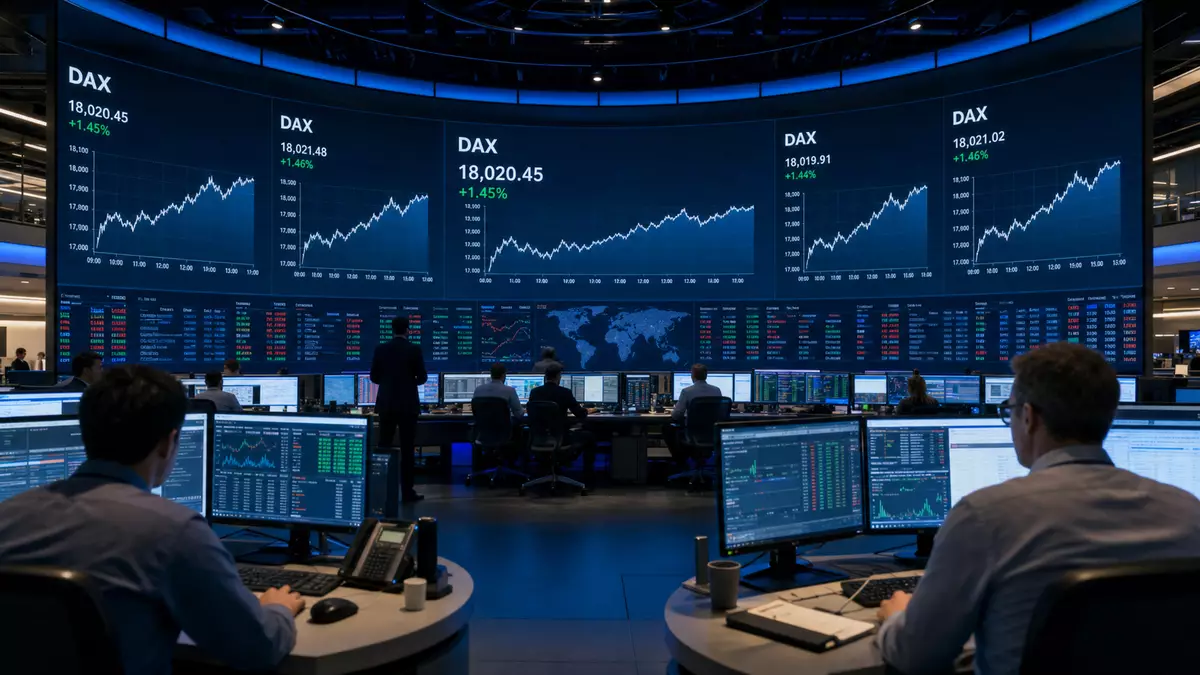
Deutsche Börse AG (DE0005810055) stock is trading in a market that has just pulled back from record DAX levels, while the group gets ready to adjust its Xetra auction pricing model from September 7, 2026, a move aimed at fine-tuning price formation in low-turnover situations as outlined in a recent circular dated August 31, 2026. The backdrop for this operational change is a German blue-chip index that stood at 26,468 points on the morning of August 31, 2026, below the all-time high of 26,659 points set the prior trading session and reflecting a modest consolidation phase after strong gains earlier in the year.
Xetra auction model change in September 2026
The most immediate operational catalyst for Deutsche Börse is the announced amendment to the Auction price without turnover model for equities on Xetra, effective from September 7, 2026. According to a circular published by Deutsche Börse and the Frankfurt Stock Exchange Management Board on August 31, 2026, the APWT model for equities will be modified from that date to refine how auction prices are set when there is no turnover in the auction book. This adjustment underscores the group’s ongoing efforts to improve market microstructure and maintain orderly trading in less liquid instruments, which is central to its role as operator of Xetra and related cash markets. Investors focusing on execution quality and price discovery in thinly traded stocks may see this as a noteworthy step, because auction pricing can directly affect end-of-day valuations, index calculations, and passive fund tracking.
While the circular does not present revenue or profit figures, the timing of the APWT change shows that Deutsche Börse continues to update its trading framework in response to evolving market conditions early in the second half of 2026. For market participants, a dated implementation date on September 7, 2026 provides a clear horizon for system adjustments and risk checks, and it ties directly into the group’s wider infrastructure strategy across its Xetra and Frankfurt trading venues. The ability to maintain robust auction mechanisms even when turnover is absent can be particularly relevant in periods of heightened volatility, when accurate closing prices and indicative levels matter for portfolio valuation.
DAX pulls back from record level
The broader equity context around Deutsche Börse also carries concrete numbers that help frame the stock’s environment. Market coverage indicates that the DAX index was at 26,468 points on the morning of August 31, 2026, down from the record 26,659 points reached the preceding trading day and below the 26,559-point close that day. This represents a setback of 191 points from the record to the subsequent morning level, a decline that illustrates how quickly sentiment can cool after new highs. Another overview of global markets for September 1, 2026 points to the German index at 26,258 points, a further decrease of 1.17 percent from the prior level, while still showing a year-to-date gain of 7.22 percent. This combination of short-term weakness and positive performance since the start of 2026 suggests that Deutsche Börse’s home market remains structurally supportive even when daily moves turn negative.
The interplay of these figures is important for understanding Deutsche Börse stock in context. A drop from 26,659 to 26,258 points implies a decline of 401 points from the record level, but the 7.22 percent year-to-date gain means the index and its constituents have still delivered meaningful appreciation over the longer horizon within 2026. For Deutsche Börse, which earns a significant portion of its income from trading, clearing, and listing activity linked to this index and related markets, an index that is down 1.17 percent on the day yet remains more than 7 percent higher for the year indicates steady underlying turnover and investor engagement. It also means that the company’s revenue exposure to trading volumes is supported by a generally favorable price environment, even as inflation concerns and energy prices weigh on sentiment.
Macro backdrop with inflation and oil prices
Beyond pure index levels, the macroeconomic commentary associated with Deutsche Börse’s market data highlights inflation and commodity dynamics as key themes for early September 2026. A news overview focused on Deutsche Börse mentions that euro area consumer prices for August are expected to rise to 3.3 percent, up from previous levels, with the principal driver identified as renewed strength in energy prices. In parallel, it indicates that core inflation is projected to remain unchanged at 2.5 percent. These figures matter for Deutsche Börse stock because they influence expectations for interest rates, sector rotation, and trading patterns across the exchange’s ecosystem.
The anticipated 3.3 percent inflation rate in the eurozone, combined with a 2.5 percent core inflation rate, reinforces the view that price pressures have not subsided fully, even if they are stabilizing in certain underlying components. When higher energy prices are highlighted as the main cause, it signals potential volatility in sectors like utilities, industrials, and consumer companies that are sensitive to fuel and power costs. For Deutsche Börse, such macro developments can translate into increased hedging activity in derivatives markets, more portfolio rebalancing on Xetra, and ongoing interest in index products tracking inflation expectations. The same market overview also notes that second-quarter GDP growth in the euro area has been revised up from 0.2 percent to 0.3 percent, suggesting a slightly stronger economy than initially reported and helping to support corporate earnings and equity valuations, even as price pressures persist.
This combination of modestly higher inflation, stable core price growth at 2.5 percent, and a Q2 GDP revision from 0.2 percent to 0.3 percent creates a nuanced macro backdrop for Deutsche Börse stock. On the one hand, energy-driven inflation can dampen sentiment and push the DAX away from peak levels, as indicated by the recent decline from 26,659 to 26,258 points. On the other hand, an upward revision in growth and solid year-to-date index gains of 7.22 percent show that the economic foundation in the eurozone remains resilient enough to sustain trading activity across cash and derivatives markets. For investors, these metrics underscore that Deutsche Börse operates in an environment where short-term price moves can be counterbalanced by longer-term structural trends in corporate profits and monetary policy expectations.
Clearstream as a core Deutsche Börse business
Within Deutsche Börse’s business model, one of the most representative products and services is the post-trade infrastructure provided through its Clearstream segment. Clearstream offers custody, settlement, and collateral management solutions for bonds, equities, and investment funds, and it is closely integrated with Deutsche Börse’s trading venues and index offerings. By linking execution on Xetra and other markets to safe and efficient post-trade processes, Clearstream helps institutional investors and banks manage their holdings, optimize collateral for regulatory purposes, and streamline cross-border transactions. In the context of the APWT model change, Clearstream’s role remains to ensure that the securities settled following auctions and continuous trading sessions are recorded and managed accurately.
For clients, Clearstream’s combination of international central securities depository services and domestic market infrastructure in Germany allows them to handle large volumes of transactions even when market volatility increases, as suggested by the recent shifts in DAX levels and the inflation outlook. Its services are designed to work across multiple currencies and jurisdictions, which can be particularly relevant when energy prices and macro data prompt cross-asset reallocations and increased collateral needs. Taken together with Deutsche Börse’s trading platforms and index business, Clearstream illustrates how the group’s core product ecosystem supports a full trade lifecycle for professional investors, from execution to settlement and custody.
Stock anchored in a volatile yet constructive market
Against this backdrop, Deutsche Börse stock trades on Xetra in a market that has recently seen the DAX fall back from its record high of 26,659 points to levels around 26,258 points, a decline of 1.17 percent that still leaves the index 7.22 percent higher since the start of 2026. That quantitative comparison underscores a volatile but constructive environment for the company’s trading and settlement businesses, where short-term drawdowns coexist with longer-term gains. The announced APWT model adjustment from September 7, 2026 is one further sign that Deutsche Börse is calibrating its microstructure to sustain orderly price formation, even when auctions take place without turnover. For investors, the key takeaway is that Deutsche Börse’s infrastructure and services remain tightly linked to macro signals like inflation at 3.3 percent in August and core inflation at 2.5 percent, as well as to index milestones such as the recent DAX record.
Read more
Further details on the APWT auction model adjustment from September 7, 2026 can be found in the Deutsche Börse circular linked from the cash market news section, while broader commentary on DAX index levels and euro area inflation expectations is available through recent Deutsche Börse-related market overviews. Together these sources provide additional granularity on how the trading model change and macro backdrop intersect with Deutsche Börse stock.
Investor Relations
Deutsche Börse AG maintains an investor relations portal where shareholders and analysts can access financial reports, presentations, and corporate governance information, including data on trading volumes, segment performance, and upcoming events relevant for evaluating Deutsche Börse stock.
Fact box
Company: Deutsche Börse AG
ISIN: DE0005810055
Ticker: DB1
Exchange: Xetra
Sector / Industry: Financials / Exchanges and data services
Index membership: DAX


