Cummins stock trades above $570 as investors digest AI data center opportunities
Published on 08/28/2026 at 13:37 | Editorial responsibility: Rafael Müller, Editor-in-Chief AD HOC NEWS
Cummins Inc. (US2310211063) stock is quoted in the mid $570s on August 28, 2026, giving the engine and power systems group significant equity value support as institutional investors add to positions and analysts see further upside. Recent commentary highlights how new energy storage and power solutions for AI data centers are becoming a larger part of the investment story for the New York Stock Exchange listed company. For shareholders, the key question is how this mix of core diesel engines and newer battery and grid offerings will shape earnings over the coming quarters.
Institutional buyers and consensus upside
Per a recent filing summary, Cummins stock opened at $574.06 on August 28, 2026, underscoring the current trading range in the high $500s. The same overview notes that the consensus target price stands at $745.64, implying close to $170 per share of potential upside from the $574.06 opening level on that date. According to the report, the shares have risen from $510.66 at the start of the year to $578.41, a gain of 13.3 percent year to date.
Market data cited in the institutional-buying update also characterizes the rating profile for Cummins stock as a moderate buy with a blended analyst score. The consensus price target of $745.64 signals that many forecasters expect further gains if the company delivers on growth in both its traditional engine business and newer electrified and battery-backed offerings. For long term holders, the gap between the present trading band around $574 and the noted target range provides a numerical reference point for evaluating risk and reward.
Latest investment case and AI power exposure
A recent analysis of the companys prospects emphasizes that Cummins investment case rests on balancing a cyclical diesel engine core with growing earnings from power systems and newer technologies like batteries. The same discussion points to a landmark battery energy storage system win for an AI data center, positioning Cummins as a supplier of integrated battery, generator and power management solutions to support large scale computing loads. This highlights how the company is seeking to diversify earnings beyond its legacy engine platforms.
In that context, commentary from trading research outlets notes that Cummins and another heavy equipment maker are committing hundreds of millions of dollars to generator production as AI data centers emerge as a rapidly expanding customer base. These investments underscore a strategic push into high demand segments, where mission critical backup power and energy storage can command premium pricing and long term service contracts. For investors, this mix of legacy engines, new batteries and AI data center demand could help smooth earnings cycles compared with past heavy reliance on truck and industrial markets alone.
Recent financial performance context
Recent stock research provides a snapshot of Cummins financial profile, including analyst earnings expectations and rating trends, although specific quarterly revenue and profit figures are discussed primarily as part of broader portfolio or ETF reviews. The stock profile shows a market capitalization in the tens of billions of dollars, consistent with a large cap industrial name, aligning with the mid $500 share price on the New York Stock Exchange. Analysts also point to the companys ability to generate earnings growth as it integrates newer technologies into its power solutions portfolio.
Historically, Cummins has demonstrated the capacity to expand margins when demand is robust, especially in segments such as engines and components for trucks, construction equipment and power generation. The addition of battery energy storage systems, grid connected power solutions and hybrid offerings for data centers and other critical infrastructure could, according to recent commentary, provide further opportunities to enhance profitability over time. While older fiscal year data are primarily useful for historical comparison, current analysis focuses on how the latest product mix and capital allocation decisions will drive earnings in the most recent and upcoming reporting periods.
Power systems and battery solutions
The AI data center battery energy storage system win described in recent analysis showcases a flagship example of how Cummins is leveraging its engineering expertise in generators, controls and energy storage. Battery energy storage systems are designed to provide fast response support for data centers, smoothing power supply fluctuations and offering backup capacity during grid disturbances. By integrating these systems with its established generator products, Cummins can offer customers a comprehensive power solution that meets strict uptime and reliability requirements.
Beyond data centers, the companys new power and battery solutions can be deployed in industrial facilities, microgrids and other applications where reliable backup power and energy optimization are essential. These deployments may support additional revenue streams through installation, long term service agreements and software enabled monitoring tools. For Cummins stockholders, the scaling of these offerings will be a key determinant of how quickly earnings from newer technologies contribute alongside traditional engine and component sales.
Cummins diesel and gas engine portfolio
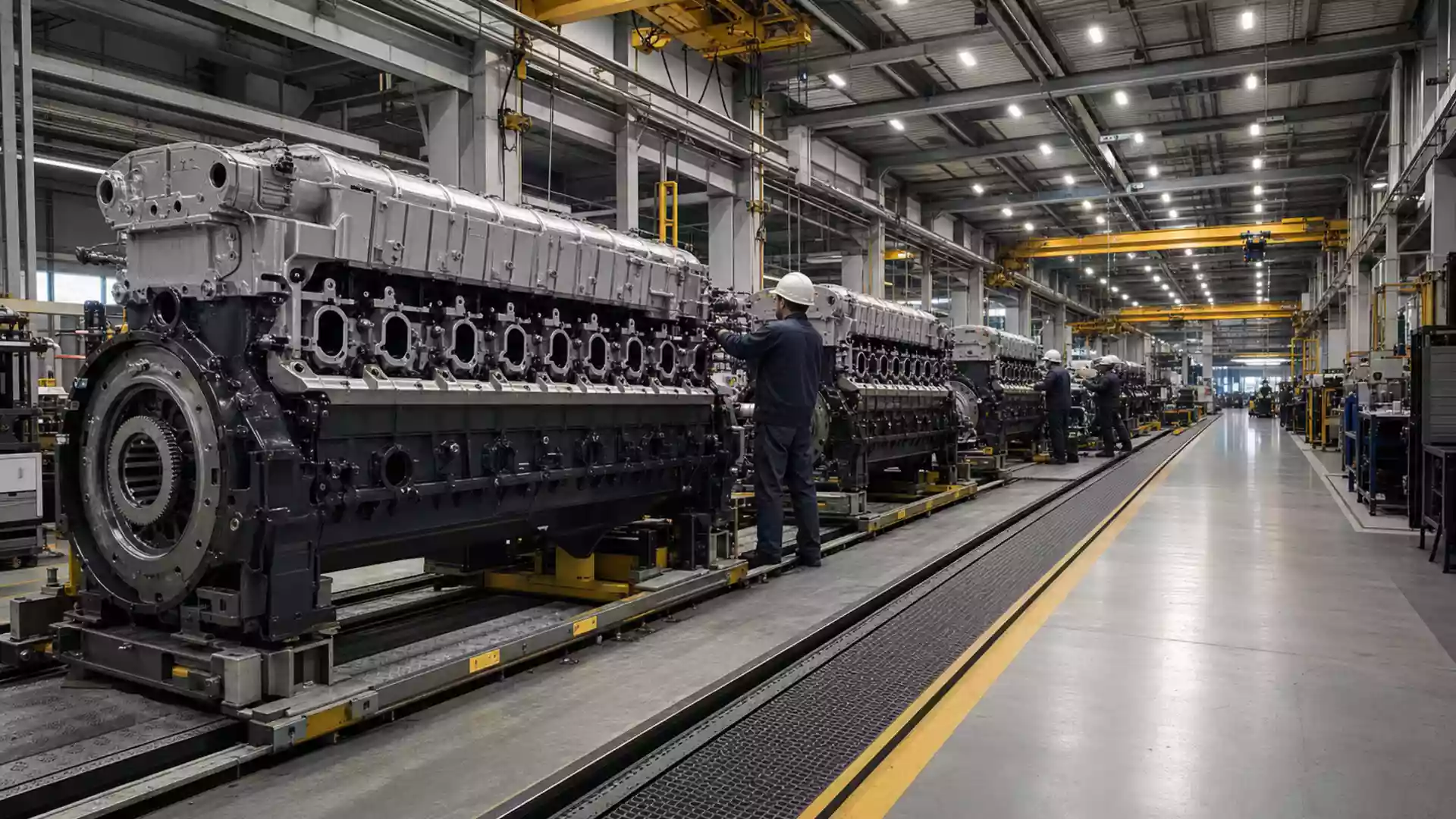
Alongside its newer technologies, Cummins continues to design, manufacture and service a broad portfolio of diesel and natural gas engines for trucks, buses, construction equipment and industrial applications. These engines remain central to the companys revenue, providing a base of installed equipment that drives ongoing demand for parts and services. Even as some markets move toward electrification, many heavy duty applications still depend on combustion engines for cost and performance reasons.
Engines configured for various emissions standards and fuel types enable Cummins to address markets worldwide, including regions where infrastructure or regulations support different technology paths. The companys strategy, as reflected in recent analysis, is to maintain a strong position in these core engine segments while gradually shifting capital and engineering resources into low and zero emission technologies, including batteries and hydrogen related solutions. This dual track approach aims to sustain cash flow from existing products while building future growth platforms.
Investor relations and reporting
The company maintains a detailed investor relations presence outlining its business segments, capital allocation and sustainability initiatives. Recent stock research and ETF portfolio updates include Cummins as a representative of dividend oriented industrial and infrastructure themes, underscoring its role in income focused portfolios that value both yield and growth potential. As of late August 2026, analysts continue to track Cummins earnings trajectory closely, particularly with respect to how AI power opportunities and energy storage projects translate into revenue growth.
Future quarterly reports will provide more granular insight into segment performance, including revenue contributions from engine, distribution, components and new power technologies. Investors will also watch for updates on order intake, backlog and project pipelines related to AI data centers and other critical infrastructure customers. These metrics will help gauge whether the current consensus price target and moderate buy rating remain justified as market conditions evolve.
Representative product spotlight
A representative product within Cummins portfolio of newer technologies is the battery energy storage system designed for large scale data centers. These systems combine high capacity battery packs, inverters, control electronics and software to manage energy flows between the grid, generators and critical loads. By integrating with existing backup generators, the solution provides both uninterruptible power and opportunities to optimize energy usage, such as shifting loads or supporting grid services.
Such battery systems can be tailored to different data center configurations, including hyperscale facilities that require multiple layers of redundancy. For customers, the key benefits are reduced downtime risk, improved energy efficiency and the potential to meet tighter emissions or sustainability targets. For Cummins, each deployment contributes not only equipment revenue but also potential long term service, maintenance and monitoring income streams, enhancing the overall lifetime value of each project.
Cummins stock and trading context
Cummins stock trades on the New York Stock Exchange under the ticker CMI, with a recent opening price of $574.06 on August 28, 2026, according to market data. At that level, the share price sits not far above the earlier cited recent figure of $570.07 and within range of the $578.41 level noted in market analysis, reflecting modest fluctuations in recent sessions. With a consensus target of $745.64, the stock is currently valued below the level that analysts collectively see as fair over their forecast horizon.
For investors evaluating Cummins stock, the numerical backdrop is clear: a mid $570 share price on August 28, 2026, year to date appreciation of 13.3 percent from $510.66 to $578.41, and a consensus target that exceeds current trading levels by more than $170 per share. Against this context, developments in AI data center power solutions, battery energy storage and core engine markets will likely play a decisive role in shaping future price performance and valuation metrics.
Read more
Further stock research on Cummins
Battery energy storage for data centers
Cummins battery energy storage system designed for AI and cloud data centers offers a compelling example of how the company is positioning itself in high growth infrastructure segments. The system integrates advanced batteries with controls that coordinate operation alongside traditional generators, providing seamless backup power during grid disturbances and enabling more efficient use of energy under normal conditions. This integration is particularly important for hyperscale data centers, where even brief outages can have significant financial and operational consequences.
The landmark data center contract referenced in recent analysis underscores how customers are increasingly seeking comprehensive solutions, combining batteries, generators and controls under a single supplier. Such arrangements can simplify project execution, reduce integration risk and provide clear accountability for performance. Cummins ability to offer both the mechanical and electrical components of these systems gives it a competitive advantage when bidding for large projects, especially where reliability and service support are crucial.
Stock valuation and analyst perspective
With Cummins shares trading around $574 and a consensus target price of $745.64, valuation metrics suggest that the market currently discounts some of the potential upside associated with newer technology segments. This spread may reflect investor caution regarding the pace of adoption for battery and low emission technologies, as well as the cyclical nature of the companys traditional engine markets. Nevertheless, the moderate buy rating profile indicates that many analysts expect earnings growth as the product mix continues to evolve.
Recent research includes Cummins as part of portfolios focused on dividend growth and infrastructure themes, highlighting its role in delivering both income and exposure to long term capital investment cycles. The companys track record of cash generation supports its ability to fund both shareholder returns and incremental investment in emerging technologies, including batteries and hydrogen related solutions. For investors, this combination of established cash flows and new growth options is a central element of the investment thesis.
Operational resilience and diversification
Cummins multi segment structure, spanning engines, components, distribution and new power technologies, provides operational diversification that can help mitigate swings in individual end markets. When truck demand slows, for example, power generation or industrial segments may provide offsetting strength, and vice versa. The addition of AI data center power and battery projects adds another layer of diversification, tapping into secular growth trends in cloud computing and digital infrastructure.
This diversification strategy also has implications for capital allocation, as management must balance investments across legacy and new businesses. Market commentary notes that significant capital is being deployed into generator and power system capacity tailored for AI data centers, reflecting confidence in long term demand from this customer base. The success of these investments will influence how quickly new technologies can contribute meaningfully to overall earnings, complementing the established engine business.
Regulatory and sustainability considerations
Regulatory frameworks and sustainability expectations are an important backdrop for Cummins product development and investment choices. In many markets, emissions standards for engines and power systems are tightening, pushing customers toward cleaner technologies or hybrid solutions that combine engines with batteries or other storage technologies. Cummins response includes developing engines compatible with lower carbon fuels, as well as deploying zero or low emission power solutions for applications such as data centers.
Sustainability oriented investors also pay attention to how companies like Cummins manage their environmental footprint, including energy use in manufacturing, supply chain emissions and product lifecycle impacts. By expanding its portfolio of energy efficient and low emission products, Cummins can address both regulatory requirements and customer demand for more sustainable solutions, potentially enhancing its competitive position in key markets.
Competitive landscape and peers
The competitive landscape for engines and power systems includes other global industrial companies that are also investing in generators, batteries and integrated power solutions for data centers and industrial customers. In this environment, factors such as product reliability, service networks, total cost of ownership and integration capabilities can be decisive in winning projects. Cummins long history in engines and power systems, combined with its global service footprint, provides advantages in bidding for large, complex contracts.
At the same time, newer entrants focused solely on battery systems or software defined energy platforms may compete in certain segments, especially where customers prioritize flexibility and advanced analytics. For Cummins, partnering selectively and continuing to invest in digital capabilities around its hardware offerings can help maintain competitiveness, particularly in segments where data and software play a central role in managing complex power systems.
Dividend policy and shareholder returns
While specific dividend figures are not detailed in the latest commentary, Cummins inclusion in dividend growth oriented portfolios suggests a track record of returning cash to shareholders through dividends and, in some periods, share repurchases. Maintaining a balanced approach to shareholder returns and reinvestment is a key consideration for industrial companies facing both cyclical demand and long term technology transitions.
For Cummins, this balance is especially important as it deploys capital into battery energy storage, AI data center power systems and other emerging technologies while sustaining its core engine operations. Investors will monitor how dividend policies evolve alongside these investments, assessing whether the company can continue to grow payouts while funding the projects needed to support future earnings growth.
Risk factors and uncertainties
Several risk factors could affect the outlook for Cummins stock, including macroeconomic conditions, demand for trucks and industrial equipment, competitive dynamics in engines and power systems, and the pace of adoption for battery and low emission technologies. Supply chain disruptions, raw material cost pressures and regulatory changes in key markets also present ongoing uncertainties that management must navigate.
In the context of AI data centers and batteries, execution risk around large, complex projects is a notable consideration. Successfully delivering integrated battery and generator solutions requires coordination across engineering, manufacturing, logistics and service functions. Delays, cost overruns or performance issues on major projects could affect margins and reputation, particularly when serving high profile customers in the cloud and technology sectors.
Outlook for Cummins stock
As of August 28, 2026, the numerical indicators for Cummins stock present a picture of a large cap industrial at an important strategic juncture: a share price of $574.06 at the latest opening, a year to date increase of 13.3 percent from $510.66 to $578.41, and a consensus target price of $745.64 reflecting anticipated upside. Against this backdrop, the interplay between traditional engines, power generation and newer battery and AI data center solutions will likely drive sentiment and valuation in the months ahead.
For investors, the combination of institutional buying interest, a supportive analyst consensus and tangible investments in high growth infrastructure segments suggests that Cummins remains a significant player in the evolving landscape of power and energy technologies. How quickly the company can translate AI data center opportunities and battery projects into sustained earnings growth will be a central theme for forthcoming earnings reports and market commentary.
Fact box
Company: Cummins Inc.
ISIN: US2310211063
Ticker: CMI
Exchange: New York Stock Exchange (NYSE)
Price (as of August 28, 2026, opening): $574.06 USD
Sector / Industry: Industrials / Machinery