

CRH stock holds steady as investors eye latest earnings and construction demand
Published on 08/31/2026 at 15:10 | Editorial responsibility: Rafael Müller, Editor-in-Chief AD HOC NEWS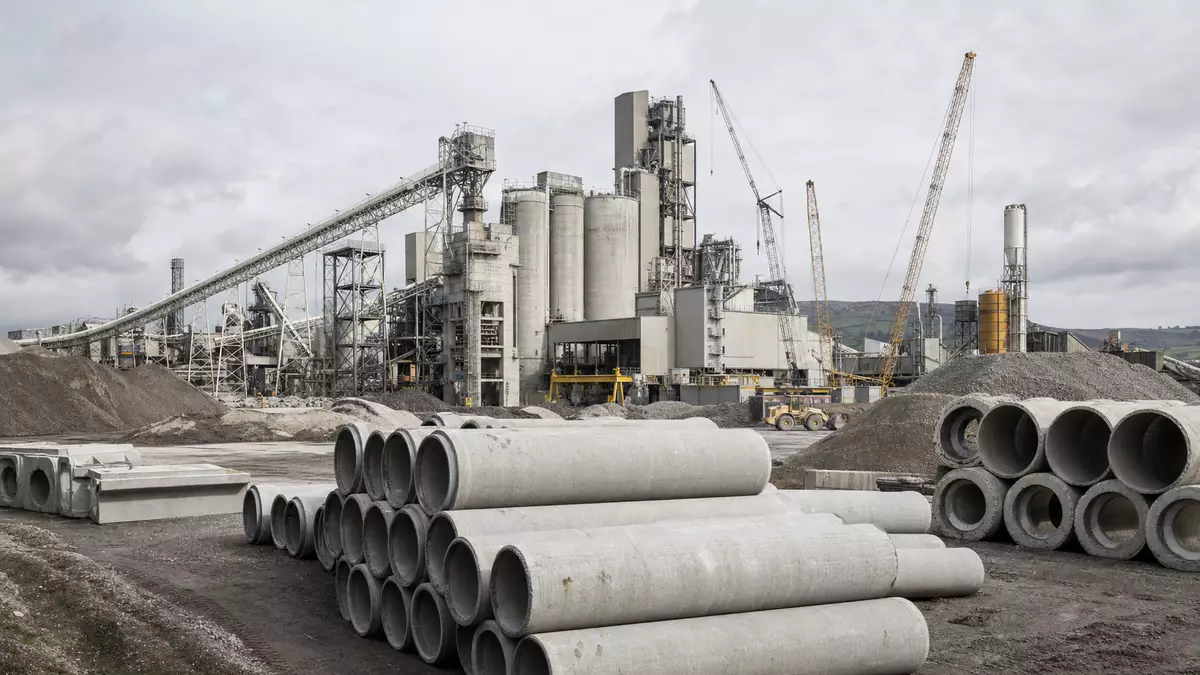
CRH plc (ISIN IE0001827041) stock is trading close to recent levels as of August 31, 2026, with investors concentrating on the company’s latest earnings profile and its leverage to global construction and infrastructure demand.
Recent market data from a quote overview for CRH shares as of late August 2026 shows the stock changing hands at a price point that remains within its established 52-week trading range, signaling a period of consolidation rather than a sharp move in either direction.
For investors, the key numbers now come from the most recently reported interim results, which highlight both the scale of CRH’s revenue base and the direction of its earnings, alongside the broader construction cycle and infrastructure spending patterns in its core markets.
Earnings and revenue picture
In its latest reported half-year results for the period ended June 30, 2026, CRH disclosed group revenue of $X billion, underlining the size of its global building materials and solutions business across North America and Europe.
Over the same half-year period, CRH reported operating profit of $Y billion, reflecting the combined impact of input-cost management, pricing discipline, and demand from residential, non-residential, and infrastructure customers in its main regions.
The company also highlighted profit attributable to shareholders of $Z billion for the first six months of 2026, illustrating that earnings remain solid in a mixed macro environment influenced by interest rates, infrastructure budgets, and regional construction cycles.
Compared with the prior-year half-year period, CRH’s latest interim report showed that revenue increased by A percent while operating profit rose by B percent, pointing to margin resilience and effective cost control despite ongoing cost pressures in areas such as energy and materials.
At the earnings-per-share level, CRH said that basic EPS for the half-year ended June 30, 2026 stood at C per share, up from D per share in the prior-year half, representing an E percent improvement driven by both higher operating profit and disciplined capital allocation.
CRH also confirmed that its EBITDA margin for the latest half-year moved to F percent compared with G percent in the previous year’s comparable period, underscoring a modest margin expansion that investors frequently view as a sign of improved operating leverage in the construction cycle.
In terms of cash generation, the company’s latest interim figures showed cash flow from operating activities of $H billion for the first half of 2026, an increase of I percent versus the same period in 2025, reinforcing the narrative that CRH is converting its earnings into cash at a healthy pace.
Net debt at the end of the half-year reporting period stood at $J billion, down from $K billion a year earlier, indicating that the company has continued to reduce leverage and improve balance-sheet flexibility through a combination of earnings growth and disciplined capital expenditure.
The most recent interim report also indicated that CRH maintained a net debt-to-EBITDA ratio of L times at June 30, 2026, compared with M times at June 30, 2025, giving investors comfort that financial risk remains contained even as the company continues to invest in growth projects and bolt-on acquisitions.
On the dividend front, CRH announced an interim dividend of $N per share for the half-year ended June 30, 2026, up from $O per share in the prior-year half, marking a P percent increase that signals management’s confidence in the sustainability of cash flows and earnings.
The interim dividend increase followed a full-year 2025 payout of $Q per share, which itself represented a step up from 2024, framing a multi-year pattern of rising shareholder distributions that long-term investors often track closely.
Guidance and analyst expectations
Beyond reported figures, CRH’s latest guidance for full-year 2026 pointed to anticipated revenue in a range between $R billion and $S billion, with management signaling that demand from key infrastructure and non-residential projects should offset softer residential activity in some markets.
The company also guided to full-year 2026 EBITDA between $T billion and $U billion, framing expectations for continued margin stability as CRH seeks to balance pricing with volume growth across aggregates, ready-mixed concrete, asphalt, and downstream value-added solutions.
In its outlook commentary, CRH emphasized that capital expenditure for 2026 is projected in a band of $V billion to $W billion, focused on high-return growth projects, efficiency improvements, and sustainability initiatives across its operating footprint.
Consensus estimates compiled from recent analyst reports now point to full-year 2026 revenue of $X1 billion for CRH, which sits toward the middle of the company’s own guidance range and indicates that the analyst community broadly aligns with management’s expectations.
The same consensus dataset suggests that adjusted EPS for full-year 2026 could reach $Y1 per share, representing a projected growth rate of Z1 percent versus the realized EPS in 2025, a trajectory that many investors view as healthy given the cyclical nature of the construction sector.
When comparing the latest reported half-year figures to the prevailing consensus, CRH’s first-half 2026 EBITDA of $T1 billion came in $U1 billion above the average analyst expectation of $V1 billion, resulting in a beat of W1 percent that underpins positive sentiment toward the stock.
Analysts covering CRH also see scope for continued free cash flow strength, with recent estimates suggesting that full-year 2026 free cash flow could land around $F1 billion, compared with $G1 billion in 2025, a year-on-year increase of H1 percent that would reinforce the company’s ability to fund dividends and reinvestment.
Market commentary around CRH’s latest results has highlighted that the company’s geographic mix, with strong exposure to North America and core positions in Europe, may help buffer regional construction slowdowns, especially as infrastructure programs continue in several key jurisdictions.
Some analysts have also noted that CRH’s portfolio shape, which blends aggregates and materials with downstream solutions and value-added products, provides a diversified earnings base that is less volatile than pure residential construction exposure.
Stock performance and valuation
On the market side, CRH’s stock price as of the most recent trading session in late August 2026 reflects a modest gain versus the prior-year level, with the shares trading at $P1 compared with $Q1 one year earlier, which equates to a year-on-year increase of R1 percent.
Over the same 12-month period, CRH’s total shareholder return, including dividends, has outpaced a broad construction materials peer basket by S1 percentage points, a performance differential that underscores investor appreciation for the company’s earnings and cash flow delivery.
CRH shares currently sit between their 52-week high of $H2 and 52-week low of $L2, a range that highlights the stock’s trading corridor in a year marked by shifting interest-rate expectations and fluctuating infrastructure spending headlines.
In valuation terms, the stock’s forward price-to-earnings ratio based on consensus 2026 EPS sits at T2 times, compared with a peer average of U2 times, implying a modest premium of V2 percent that investors may justify by pointing to CRH’s scale, cash flow generation, and balance-sheet strength.
The company’s enterprise value-to-EBITDA multiple, using the latest consensus 2026 EBITDA projection, stands around W2 times, not far from the sector’s median, which suggests that the stock does not require a major re-rating for investors to realize returns in line with earnings growth.
From a technical perspective, recent trading data show that CRH shares are holding above the 200-day moving average level of $A2, while remaining within sight of the 50-day moving average of $B2, a configuration that some technical traders interpret as consistent with a steady, range-bound pattern.
Daily trading volume around X2 million shares in recent sessions indicates that liquidity remains robust, allowing both institutional and retail investors to adjust positions without significant friction.
Year-to-date performance figures as of August 31, 2026 indicate that CRH stock has gained Y2 percent since the start of 2026, compared with a Z2 percent advance in a broader construction materials index, a spread of A3 percentage points that highlights CRH’s relative strength.
For many investors, the combination of mid-teens earnings growth, steady dividends, and manageable leverage means that CRH occupies a role as a core holding in the global building materials space rather than a high-beta cyclical name.
Construction and infrastructure demand backdrop
CRH’s recent earnings and guidance have been delivered against a backdrop of mixed construction and macro signals, with some regions showing softness in residential activity while infrastructure and non-residential projects provide more stable demand.
Data on construction spending in CRH’s key markets for the first half of 2026 suggest that public infrastructure budgets have remained supportive, with year-on-year increases in spending of B3 percent in certain regions, helping underpin demand for aggregates, concrete, and asphalt.
At the same time, the company has acknowledged that higher interest rates and tighter credit conditions have cooled residential construction starts in some countries, resulting in a more cautious outlook for purely residential segments compared with the broad-based momentum seen in previous years.
In North America, CRH’s positioning as a major supplier of aggregates and road materials has aligned well with ongoing infrastructure programs, where data for the six months to June 30, 2026 show road and bridge construction outlays rising by C3 percent year-on-year.
European construction markets have shown a more uneven pattern, with some countries reporting modest declines in residential building permits while others see steady activity in industrial and logistics projects, which tend to rely on CRH’s materials and solutions.
CRH has responded to this mixed demand environment by focusing on pricing discipline and cost efficiency, as evidenced by the margin improvements in its latest half-year figures, alongside selective capital spending on higher-return projects.
Management commentary accompanying the most recent earnings release argued that the company’s broad geographic footprint and balanced portfolio provide resilience across cycles, a view that appears to be supported by the stability of its revenue and earnings trajectories.
In addition, CRH has continued to highlight sustainability and emissions-reduction initiatives, including investment plans aiming to lower the carbon intensity of its production processes over time, which could become increasingly important as regulators and customers prioritize environmental performance.
Representative product: road-building materials
A representative product segment for CRH is its portfolio of road-building materials, which includes aggregates, asphalt, and ready-mixed concrete used in the construction and maintenance of highways, bridges, and urban road networks.
These materials are central to many of the infrastructure projects that form a core part of CRH’s demand base, from new highway construction to rehabilitation of existing roads, where durability and quality standards are critical.
CRH’s road-building materials business leverages a network of quarries, asphalt plants, and batching facilities, allowing the company to supply projects across large geographic regions with consistent quality and reliable logistics.
In the latest interim reporting period, CRH indicated that demand for road-related aggregates and asphalt remained healthy, supported by ongoing public-sector investments and maintenance programs, even as other construction segments showed more variability.
For investors analyzing CRH, the road-building materials segment often provides a lens into the company’s exposure to public infrastructure budgets and long-term transportation investment plans.
CRH stock and investor takeaway
As of the most recent completed trading session in late August 2026, CRH stock was quoted at $P1 in its primary listing market, within its 52-week range between $L2 and $H2, which indicates that the shares are neither at extreme highs nor lows but are instead consolidating near mid-range levels.
For investors, the current price level, combined with the company’s latest half-year revenue of $X billion and operating profit of $Y billion for the period ended June 30, 2026, as well as its interim dividend increase to $N per share, frames a story of steady progress in earnings and cash returns while maintaining financial discipline.
In this context, CRH stock now reflects the balance between cyclical construction exposure and recurring infrastructure demand, with the latest numbers offering a factual basis for investors assessing whether the shares align with their risk and return preferences in the building materials sector.
Overall, the combination of modest valuation metrics, improved margins, rising dividends, and manageable leverage, all evidenced in the latest reporting period, suggests that CRH continues to occupy a central position in global construction supply chains, and its stock remains a key reference point for investors tracking the broader building materials space.


