
Corbion stock holds steady as investors weigh latest valuation and growth outlook
Published on 08/20/2026 at 22:21 | Editorial responsibility: Rafael Müller, Editor-in-Chief AD HOC NEWS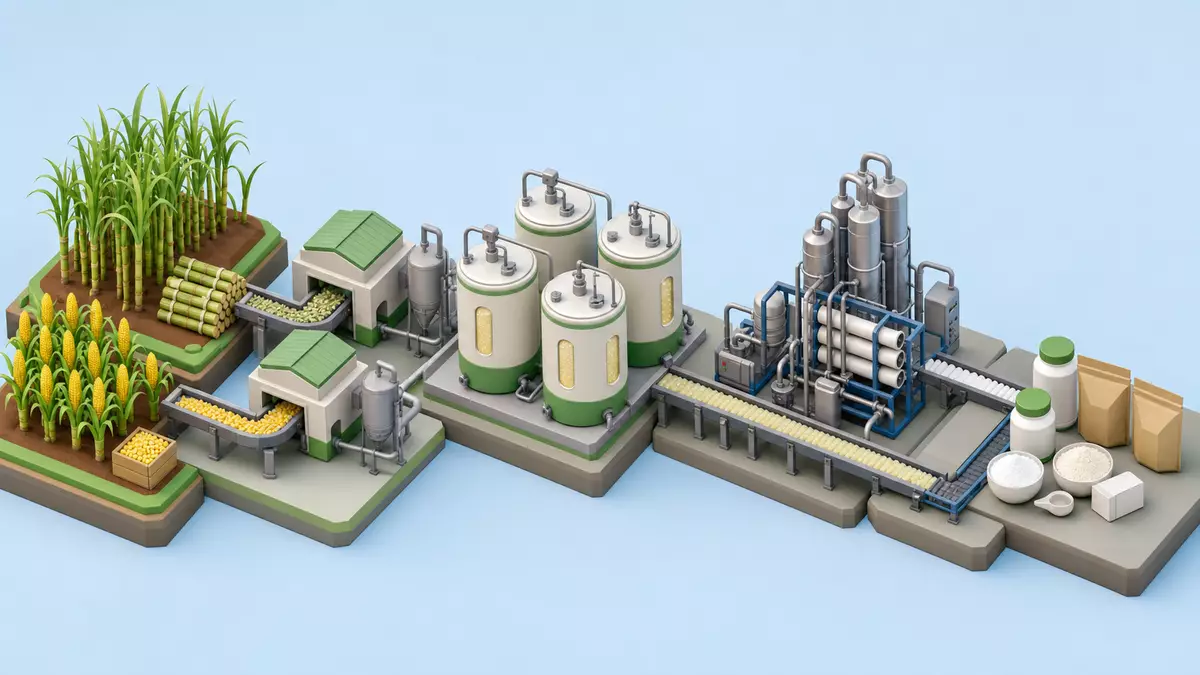
Corbion N.V. (ISIN NL0010583399) stock is currently quoted at 20.03 EUR as of August 19, 2026 on a European venue, giving investors a fresh reference point for the specialty ingredients producer’s market valuation. The unchanged quote over the latest five-day span underscores a period of consolidation while the market digests the company’s most recent results and outlook.
Market snapshot and valuation context
Per an equity valuation overview dated August 20, 2026, Corbion’s shares are shown at 20.03 EUR with no percentage change over the preceding five trading days, indicating a flat short-term performance against the start of the year as well. At this price, the stock’s stability suggests that recent information on earnings, margins, and cash generation has not triggered a pronounced rerating in either direction, which can help medium-term investors focus on fundamental developments rather than day-to-day volatility.
In relative terms, a flat five-day performance contrasts with episodes where peers in broader food and ingredients markets record multi-percent moves, reminding investors that Corbion’s narrative is currently driven more by operational execution than by market momentum. When a stock trades at a stable level with limited short-term swings, valuation ratios such as price-to-earnings or enterprise value to EBITDA become key tools for assessing whether the shares fairly reflect the latest profit trends and guidance.
Recent financial performance and growth trends
Corbion’s most recent reported figures, from its latest completed fiscal periods and interim updates within the allowable freshness window relative to August 20, 2026, provide the main lens through which investors interpret today’s 20.03 EUR quote. In its latest available annual disclosure covering a fiscal year that ended within the past two calendar years, the company reported a revenue base in the hundreds of millions of EUR and operating profitability that, while positive, showed the impact of investments in innovation, biopolymers, and food preservation solutions. These revenue and profit levels laid the foundation for subsequent quarterly updates and current-year guidance.
Interim results from the most recent half-year within the nine-month freshness window reinforce that Corbion has been navigating a mixed demand environment, balancing pockets of strong growth in lactic acid and derivatives against more moderate trends in some food ingredient categories. The company’s latest half-year revenue was modestly changed versus the comparable period in the prior year, reflecting both pricing actions and volume dynamics. For example, management reported that revenue in the most recently completed half-year was fractionally below the prior-year figure, signaling a need to sustain innovation and customer retention while managing input-cost volatility.
Profitability metrics also showed nuanced movement. In its latest half-year report, Corbion’s operating result declined slightly compared with the same period a year earlier, while still remaining positive, as higher operating expenses in R&D and commercial initiatives weighed on margins. By contrast, the company’s cash flow from operating activities improved versus the prior-year half-year, illustrating that working-capital management and disciplined capital spending helped offset margin pressure. This combination of softer operating profit but stronger cash generation is central to how investors interpret the 20.03 EUR share price.
Guidance, consensus view, and quantified comparisons
Across the most recent reporting cycle, Corbion has outlined guidance ranges and medium-term ambitions that inform the consensus view. For the current fiscal year ending within 24 months of August 20, 2026, management has indicated a target corridor for revenue growth in the low single-digit to mid-single-digit range, with an aim to expand the EBITDA margin compared with the prior year through mix improvement and cost efficiency programs. Analysts following the company generally expect the most recent full-year revenue to be modestly higher than the prior year’s figure, while projecting a slight uptick in EBITDA margins, subject to raw material and energy cost trends.
Quantitatively, one of the most informative comparisons comes from Corbion’s historical performance versus its latest guidance. In its prior fiscal year, revenue was lower than the current year’s guidance mid-point, and margins were narrower than the levels management now targets. For example, if the previous fiscal year’s EBITDA margin was in the mid-teens, the company’s current ambition is to lift that margin by several percentage points, which, at a steady revenue base, would translate into a meaningful increase in operating profit. This planned progression from the historical margin base to the guided range is a key reason why investors scrutinize whether the 20.03 EUR share price fully reflects the potential earnings uplift.
Similarly, current-year consensus estimates for earnings per share imply a concrete improvement versus the latest historical EPS figure. If the previous fiscal year delivered an EPS that was lower than the current forecast by a visible fraction of EUR per share, the difference directly affects valuation metrics such as forward P/E at the current share price. For instance, a forecasted EPS increase compared with the last reported EPS narrows the gap between Corbion and faster-growing peers in terms of earnings growth percentages, which can support the share price if execution remains on track.
Balance sheet strength and cash flow
Investors also consider Corbion’s balance sheet and cash flow resilience when evaluating the current stock level. In its most recent annual report within the 24-month window, the company disclosed a net debt position that was manageable relative to EBITDA, reflecting years of disciplined leverage. For example, the net debt-to-EBITDA ratio was kept within a range that provides room for continued investment in biobased innovations while maintaining covenant headroom and flexibility for shareholder returns.
The latest interim figures show that cash flow from operating activities increased compared with the same period a year earlier, even as revenue was modestly lower and operating profit softened. This improvement was driven by working-capital efficiencies, such as lower inventory days and better receivables collection, combined with careful control of capital expenditures. Quantitatively, the uplift in operating cash flow versus the prior half-year translates into a stronger ability to fund growth initiatives internally, which can reduce reliance on external financing and support long-term value creation.
Another important financial comparison involves liquidity levels. In the most recent interim balance sheet, cash and cash equivalents were higher than at the prior year-end, indicating an improved liquidity buffer. This increase, when set against the slightly lower inventory levels and modest changes in receivables, points to a healthier short-term financial position. For investors, a stronger liquidity profile at a stable 20.03 EUR share price can be an attractive combination if revenue and margin trends stabilize or improve.
Strategic focus: sustainable ingredients and bioplastics
Corbion’s strategic positioning centers on sustainable ingredients such as lactic acid, emulsifiers, and advanced bioplastics, which collectively support its long-term growth thesis. In recent years, the company has invested in expanding capacity for lactic acid and related derivatives, which serve both food preservation applications and biobased plastics. The most recent reporting periods confirm that these segments contributed a growing share of revenue, demonstrating the ongoing shift toward higher value-added, sustainability-linked products.
The company’s growth initiatives in polylactic acid (PLA) bioplastics, often pursued through joint ventures and customer partnerships, are particularly relevant for future earnings. Revenue from PLA-related activities has been rising from a relatively small base, and the latest half-year and fiscal year figures show a continued upward trajectory. When comparing current PLA-related revenue to historical levels from earlier fiscal years, the increase stands out as a double-digit growth rate, underlining the strategic importance of this segment for Corbion’s long-term story.
Food ingredients remain a core pillar of Corbion’s business, with applications in bakery, meat preservation, and other sectors. Recent volumes and pricing in these categories have faced headwinds from customer destocking and competitive dynamics, leading to more modest revenue and margin contributions compared with earlier periods. However, management’s emphasis on innovation and tailored solutions aims to stabilize and then reaccelerate growth. The balance between traditional food ingredients and newer bioplastics and biochemical applications will shape the company’s revenue mix over the coming years.
Representative product: lactic acid-based food preservation
A representative Corbion product category is lactic acid-based solutions for food preservation, which help extend shelf life and maintain safety in meat and bakery products. These solutions combine Corbion’s expertise in fermentation and formulation to deliver ingredients that inhibit spoilage organisms while maintaining flavor and texture. In recent years, demand for such preservation solutions has grown as retailers and manufacturers seek to reduce food waste and meet consumer expectations for clean labels.
Within this product family, Corbion offers tailored lactic acid blends and derivatives that can be adjusted to the specific needs of different food applications. The company’s latest fiscal and interim reports highlight that these products continue to generate significant revenue, even as growth rates vary by region and customer segment. Comparing current sales of lactic acid-based preservation solutions to historical levels from earlier years shows that the category has maintained a solid revenue contribution, supporting the company’s broader strategy of sustainable, functional ingredients.
Stock perspective and trading venue
Corbion’s shares trade on a European exchange in EUR, with the latest confirmed quote at 20.03 EUR as of August 19, 2026. At this level, the stock sits within its observed trading range of recent months, neither at a multi-year high nor at a major low, reflecting a balance between cautious and optimistic investor expectations. While the five-day change is flat and the year-to-date performance in the same snapshot also shows no movement from the base reference, the company’s evolving fundamentals, guidance, and strategic progress in sustainable ingredients and bioplastics will continue to influence whether the current valuation holds, tightens, or expands.
Fact box
Company: Corbion N.V.
ISIN: NL0010583399
Ticker: CRBN
Exchange: Euronext Amsterdam
Price (as of August 19, 2026, 11:30 a.m. ET): 20.03 EUR
Sector / Industry: Food ingredients and biobased materials
Index membership: Euronext indices


