
Campbell Soup stock trades above analyst target as yield stays elevated
Published on 08/21/2026 at 13:50 | Editorial responsibility: Rafael Müller, Editor-in-Chief AD HOC NEWS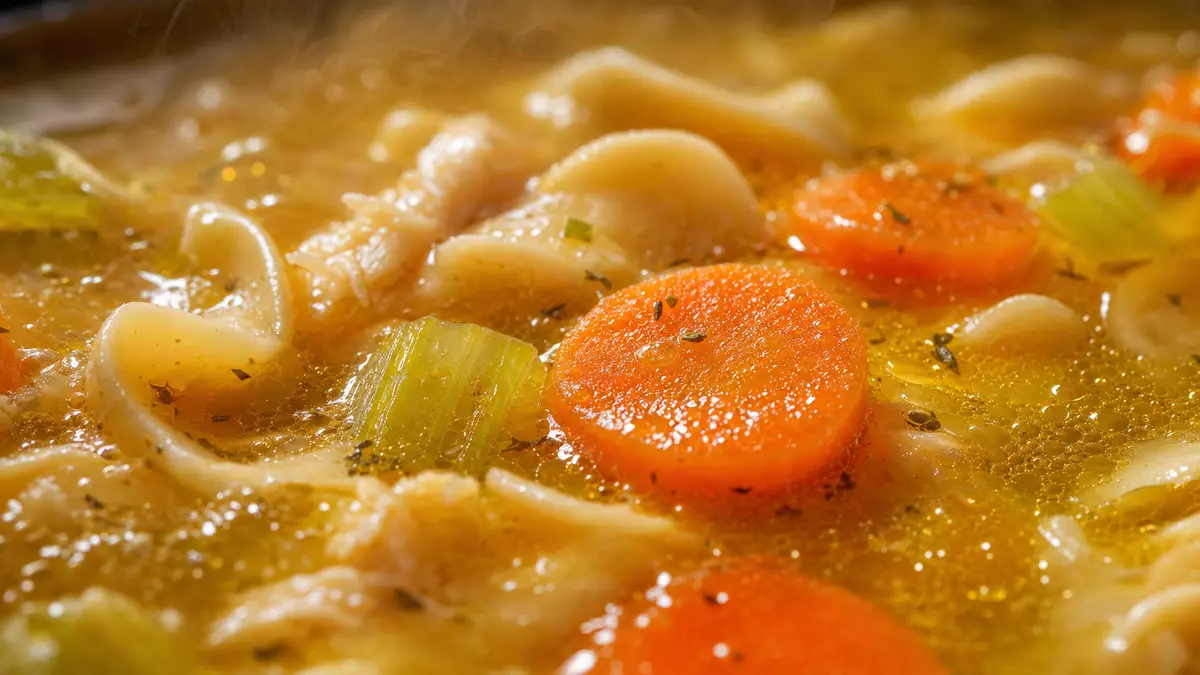
Campbell Soup Co. (ISIN US1280301048) stock is trading in the mid-$20 range as of August 19, 2026, with the shares offering a dividend yield close to 7% based on the latest verified quote snapshot.
Per recent market data from August 19, 2026, Campbell Soup closed that regular Nasdaq session at $23.81, representing a single-day gain of 4.16%, or $0.95, and implying a market capitalization of $6.76 billion reported two days earlier at similar price levels. At the same time, quote data compiled on August 21, 2026, show the stock changing hands close to $23.77 with a day move of 0.19% and a year-to-date performance that remains slightly negative, indicating that investors are seeing a combination of high current income and muted capital appreciation.
Analyst targets and valuation context
Recent analyst commentary reported by Investing.com on an UBS call highlights that a major research house has raised its price target on Campbell Soup to $18.00 from $17.00 while maintaining a Sell rating, noting that shares recently traded at $22.40, which is well above that target and follows a year-to-date share price decline of 23%. The same coverage indicates that the analysts see Campbell Soup trading around 11 percent above a fair value estimate anchored at $21.47, based on expectations for future earnings growth, profit margins, and key risk factors, even though the company’s price-to-earnings multiple of 11.7 times trails the 13.5 times level of selected peers and the 17.8 times ratio seen across the broader US food industry.
Complementing this view, a valuation-focused overview on Simply Wall St cites a consensus fair value for Campbell Soup at $21.47 and notes that the stock’s last close of $23.78 sits above that level, leading to a characterization of the shares as overvalued on that specific fair value model. However, the same overview underscores that the company’s price-to-earnings ratio of 11.7 times is still below both the peer group average and the wider US food sector, suggesting that the stock may offer relative value within its segment even if it screens as slightly overvalued versus this fair value estimate.
Upcoming earnings and recent fundamental trends
The near-term fundamental catalyst for Campbell Soup is the upcoming fiscal 2026 fourth-quarter earnings release, which, according to the analyst summary relayed by Investing.com, is scheduled for September 3, 2026, before the market open. The same coverage notes that the analysts now forecast fourth-quarter fiscal 2026 earnings per share of $0.38, reduced from a prior estimate of $0.41, and slightly below a Street consensus figure of $0.39, signaling modest downside risk in near-term profitability expectations.
Looking ahead to the next fiscal year, the analysts referenced in that report have updated their earnings per share estimates for fiscal 2027 to $1.72, down from $1.86 previously, and broadly aligned with a Street consensus that they indicate around $1.86, reinforcing the view that Campbell Soup’s earnings trajectory is expected to grow but at a tempered pace. In their recap of the most recently reported quarter, the same coverage points out that Campbell Soup’s third-quarter results showed a revenue decline of 4.0 percent compared with the prior-year period, missing an anticipated decline of 3.3 percent by a modest margin, even as the company was able to beat expectations on both gross and operating margins, underlining an active focus on cost control and efficiency.
Investors thus face a mixed fundamental picture: on one hand, revenue is under pressure and forward earnings expectations have been revised downward, but on the other hand, margin improvement and an elevated dividend yield support the stock’s total-return profile. The quantified comparison between the 4.0 percent revenue decline actually reported and the 3.3 percent decline anticipated by analysts highlights that top-line performance undershot expectations by 0.7 percentage points, a manageable shortfall that still warrants attention as management navigates inflation and competitive dynamics in the packaged foods market.
Shelf registration and capital flexibility
According to the valuation commentary hosted on Simply Wall St, Campbell Soup has filed an omnibus shelf registration that covers capital stock, preferred stock, debt securities, warrants, purchase contracts, and units, effectively giving the company broad flexibility to issue various types of securities in the future as market conditions and strategic priorities warrant. While such a filing does not in itself commit the company to a specific capital-raising transaction, it does signal that management wants the option set to be ready, which can matter for refinancing existing debt, funding acquisitions, or supporting long-term investment programs.
The same analysis notes that Campbell Soup’s share price has risen 6.45 percent over the past 30 days and 15.55 percent over the last 90 days, suggesting a notable positive momentum in recent months even though the year-to-date share price return remains down 14.18 percent and the one-year total shareholder return stands at a negative 22.35 percent. This contrast between near-term gains and longer-term declines underscores how recent optimism around margins and valuation has yet to fully offset prior periods of underperformance, and highlights the importance of upcoming earnings and strategic communication in sustaining the current recovery trend.
Leadership transition and governance signal
Corporate governance has also been in motion. The analyst summary linked via Investing.com reports that Campbell Soup has announced a leadership change whereby Daniel L. Poland will step down as Executive Vice President and Chief Enterprise Transformation Officer, effective August 3, 2026, and Melissa Nippert will take over that role. For investors, this kind of leadership transition in a transformation-focused position suggests that the company is refining its approach to enterprise-wide change initiatives, supply-chain modernization, and potentially its digital and efficiency programs, which tie directly into the margin improvements noted in the recent quarterly results.
While such a change does not alter the near-term financial metrics on its own, it can influence how management prioritizes investments and cost programs that shape future earnings. In the context of a shelf registration and elevated dividend yield, the governance update adds another angle for investors to monitor: how the new leadership will balance capital structure flexibility, operational transformation, and shareholder returns in the coming quarters.
Core brands in soup and snacks
Beyond the numbers, Campbell Soup’s investment case is anchored in its portfolio of well-known consumer brands spanning shelf-stable soups, sauces, and snacks. The company’s flagship Campbell’s condensed soups remain a staple in US households, offering tomato, chicken noodle, and cream-style variants that cater to both direct consumption and use as ingredients in home cooking. In parallel, its ready-to-serve soup lines and premium brands extend the portfolio into higher-value segments, reinforcing the company’s reach across price points and consumer tastes.
On the snacks side, Campbell Soup participates in the growing demand for convenient, packaged snack foods through brands such as Pepperidge Farm, which covers cookies and crackers, and a broader portfolio that includes chips and other salty snacks. Together, these soup and snack franchises give the company diversified exposure to the consumer staples category, helping to smooth revenue fluctuations and support the company’s ability to sustain its dividend strategy even in periods of macroeconomic uncertainty or shifting food-at-home versus food-away-from-home trends.
Share price level and investor takeaway
As of the most recent completed trading session on August 19, 2026, Campbell Soup stock closed on the Nasdaq at $23.81, with a market capitalization of $6.76 billion referenced in market data from August 17, 2026, and a dividend yield close to 7% at that price level. Subsequent quote snapshots for Campbell Soup taken on August 21, 2026, show the stock trading around $23.77 with a modest intraday move of 0.19% and a short-term performance profile that has improved over the last 30 and 90 days but remains negative year-to-date by double-digit percentages, highlighting that the recent rebound is still in a catch-up phase relative to longer-run declines.
For investors, the key quantified relationships are clear: the stock’s current level near the mid-$20s stands above a consensus fair value estimate of $21.47 and exceeds an updated analyst price target of $18.00, while at the same time the company’s price-to-earnings multiple of 11.7 times is below peer and sector averages and the dividend yield is close to 7%. This combination of a high income stream, modest valuation on traditional metrics, and price trading above certain fair value and target benchmarks defines the tension in the current Campbell Soup stock narrative as the company approaches its fiscal 2026 fourth-quarter earnings release on September 3, 2026, where management’s guidance and commentary will play a central role in resolving whether the recent recovery in the share price has further room to run.
Read more
More detailed corporate information on Campbell Soup, including investor presentations and regulatory filings, is available on the company’s own website. Additional valuation and consensus data can be found through specialized equity research and market-data platforms that track packaged food companies.
Flagship condensed soup product
Among Campbell Soup’s many products, its classic Campbell’s condensed tomato soup stands out as a representative flagship item that encapsulates the brand’s heritage and ongoing relevance in grocery aisles. This tomato soup has long served as both a standalone meal and a base ingredient for a wide variety of recipes, from simple grilled cheese pairings to more complex casseroles, making it a core component of the company’s shelf-stable offerings and a recurring contributor to revenue in its meals and beverages segment.
Current price context for Campbell Soup stock
In the equity market, Campbell Soup stock currently trades on the Nasdaq with recent verified levels at $23.81 as of August 19, 2026, in regular trading hours, supported by a market capitalization figure of $6.76 billion as of August 17, 2026. This price level, coupled with a dividend yield close to 7% and recent 30-day and 90-day gains of 6.45 percent and 15.55 percent respectively, frames a story of a consumer staples stock that offers substantial income and a recovering share price, while still sitting below its historical highs and experiencing a negative year-to-date return of 14.18 percent that reflects earlier periods of weakness.
Fact box
Company: Campbell Soup Co.
ISIN: US1280301048
Ticker: CPB
Exchange: Nasdaq
Price (as of August 19, 2026, 4:00 p.m. ET): $23.81 USD
Market cap: $6.76 billion (as of August 17, 2026)
Sector / Industry: Consumer staples / Packaged foods
Index membership: S&P 500
Next earnings date: September 3, 2026
Amazon note
Campbell’s condensed tomato soup is widely available through grocery retailers and online marketplaces, including Amazon, where consumers can purchase multi-pack cans for household use.


