

BVB stock steadies as insider buying and transfer rebuild shape outlook
Published on 08/26/2026 at 13:41 | Editorial responsibility: Rafael Müller, Editor-in-Chief AD HOC NEWS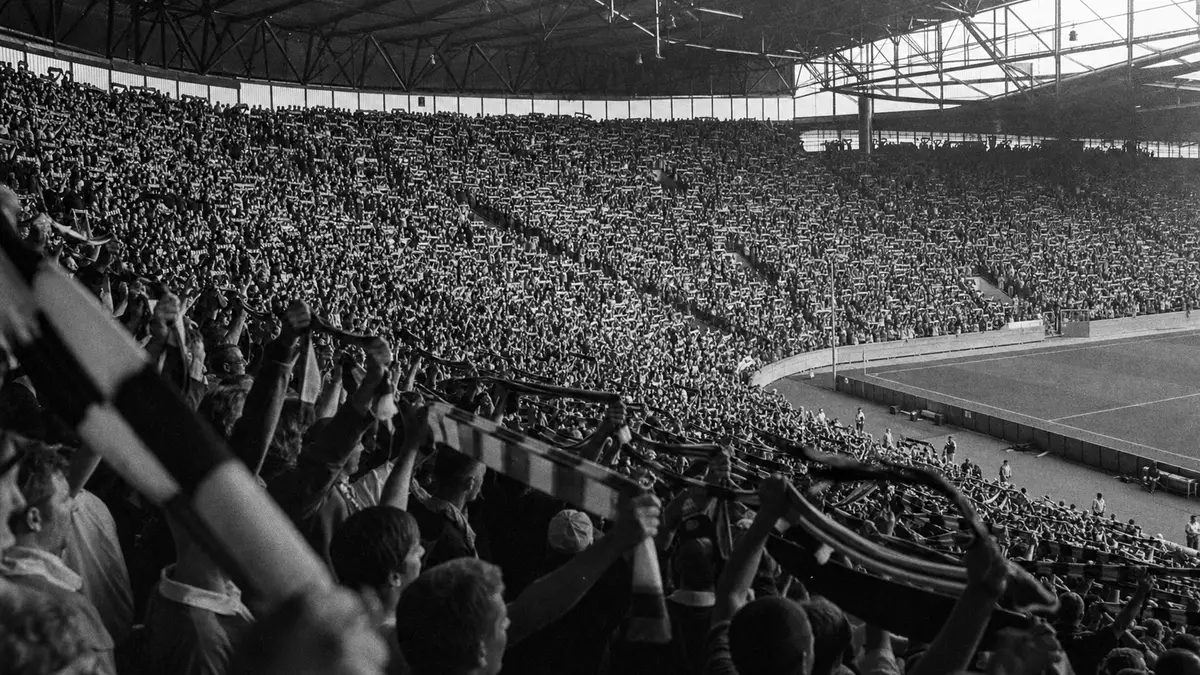
Borussia Dortmund GmbH & Co. KGaA (ISIN DE0005493092) stock is trading in the low single digits in late August 2026 while a fresh insider purchase and an expensive transfer window underline how tightly the club's finances are linked to results on the pitch as of August 26, 2026. Recent disclosures and market data show a modest share price, a new director dealing at slightly above EUR3 per share, and management guidance that aims to stabilize earnings over the coming seasons.
Insider deal supports BVB shares
A director dealing notification published on August 26, 2026 reports that a person closely associated with Borussia Dortmund's leadership bought shares on August 24, 2026 at a price of EUR3.19 per share in two tranches. The disclosure states that the two trades had volumes of EUR191,352.15 and EUR47.85, respectively, resulting in an aggregated volume of EUR191,400.00 at an average price of EUR3.19 per share as of the transaction date of August 24, 2026. This kind of purchase by a person in a leadership-related position is often interpreted by investors as a signal of confidence in the club's medium-term prospects.
On the secondary market, BVB shares have been trading slightly above this insider purchase level on German trading venues. A market overview dated August 26, 2026 shows the stock last quoted at EUR3.23 on a German platform with the previous close at EUR3.23 and an opening level of EUR3.22 for the day. The same overview lists a close of EUR3.21 for BVB on Xetra on August 25, 2026 compared with EUR3.18 the day before, indicating a gain of 0.94 percent session over session at that venue.
An analyst report that reaffirms a positive long-term view on BVB accompanies this insider activity. The equity research document dated late August 2026 reiterates a buy rating on BVB shares with a unchanged price target of EUR5.00 per share based on a discounted cash flow valuation. In that analysis, the share price used for valuation purposes is EUR3.19 as of the close on August 24, 2026, implying potential upside from that reference level if the club meets the assumptions embedded in the valuation model.
Latest market data and valuation context
The current market price leaves BVB stock trading at a substantial discount to that EUR5.00 fair value estimate mentioned in the research document. At a market level of EUR3.19 to EUR3.23 as observed around August 25 and August 26, 2026, the implied upside to the EUR5.00 target stands at roughly 57 percent when comparing EUR5.00 to the EUR3.19 close used in the report. For investors, this gap highlights how much of the club's expected improvement in earnings and cash flow is still not reflected in the share price according to the research assumptions.
Market data in the same research file provide additional context on BVB's size on the stock market. The market snapshot lists a share price of EUR3.19 and a corresponding market capitalization, indicating that Borussia Dortmund's equity continues to trade in the lower mid-cap range on German exchanges as of August 24, 2026. The insider purchase referenced above, with a total value above EUR190,000, therefore represents a non-trivial trade compared with the club's daily liquidity in the stock.
Short-term trading statistics point to modest intraday moves rather than sharp swings. The German quote overview shows BVB changing hands at EUR3.23 on Tradegate on August 25, 2026 compared with EUR3.21 the session before, a gain of 0.78 percent for that specific venue on that date. This, together with the 0.94 percent rise on Xetra between EUR3.18 and EUR3.21 on August 25, 2026, suggests that the stock has been edging higher in recent sessions from levels slightly below EUR3.20 while remaining far below the longer-term valuation target highlighted in the analyst note.
Management guidance and earnings ambitions
Beyond short-term trading, recent commentary on Borussia Dortmund's financial planning underlines that the current share price sits against a backdrop of ambitious but cautious earnings targets. A detailed report on BVB published on August 26, 2026 highlights that management has guided for a net result between EUR0 million and EUR10 million for the 2026/27 season. This corridor signals an intention to return to at least break-even after a season that ended with a loss and forced the club to forgo a dividend payment.
The same analysis recalls that Borussia Dortmund reported a negative result of EUR21.7 million for the 2025/26 season, reflecting the financial impact of an early exit in the Champions League playoffs and an elimination in the DFB Cup round of sixteen. Those setbacks meant that planned income from UEFA and domestic cup participation did not materialize, putting pressure on the profit and loss statement. Historically, that EUR21.7 million loss for the 2025/26 season serves as a reference point for the current guidance range: moving from a loss of EUR21.7 million to a target corridor of EUR0 million to EUR10 million represents an improvement of at least EUR21.7 million and potentially more than EUR30 million year over year if the upper end of the range is achieved.
This guidance also has direct relevance for equity investors. With the share price oscillating around EUR3.20 and management targeting a return to roughly break-even in 2026/27, BVB's valuation implicitly depends on whether the team can advance further in European and domestic competitions than in 2025/26. For fundamental investors, the quantified step from a EUR21.7 million loss to a potential positive result of up to EUR10 million underscores how sensitive the business model is to sporting outcomes, since the swing of more than EUR30 million in net profit would mainly be driven by changes in match-related and media income.
Transfer offensive and cost structure
Sporting ambitions and the desire to improve results on the pitch have been reflected in a very active transfer window. A detailed analysis of BVB's transfer strategy dated August 26, 2026 reports that the club has posted a transfer balance of negative EUR70 million so far in the summer window. In this period, Borussia Dortmund has invested EUR108.5 million in transfer fees for new players while realizing EUR38.5 million in income from outgoing transfers, leading to that EUR70 million net spending total.
This heavy investment follows a year with the EUR21.7 million net loss and highlights a calculated risk by management. On the one hand, such net spending increases the balance sheet value of player registrations and is intended to raise the sporting quality of the squad, which in turn can drive higher income from UEFA competitions, the Bundesliga, and commercial activities. On the other hand, it increases amortization and wage costs in the short term, which means that the targeted move from a negative EUR21.7 million result to a figure between EUR0 million and EUR10 million for 2026/27 depends heavily on those new signings contributing early and effectively.
The same transfer analysis notes that Borussia Dortmund has allowed several high earners to depart after the 2025/26 campaign without receiving transfer fees because they left on free transfers. Players such as Niklas Süle and Julian Brandt are cited as examples of this trend. While their departures lower the wage bill going forward, the absence of transfer income from these exits has weighed on recent financial statements, showing up in the EUR21.7 million loss for 2025/26. Management's strategy is therefore to offset the short-term hit from free departures and heavy net spending by lowering the average salary level and age profile of the squad while raising potential future resale values.
For equity investors, the key quantified tension here lies between the short-term increase in net transfer spending and the medium-term goal of stabilizing earnings. A negative transfer balance of EUR70 million in the current window, compared with lower net spending in previous summers, represents a sizeable outlay that must be recovered through higher revenues and possible future player sales. If the club can translate this EUR70 million net investment into deeper runs in the Champions League and higher player valuations, then the planned swing from a EUR21.7 million loss to up to EUR10 million profit in 2026/27 looks more attainable. If sporting performance disappoints again, the heightened cost base could weigh on results and constrain the ability to pay dividends.
Leadership tone and expectations management
Club leadership has been signaling caution even as the transfer offensive raises supporters' hopes. A television interview published on August 26, 2026 highlights comments from the club president, who stresses that Borussia Dortmund still faces a significant financial gap compared with its main domestic rival. He points out that the club must balance ambition with economic prudence and asks for patience from fans ahead of the new Bundesliga season.
The leadership's message dovetails with the quantified guidance corridor for 2026/27 and the recent net loss of EUR21.7 million in 2025/26. While the club is investing EUR108.5 million in new players and accepting a negative transfer balance of EUR70 million for the current window, it does so with an explicit earnings target of EUR0 million to EUR10 million. This combination underscores that Borussia Dortmund's management is willing to take calculated risks to renew the squad but aims to avoid repeated deep losses that would constrain flexibility in future seasons and could weigh further on the stock's valuation.
Representative BVB product: matchday experience
Beyond the stock and financial metrics, Borussia Dortmund's core product remains the live matchday experience at Signal Iduna Park, where the club leverages its large fan base and stadium capacity. Ticketing information published in late August 2026 shows that admission prices for certain events are structured in a way that keeps access affordable while maintaining strong matchday revenue. A recent club statement emphasizes the importance of fan relations and reaffirms the commitment to the 50+1 rule, which ensures that members retain control over key decisions. For investors, the strong matchday culture and fan engagement underpin revenue streams from ticketing, hospitality, and merchandise that support the listed company's income beyond broadcasting and sponsorship.
BVB stock and investor takeaway
As of late August 2026, BVB shares change hands on German exchanges at prices slightly above EUR3.20, with recent data showing a level of EUR3.23 and modest day-to-day percentage moves of less than 1 percent in many venues. Against this backdrop, the insider purchase at EUR3.19 on August 24, 2026 and the equity research target of EUR5.00 per share define a valuation corridor between current market pricing and a higher fair value estimate based on discounted cash flows.
For investors, the quantified story is clear: management is aiming to move from a EUR21.7 million loss in 2025/26 to a net result between EUR0 million and EUR10 million in 2026/27 while absorbing a negative EUR70 million transfer balance in the current window. If the club can translate that EUR108.5 million gross spend into improved sporting performance and higher revenues, BVB stock trading around EUR3.20 could begin to close some of the gap to the EUR5.00 valuation target cited in late August 2026. Conversely, another season with early exits could make it harder to reach the guidance range and keep the share price tied to the lower end of this corridor.
Read more
Investor Relations information on Borussia Dortmund, including detailed annual and interim reports, is available directly from the company on its corporate website.
Fact box
Company: Borussia Dortmund GmbH & Co. KGaA
ISIN: DE0005493092
Ticker: BVB
Exchange: German regional exchanges and Xetra, home market listing in EUR
Price (as of August 25, 2026, close on Xetra): EUR3.21
Sector / Industry: Sports, entertainment, and media
Index membership: German small and mid-cap universe


