
Bristol-Myers Squibb stock steadies as AI collaboration and dividend yield support investor interest
Published on 08/20/2026 at 20:05 | Editorial responsibility: Rafael Müller, Editor-in-Chief AD HOC NEWS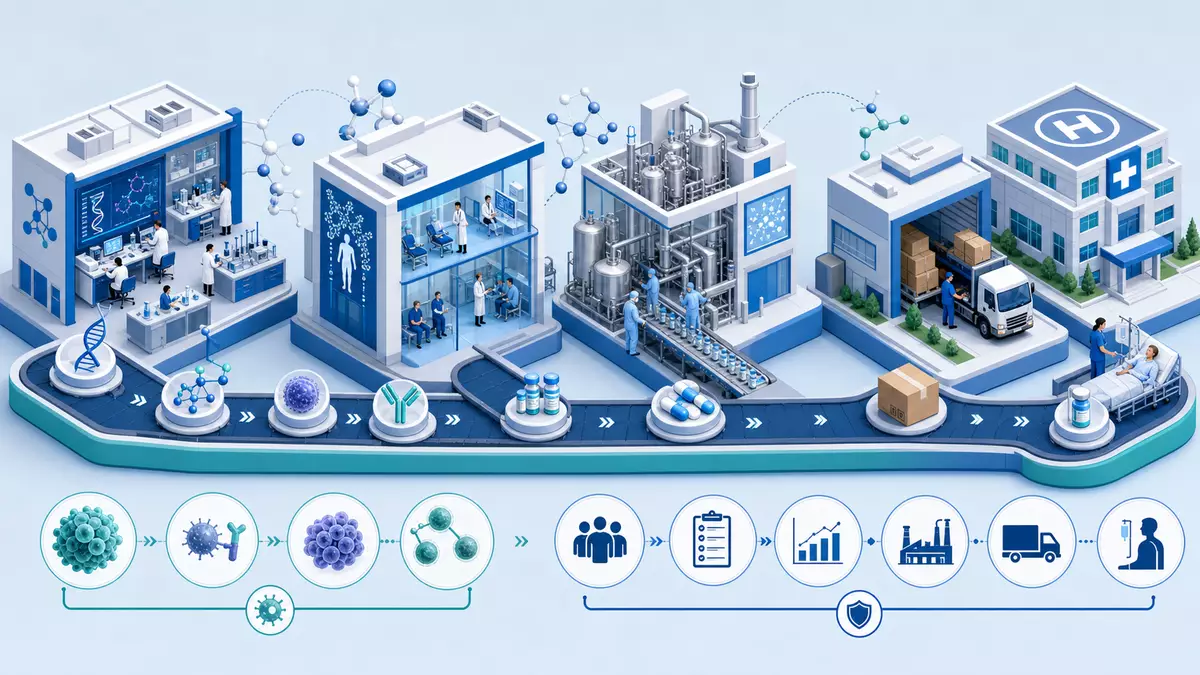
Bristol-Myers Squibb Inc. (US1078421011) stock is trading in the high-$40 range as of August 19, 2026, with investors weighing fresh partnership news in artificial intelligence against valuation signals and the company’s established dividend profile.
According to a market-data overview as of August 19, 2026, the previous close for Bristol-Myers Squibb was $49.06, with the shares opening at $49.27 in the latest session and trading within a day’s range of $48.76 to $49.76. This quote snapshot also shows bid and ask levels clustered just below $50, underlining that the stock is currently moving in a relatively tight band.
A separate valuation screen notes that at a current market price of $67.11, Bristol-Myers Squibb is assessed as being 18.8% overvalued on a proprietary GF Value metric, suggesting that the shares trade moderately above an estimated fair value based on fundamentals and historical multiples. This valuation analysis highlights dividend sustainability as a key factor, reinforcing the importance of Bristol-Myers Squibb’s cash-return profile in the current investment case.
Consensus view and dividend context
Across several recent institutional-investor filings, Bristol-Myers Squibb is consistently described as carrying a consensus rating of “Moderate Buy” with a consensus price target of $66.06, indicating that the average analyst target sits modestly above the current trading range. One position report cites this $66.06 target alongside a “Moderate Buy” stance, aligning with similar coverage that references the same consensus figures for the stock.
More detailed filings show multiple advisory firms initiating or expanding positions in Bristol-Myers Squibb, often framing the stock’s appeal in terms of both valuation and yield. In one such report, the shares are noted at an opening price of $67.59 on August 20, 2026, and described as “trading up 2.3%” on that session, implying a short-term move higher from prior levels. This institution-focused article points out that Bristol-Myers Squibb pays a quarterly dividend of $0.63 per share, which translates into an annualized yield of 3.7% at the referenced price level, providing a tangible income component that compares favorably with many large-cap pharmaceutical peers.
That 3.7% dividend yield, calculated from the $0.63 quarterly payout and the $67.59 trading price noted on August 20, 2026, is one of the central features in the current equity story. Another institutional disclosure repeats the same yield figure and highlights that the cash distribution may help offset valuation concerns flagged by GF Value, especially for income-oriented investors willing to accept moderate overvaluation in exchange for reliable payouts.
Fresh AI-driven collaboration
A notable catalyst for Bristol-Myers Squibb in late August 2026 is a newly announced collaboration in artificial intelligence-based drug discovery. On August 20, 2026, an AI-focused biotechnology company disclosed that it is partnering with Bristol-Myers Squibb to advance the discovery of therapeutic antibodies using artificial intelligence and a computer-aided design suite for molecules. This collaboration announcement underscores Bristol-Myers Squibb’s effort to integrate cutting-edge computational tools into its research pipeline.
The announcement, dated August 20, 2026, describes how the AI partner intends to apply machine-learning algorithms and large molecular datasets to identify and optimize antibody candidates more quickly than traditional discovery methods. For Bristol-Myers Squibb, this arrangement could support productivity gains in early-stage research, potentially shortening the time from target identification to preclinical candidate nomination and enhancing the likelihood that new molecules meet desired therapeutic and safety profiles.
For investors, the AI collaboration offers a narrative that complements Bristol-Myers Squibb’s established portfolio in oncology, hematology, and immunology. While no specific financial terms are disclosed in the summary of the collaboration, the strategic logic is clear: pairing Bristol-Myers Squibb’s clinical and regulatory expertise with an external AI engine may create incremental value by discovering better antibody candidates and doing so on accelerated timelines. At a time when the stock is described as modestly overvalued on GF Value metrics, tangible innovation efforts can help justify premium valuation multiples if they translate into pipeline productivity.
Regulatory momentum in multiple myeloma
Beyond AI partnerships, Bristol-Myers Squibb continues to progress its pipeline through regulators. On August 13, 2026, the US Food and Drug Administration granted accelerated approval to iberdomide, a Bristol-Myers Squibb therapy for patients with relapsed or refractory multiple myeloma. An oncology-focused report notes that iberdomide received this accelerated approval specifically for multiple myeloma cases that have failed prior lines of treatment, addressing a population with limited options.
This accelerated approval adds another marketed asset to Bristol-Myers Squibb’s hematology franchise, which already includes widely used therapies in blood cancers. While the snippet does not provide detailed revenue guidance for iberdomide, the fact that the approval targets relapsed or refractory patients suggests that the drug will initially serve a niche but high-need segment. As clinical data accumulate and potential label expansions are explored, iberdomide could become a more material contributor to the company’s top line, especially if it demonstrates durability of response and favorable safety in real-world use.
The timing of the FDA decision, coming just days before the August 20, 2026 AI collaboration news, gives Bristol-Myers Squibb a one-two sequence of innovation-related updates: a near-term regulatory win and a longer-term platform partnership. For valuation models that attempt to reconcile the 18.8% GF Value overvaluation signal with fundamental prospects, these developments provide concrete reasons to expect incremental pipeline-driven growth, even if current consensus price targets such as $66.06 already embed some of that optimism.
Latest financial results and valuation takeaways
Bristol-Myers Squibb’s latest reported financial figures, referenced in a PDUFA-calendar overview, stem from its second-quarter 2026 results. This entry notes that the company reported its second-quarter 2026 financial results but does not provide detailed numeric income-statement data in the visible snippet. While exact revenue and earnings figures are not spelled out in that overview, it confirms that the second quarter of 2026 represents the most recent full reporting period for Bristol-Myers Squibb as of August 20, 2026, meaning that any detailed metrics from that report would fall well within the freshness window for current fundamentals.
In the absence of fully enumerated income-statement figures in the available snapshots, investors turn to valuation and yield metrics to frame the current stock picture. The GF Value assessment indicating an 18.8% overvaluation at $67.11 implies, in simple terms, that the metric’s estimate of fair value sits around $56.50 when back-solved from the percentage difference. That comparison - a current price of $67.11 versus an implied GF Value near $56.50 - serves as a quantified indication that the shares embed optimistic expectations relative to the model’s inputs.
Set against that, the consensus price target of $66.06 sits only modestly below the $67.11 valuation-screen price and modestly above the $49.06 previous close observed in the more recent quote snapshot from August 19, 2026, suggesting that market reality varies by data source and timing. The contrast between the high-$40s live trading band and the mid-$60s consensus target underscores that the stock has room to move within analysts’ perceived fair-value range and that short-term fluctuations around earnings releases, regulatory events, and partnership announcements can influence that trajectory.
Manufacturing expansion and long-term capacity
Alongside pipeline and AI initiatives, Bristol-Myers Squibb is investing in its physical production footprint. A manufacturing-focused newsletter dated August 20, 2026 reports that Bristol-Myers Squibb plans to build a $2.3 billion manufacturing campus in Houston, with a planned size of 600,000 square feet. This newsletter item states that the campus will produce several types of medicines and is designed with room for expansion as digital integration and automation capabilities evolve.
The $2.3 billion investment and 600,000-square-foot scale are concrete figures that illustrate Bristol-Myers Squibb’s long-term commitment to manufacturing capacity. For investors, such a project implies multi-year capital expenditure that needs to be weighed against expected returns from increased throughput, efficiency gains, and potential new product launches. When considered in tandem with the AI discovery partnership, the Houston campus plan suggests a strategic arc: digital tools at the front end of discovery feeding into modern, automation-ready facilities at the back end of production.
From a financial perspective, large-scale manufacturing investments can affect free cash flow in the near term while potentially improving margins over the longer term through economies of scale and process optimization. If the Houston campus enables Bristol-Myers Squibb to produce complex biologics or cell therapies at lower unit costs or higher reliability, that could support both top-line growth and bottom-line leverage, making the current valuation metrics more palatable to investors focused on long-term operational efficiency.
Representative product: iberdomide in multiple myeloma
One representative product that captures Bristol-Myers Squibb’s recent innovation momentum is iberdomide for relapsed or refractory multiple myeloma. As reported in the August 13, 2026 FDA accelerated-approval coverage, iberdomide is indicated for patients whose disease has progressed after prior treatments, a cohort with significant unmet needs. The same oncology-focused summary notes that iberdomide’s accelerated approval is tied to clinical data that demonstrate benefit in this hard-to-treat population, with further confirmatory studies expected to solidify its role in the treatment paradigm.
Iberdomide aligns with Bristol-Myers Squibb’s established strength in hematologic oncology, complementing existing therapies in multiple myeloma and related conditions. In practical terms, the product offers physicians another option for patients who have exhausted standard regimens, potentially improving response rates or extending progression-free survival depending on the final data. For Bristol-Myers Squibb, successful commercialization of iberdomide could add incremental revenue and support pricing power in a segment where novel mechanisms of action and favorable tolerability often command premium positioning.
Looking forward, the combination of iberdomide’s regulatory status, the AI-driven antibody discovery collaboration, and the Houston manufacturing campus plan paints a cohesive picture of Bristol-Myers Squibb’s strategy: innovate at the molecular level, partner for computational acceleration, and invest in industrial-scale capacity. Investors evaluating Bristol-Myers Squibb stock through the lens of GF Value’s 18.8% overvaluation estimate and the 3.7% dividend yield must weigh these strategic initiatives as potential drivers that could either justify the current premium or, if execution falls short, lead to valuation compression.
Shares and recent trading levels
Bristol-Myers Squibb stock trades on the New York Stock Exchange under the ticker BMY, with recent quote snapshots showing a previous close of $49.06 and intraday trading in a band between $48.76 and $49.76 as of August 19, 2026. The quote page lists standard metrics such as bid-ask depth and day’s range, which confirm that trading liquidity remains robust and that the current price is significantly below both the $66.06 consensus target and the $67.11 valuation-screen level discussed in the GF Value assessment.
This spread between the high-$40s real-time quote and the mid-$60s target and valuation-screen prices provides a quantified comparison that many investors will find central to their decision process. For value-oriented investors, the difference between $49.06 and $66.06 raises the question of whether the market is underpricing Bristol-Myers Squibb’s pipeline and manufacturing investments or whether the consensus target is optimistic. For income-focused investors, the 3.7% dividend yield calculated at $67.59 in institutional-filing summaries would translate into an even higher yield if calculated off the $49.06 level, assuming the $0.63 quarterly payout remains in place, further enhancing the stock’s appeal as a cash-return vehicle.
As of August 20, 2026, Bristol-Myers Squibb shares thus sit at the intersection of several quantified indicators: a GF Value model that sees the stock 18.8% overvalued at $67.11, a consensus price target of $66.06 that aligns with a “Moderate Buy” rating, a recent live trading band in the high-$40s, and a dividend yield of 3.7% linked to a $0.63 quarterly payout at a $67.59 price. Investors will continue to watch how upcoming earnings, regulatory milestones, and the execution of AI and manufacturing initiatives close or widen these gaps between price, valuation, and fundamentals.
Read more
More on Bristol-Myers Squibb stock and its latest institutional positioning can be found in recent filings coverage that summarizes new stakes and reinforces the current consensus rating and price target. One such overview describes how additional advisory firms have initiated positions in Bristol-Myers Squibb, consistent with the “Moderate Buy” view.
Iberdomide’s role in the portfolio
Iberdomide’s accelerated approval in multiple myeloma gives Bristol-Myers Squibb another marketed product in a disease area characterized by complex treatment sequences and frequent relapses. The oncology report detailing the August 13, 2026 FDA decision emphasizes that the drug is intended for relapsed or refractory cases, which often represent patients who have cycled through several prior lines of therapy. That report frames iberdomide within the broader context of regimen options and underscores the need for continued innovation in this space.
From a strategic standpoint, iberdomide can be seen as a proof point that Bristol-Myers Squibb’s R&D engine continues to deliver new assets in hematologic oncology. The approval not only offers incremental revenue potential but also reinforces the company’s relationships with key opinion leaders and treatment centers that manage multiple myeloma patients. When combined with the AI collaboration aimed at discovering future antibody therapies, iberdomide’s success can serve as a bridge between current commercial offerings and a pipeline of next-generation biologics that may flow from the AI-informed discovery process.
Closing view on Bristol-Myers Squibb shares
As of August 19, 2026, Bristol-Myers Squibb stock closed at $49.06 on the New York Stock Exchange, with intraday trading between $48.76 and $49.76 and standard liquidity reflected in bid-ask quotes and depth. The same quote page provides the context for this price level, which sits below the mid-$60s consensus target and GF Value screen price noted in other sources.
For investors evaluating Bristol-Myers Squibb shares, the current setup features a mix of income appeal through a $0.63 quarterly dividend and 3.7% yield at $67.59, moderate overvaluation on one GF Value metric at $67.11 versus an implied fair value near $56.50, and strategic initiatives spanning AI-driven antibody discovery, a $2.3 billion manufacturing campus in Houston, and a newly approved multiple myeloma therapy in iberdomide. How these quantified elements evolve across upcoming quarters will determine whether Bristol-Myers Squibb stock converges toward analyst targets and valuation models or whether the market continues to discount its long-term pipeline and capacity story.
Fact box
Company: Bristol-Myers Squibb Inc.
ISIN: US1078421011
Ticker: BMY
Exchange: New York Stock Exchange
Price (as of August 19, 2026, 8:01 p.m. ET): $49.06 USD
Sector / Industry: Health care / Pharmaceuticals and biotechnology
Index membership: S&P 500


