
Bellway stock holds at 2,168 pence as investors digest trading update
Published on 08/28/2026 at 13:16 | Editorial responsibility: Rafael Müller, Editor-in-Chief AD HOC NEWS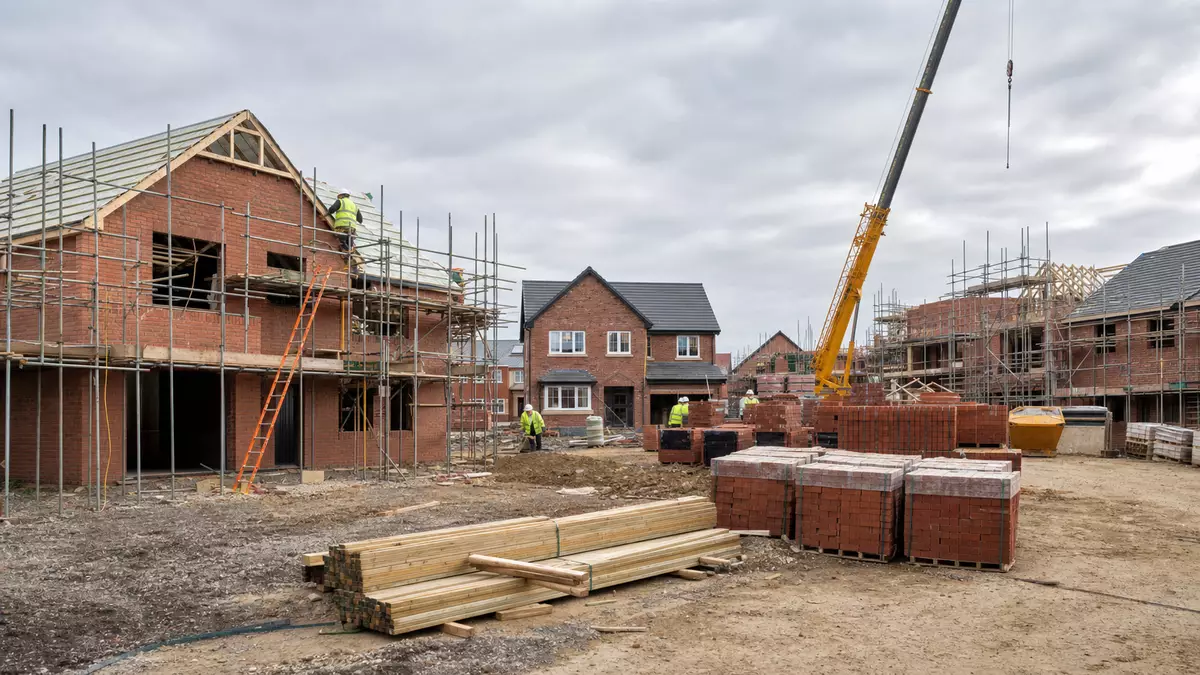
Bellway p.l.c. (ISIN GB0000904986) stock is quoted at 2,168 pence as of August 27, 2026, with the shares showing a year-to-date performance of minus 19.15 percent according to a recent market overview dated August 27, 2026. This places the housebuilder below its latest referenced real-time level, signaling cautious sentiment around the group after its recent trading update. For investors, the combination of the current price level and the drawdown since the start of 2026 frames Bellway as a cyclical name under pressure from the wider UK housing backdrop.
Share performance and current levels
Per a detailed price snapshot published on August 27, 2026, Bellway shares are recorded at 2,168 pence, with the figure also used as the latest reported stand for that day. The same data set attributes a year-to-date performance of minus 19.15 percent to Bellway, highlighting that the stock has given back a significant portion of its value since the turn of the year. The referenced overview additionally notes that this latest stand is 1.81 percent below a real-time indication from a market-data source, suggesting that intraday trading had Bellway marginally higher than the static quote used in the summary.
The 2,168 pence level on August 27, 2026 can be viewed in the context of sector volatility, as residential construction companies have been sensitive to changes in interest rates and buyer confidence. With Bellway’s shares trading below their earlier real-time indication by 1.81 percent, the stock’s intraday dynamics underscore how quickly sentiment can shift even on seemingly minor news or macro signals. For investors tracking the name, the combination of the price level and the year-to-date decline provides a concrete benchmark for evaluating valuation against peers in UK homebuilding.
Trading update context and sector backdrop
The latest reporting around Bellway refers to a trading update that has left the stock consolidating at 2,168 pence as of August 27, 2026, rather than prompting a pronounced move higher. While the detailed operational metrics of that update are not spelled out in the available snapshot, the context suggests that the message was steady rather than transformative, with the shares still reflecting a decline of 19.15 percent since the beginning of 2026. In practice, that means the company’s recent communication has not yet reversed the broader downtrend tied to housing market uncertainties and affordability pressures.
Residential construction peers have been facing similar challenges, with higher mortgage costs and tighter lending standards weighing on reservation rates and completion volumes. Within that environment, Bellway’s year-to-date move of minus 19.15 percent compares to a more modest decline in some diversified consumer discretionary names, underlining that pure-play housebuilders are especially exposed to housing-cycle swings. For long-term holders, the current share price level may be seen as a reflection of near-term demand headwinds rather than a verdict on Bellway’s ability to deliver homes over the cycle, but the quantified performance figures speak to the scale of the adjustment.
Operations and project example
Beyond share-price metrics, Bellway remains active in UK residential projects, often working alongside housing associations and local authorities to deliver new homes. Recent reporting on regeneration initiatives in London highlights how new-build schemes are being handed over to social landlords at the end of August, with first residents set to move into new properties in September. Although that coverage centers on another organisation, the pattern of delivering modern, energy-efficient homes in regenerated estates is representative of the type of projects Bellway targets in its own portfolio.
For Bellway’s business model, large-scale developments with mixed tenures and partnerships with housing associations are crucial to maintaining build volumes through different phases of the cycle. Such projects can provide more predictable demand than open-market sales alone, as institutions commit to buying units for affordable or social rent. In practical terms, this can help smooth revenue and cash flow when private buyer sentiment becomes more volatile, which is particularly relevant at a time when Bellway’s share price data show a double-digit percentage decline year to date.
Representative product: new-build homes
One representative product for Bellway is a range of mid-market new-build family homes in suburban developments, which typically combine three- and four-bedroom houses with modern energy efficiency standards. These homes are designed to appeal to buyers looking for more space than is available in city-center apartments, with features such as private gardens, off-street parking, and access to local schools and transport links. For many households, such properties offer a trade-off between commuting distance and living space, positioning Bellway’s developments as an alternative to older second-hand housing stock.
From an investor perspective, the appeal of these family homes lies in their resilience across the housing cycle: even when transaction volumes slow, underlying demand for suitable family housing remains. As mortgage conditions evolve, schemes that can offer a mix of tenures, including shared ownership and discounted market sale, may help Bellway maintain sales rates while supporting policy goals around housing affordability. The ability to design and deliver such products at scale is a key differentiator for large housebuilders compared with smaller local firms.
Stock price reference and investor angle
Based on the available market-data overview, Bellway stock is referenced at 2,168 pence as of August 27, 2026, denominated in GBX on its London listing. With a year-to-date performance of minus 19.15 percent and the latest static quote sitting 1.81 percent below an earlier real-time indication, the shares are trading below levels seen earlier in the year, reflecting the impact of housing-market concerns on valuation. For investors evaluating Bellway in the wider UK residential construction sector, the quantified price and performance figures provide a starting point for comparing the company’s trajectory against peers and for assessing whether current levels align with their view on the housing cycle.


