
BASF stock edges higher as price hikes and Q2 2026 earnings underpin outlook
Published on 08/19/2026 at 18:21 | Editorial responsibility: Rafael Müller, Editor-in-Chief AD HOC NEWS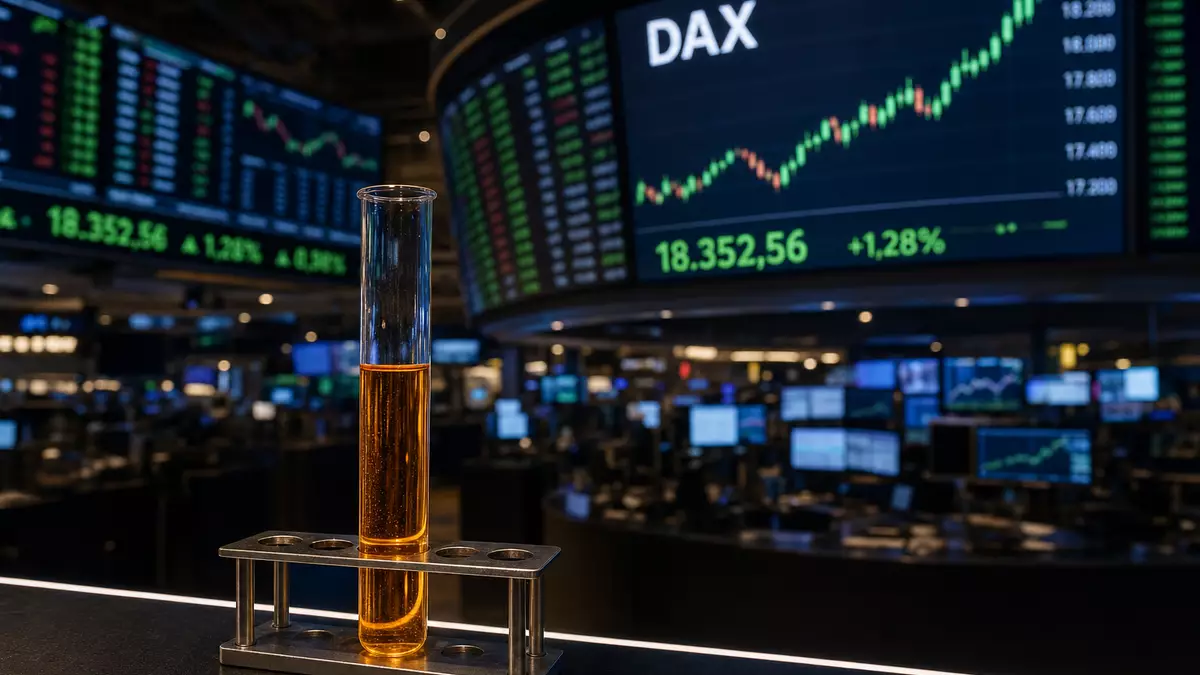
BASF (ISIN DE000BASF111) stock traded at 51.28 EUR in Xetra at midday on August 19, 2026, up 0.6 percent from the previous close according to a mid-session market update from Finanzen.ch.
The shares are holding just above 51 EUR as investors digest strong second-quarter 2026 earnings, new price increases in key product lines, and ongoing portfolio moves that are gradually reshaping the business as summarized in a Stockhouse commentary.
For investors, the combination of a firmer earnings base and active pricing measures is helping BASF defend margins in an environment of volatile input costs and still-muted global industrial demand as highlighted by recent reporting on its European price adjustments.
Q2 2026 results lift earnings guidance
Operationally, BASF delivered a strong second quarter of 2026, with revenue rising 16 percent year over year to 17.2 billion EUR and adjusted EBITDA increasing from 1.6 billion EUR to 2.4 billion EUR compared with the same period in 2025 according to the Stockhouse overview.
This means BASF added 2.4 billion EUR of revenue compared with the prior-year quarter and expanded adjusted EBITDA by 0.8 billion EUR, reflecting both higher volumes in selected businesses and improved pricing in specialty segments.
The company also raised its full year 2026 outlook, projecting EBITDA before special items in a range of 6.9 billion EUR to 7.7 billion EUR versus the previous target range, which points to a mid-range uplift of several hundred million euros for the year as summarized in the same commentary.
In relative terms, the new guidance corridor implies that BASF expects to deliver significantly higher earnings in 2026 than in the prior year, despite continued cost pressure and macroeconomic uncertainty.
Sector observers noted that the Q2 2026 results clearly exceeded the average analyst expectations for EBITDA, which had been closer to the prior-year level of 1.6 billion EUR, underlining that cost savings and portfolio optimization are feeding through more quickly than anticipated based on the Stockhouse assessment of consensus and strategy.
Price increases and share buybacks support the share
Beyond the earnings beat, BASF has begun to lean more on pricing and capital allocation to support value creation.
In Europe, the company has raised list prices for neopentylglycol (NPG) by 250 EUR per metric ton and for 1,6-hexanediol (HDO) by 300 EUR per metric ton, citing tight supply-demand conditions and higher raw material costs as reported in a chemicals industry update.
The new pricing takes effect immediately where contracts allow, meaning that from late August 2026 the incremental contribution margin from these products should begin to build, offering a partial offset to feedstock inflation in coatings, resins, and specialty intermediates.
On the capital allocation side, BASF has been executing a share repurchase program of up to 1 billion EUR scheduled to run through the end of April 2027, and between August 10 and August 14, 2026, it bought back 695,000 shares at prices between 50.27 EUR and 51.52 EUR per share as detailed in an analysis of the program.
At the upper end of that range, the company deployed around 35.8 million EUR in a single week (51.52 EUR times 695,000 shares), signaling management confidence in the intrinsic value of the business while also incrementally supporting earnings per share through a smaller share count.
The same analysis notes that BASF shares closed at 51.06 EUR on August 18, 2026, up from 50.50 EUR the day before, and remain 7 percent below their 52-week high of 55.05 EUR reached in April 2026, leaving headroom if the improved earnings trajectory can be sustained according to the same commentary.
Over the past 30 days, the stock has gained 6.4 percent and recently moved above its 100-day moving average of 50.70 EUR, with a relative strength index value of 56.8 that points to a healthy uptrend without signs of technical overheating based on the technical discussion in the same report.
Valuation and analyst consensus
The stronger operating performance and supportive technical picture are reflected in a cautious but constructive analyst consensus.
Across the expert community, the average 12-month price target currently stands at 52.63 EUR per share compared with a recent market level of 50.86 EUR, indicating expected upside of about 3.5 percent from that reference price, excluding dividends according to the Stockhouse compilation of price targets.
Within this range, more cautious houses recommend an underweight exposure, while the most optimistic analysts see fair value at 60.00 EUR to 61.00 EUR per share, corresponding to upside of around 18 to 20 percent versus the mentioned 50.86 EUR spot level as reflected in the same survey.
On forward earnings metrics, the stock is referenced with an estimated price-to-earnings ratio of 13.2 for 2027 and a dividend yield just under 3.5 percent, suggesting a balance between income and growth characteristics in the context of European large-cap chemicals according to the same analysis.
For investors evaluating the risk-reward profile, the key question is whether BASF can convert its upgraded 2026 guidance into a sustainable earnings step-up through cost measures, disciplined capital spending, and targeted portfolio actions.
Diaper performance lab highlights specialty focus
Alongside financial and pricing developments, BASF continues to invest in specialized applications that can underpin higher-margin growth over time.
The company recently inaugurated a new performance laboratory for diapers and superabsorbent polymers in Mumbai on August 18, 2026, designed to provide technical and application services to superabsorbent customers worldwide as announced on its media news page.
The site will help diaper manufacturers optimize formulations and performance characteristics of products using BASF superabsorbent materials, enabling tailored solutions for various age groups and regional consumer preferences.
From a strategic standpoint, this kind of customer-centric technical support strengthens BASF's position in hygiene applications, a segment where innovation, reliability, and close collaboration with brand owners are critical to securing long-term supply agreements and premium pricing.
BASF stock trades close to technical levels
On August 19, 2026, BASF was among the stronger constituents in the DAX index, with the shares quoted 1.18 percent higher at 51.59 EUR in early Xetra trading according to a German market overview from Finanzen.ch.
The same overview highlighted BASF as one of the top performers in the index on August 19, 2026, together with other large-cap names, indicating that investors are currently rewarding cyclical industrials and chemicals that show improving earnings momentum.
Given the recent move, the stock is now trading in the low-50s euro range, slightly above the mentioned 100-day moving average of 50.70 EUR and still below the April 2026 peak of 55.05 EUR, leaving a visible technical gap that could close if the macro backdrop remains supportive as discussed in the Ad-hoc-news analysis.
The share's relative strength index of 56.8 suggests that while the uptrend has been firm over the past month, the stock is still some distance from overbought territory on this technical indicator, allowing room for further gains or consolidation without immediate pressure for a correction according to the same report.
Superabsorbent polymers as a representative BASF product
Superabsorbent polymers are a representative product family for BASF, illustrating how the company combines chemistry expertise with application know-how.
These materials are cross-linked polymer chains that can absorb many times their own weight in liquid, making them essential components in modern diapers, adult incontinence products, and sanitary items.
By fine-tuning polymer structure and particle size distribution, BASF can influence absorption speed, liquid retention under pressure, and distribution characteristics in the finished hygiene product, which are key performance parameters for brand owners.
Beyond hygiene, superabsorbent technologies also have potential in agriculture and specialty packaging, where controlled water management and spill containment are important.
Latest trading snapshot
At midday on August 19, 2026, BASF shares traded at 51.28 EUR in Xetra, 0.6 percent higher than the prior close, in line with the broader DAX index showing modest gains based on the intraday BASF quote.
A separate DAX snapshot for August 19, 2026, cited BASF as gaining 1.18 percent to 51.59 EUR in early trading, underscoring consistent demand for the stock through the session as investors responded to the earnings upgrade, ongoing buybacks, and targeted price increases in key businesses as reported in the DAX report.
Read more
More on BASF stock and its investor updates can be found on the company media and financial pages linked in the sources above.
Fact box
Company: BASF SE
ISIN: DE000BASF111
Ticker: BAS
Exchange: Xetra
Price (as of August 19, 2026, 12:28 p.m. CET): 51.28 EUR
Sector / Industry: Chemicals / Diversified chemicals
Index membership: DAX


