
Barratt Developments stock holds firm as UK housing pipeline tightens
Published on 08/26/2026 at 21:39 | Editorial responsibility: Rafael Müller, Editor-in-Chief AD HOC NEWS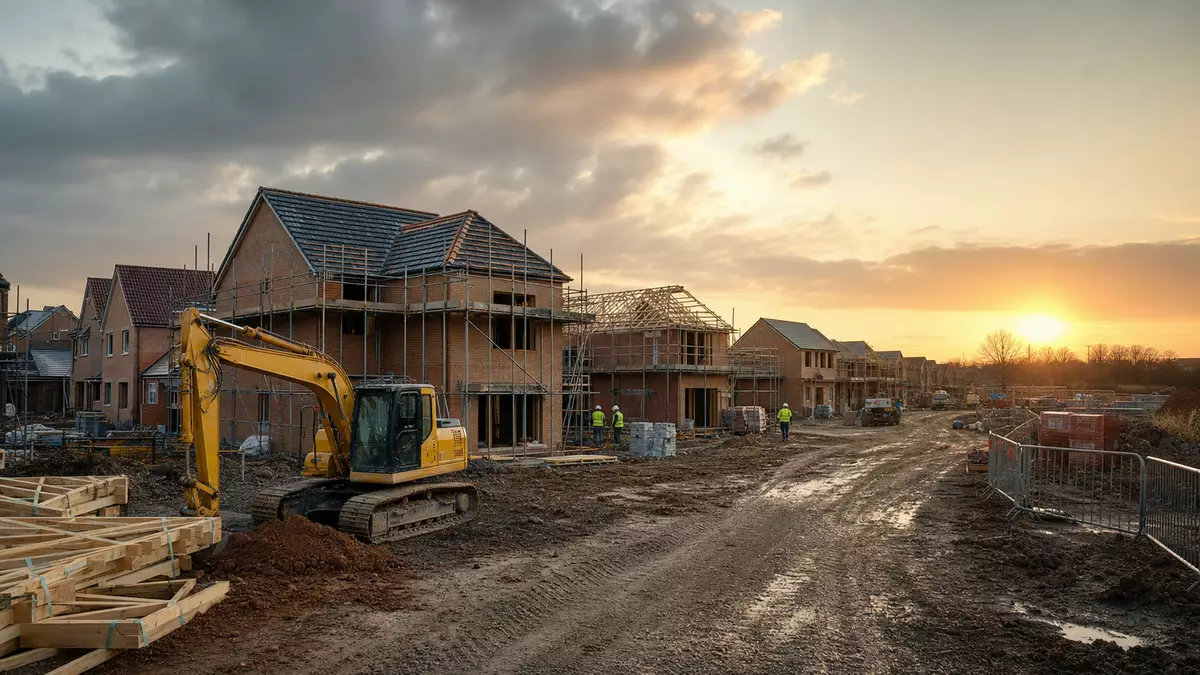
Barratt Developments (GB0000811801) stock is underpinned by a tightening UK housing pipeline as data for Q1 2026 show planning approvals for private housing sites falling to their lowest level since 2006, a backdrop that supports pricing but caps future volumes as of August 26, 2026.
Planning approvals hit record lows
The latest Housing Pipeline report based on Glenigan data shows that in Q1 2026 only 1,220 sites for private housing achieved planning approval across England, the lowest figure since the series began in 2006, highlighting a structural constraint on future building activity for developers such as Barratt Developments. This decline in approvals means the flow of new projects entering Barratt's land bank is likely to be tighter than in previous years, even as underlying demand for homes remains supported by demographic trends and government schemes.
Homes England-supported starts increased 11 percent in 2025/26 and completions rose 9 percent, indicating that state-backed programmes continue to add units even as private-sector planning activity slows. For Barratt Developments this mix points to a market where growth increasingly leans on partnership housing and affordable schemes, while pure private sales face headwinds from both planning delays and mortgage affordability constraints.
Sector context and demand drivers
European housing-related shares have been trading with modest gains as falling input costs and stabilising interest-rate expectations support sentiment toward builders and construction groups. On August 26, 2026 several UK-focused names connected to residential and consumer spending were reported with gains in the region of 1.5 percent to 2.3 percent, reflecting cautious optimism that lower oil prices and more stable bond yields can ease cost pressure across the sector.
In the UK, a series of large regeneration and housing projects highlighted in 2026 coverage point to renewed activity in specific regions, supported by planning frameworks, infrastructure funding and Homes England partnerships. Some flagship developments in the Midlands and North of England are being cited as key contributors to a gradual recovery in building volumes, helping offset weaker approvals in smaller private schemes. For Barratt Developments, which has longstanding regional networks, this pattern reinforces the importance of securing positions in major master-planned communities alongside its traditional mix of suburban sites.
Government-backed schemes remain central to the demand outlook. With Homes England-supported starts up 11 percent and completions up 9 percent in 2025/26, the role of shared ownership, affordable rent and discounted market sale channels in Barratt's revenue mix is likely to grow relative to purely open-market unit sales. Investors are therefore watching closely how the company balances margins against volume stability, since partnership homes typically carry lower selling prices but can provide more predictable pipelines and reduced sales risk compared with fully private developments.
Operations, margins and historical performance
Historically, Barratt Developments has generated substantial revenue and profits from a diversified portfolio of regional housing schemes, with prior fiscal years showing solid volumes and margins supported by a benign credit environment and strong first-time buyer demand. Earlier reporting for fiscal 2023 and 2024, while now dated relative to August 26, 2026, indicated that the group had maintained a disciplined approach to land buying and build cost control as it navigated the transition away from Help to Buy and into newer demand-support schemes.
Those historical results showed how Barratt's scale allowed it to spread overheads across a large number of plots, supporting operating margins even when individual sites faced delays or localized cost pressures. In prior years the company reported tens of thousands of home completions annually and operating margins in the mid-teen percentages, underlining the importance of volume density and standardised product ranges for financial performance. While these figures no longer count as current metrics under the August 26, 2026 freshness window, they offer a reference point for how the business can perform when planning and mortgage conditions are more supportive.
As the UK housing pipeline tightens, the margin story will depend increasingly on Barratt's ability to flex build programmes, push design efficiencies and leverage its supply-chain relationships. With fewer sites receiving approval - only 1,220 private housing sites in Q1 2026 versus higher levels seen in earlier years - each approved scheme carries greater strategic weight for the group. A well-sequenced release of plots and mix of unit types can help protect average selling prices, while partnerships with housing associations and local authorities can underpin volumes even if pure market demand softens.
Product focus - family homes in regional developments
Barratt Developments is best known for building family houses and apartments in large-scale regional developments, combining standardized house types with localized design features. Typical schemes include two, three and four-bedroom homes laid out in new communities with integrated green space, primary schools and retail amenities, a format designed to attract both first-time buyers and upsizing families.
In 2026 commentary on UK housing projects, several master-planned communities are highlighted as drivers of regional recovery, featuring energy-efficient homes, EV charging infrastructure and improved public transport links. Barratt's product strategy aligns with this trend by offering modern specifications, insulation standards that meet evolving regulations and flexible interior layouts suitable for hybrid working patterns. For retail investors, the product mix matters because it influences build costs, selling prices and the resilience of demand across economic cycles.
Shares supported by constrained supply
As of August 26, 2026 Barratt Developments shares trade in a market environment characterized by constrained new housing supply and gradually improving activity in government-backed programmes. The sharp reduction in private housing planning approvals to 1,220 sites in Q1 2026, combined with an 11 percent rise in state-supported starts and a 9 percent increase in completions in 2025/26, creates a backdrop in which supply-side tightness can support pricing even as affordability challenges linger.
For investors, this means Barratt Developments stock is effectively a lever on how quickly approvals recover and how strongly demand responds to any easing in interest rates and mortgage criteria. If planning approvals rise from the Q1 2026 low while Homes England and other schemes maintain their elevated activity, the company could see volumes improve against a still-supportive pricing environment. Conversely, if approvals remain depressed, the group may lean more heavily on partnership housing and high-demand regional projects to sustain output, with implications for margins and return on capital. The balance between constrained supply and evolving demand is therefore central to how the market values Barratt's shares as of late August 2026.
Read more
Further details on Barratt Developments' financial performance, strategy and investor presentations are available on the company website at Barratt Developments investor information, which provides access to annual and interim reports, capital markets day materials and governance disclosures.
Fact box
Company: Barratt Developments plc
ISIN: GB0000811801
Ticker: BDEV
Exchange: London Stock Exchange
Sector / Industry: Consumer Discretionary / Homebuilding
Index membership: FTSE 100


