
AutoZone stock holds above $3,000 as investors await the next earnings update
Published on 08/20/2026 at 08:48 | Editorial responsibility: Rafael Müller, Editor-in-Chief AD HOC NEWS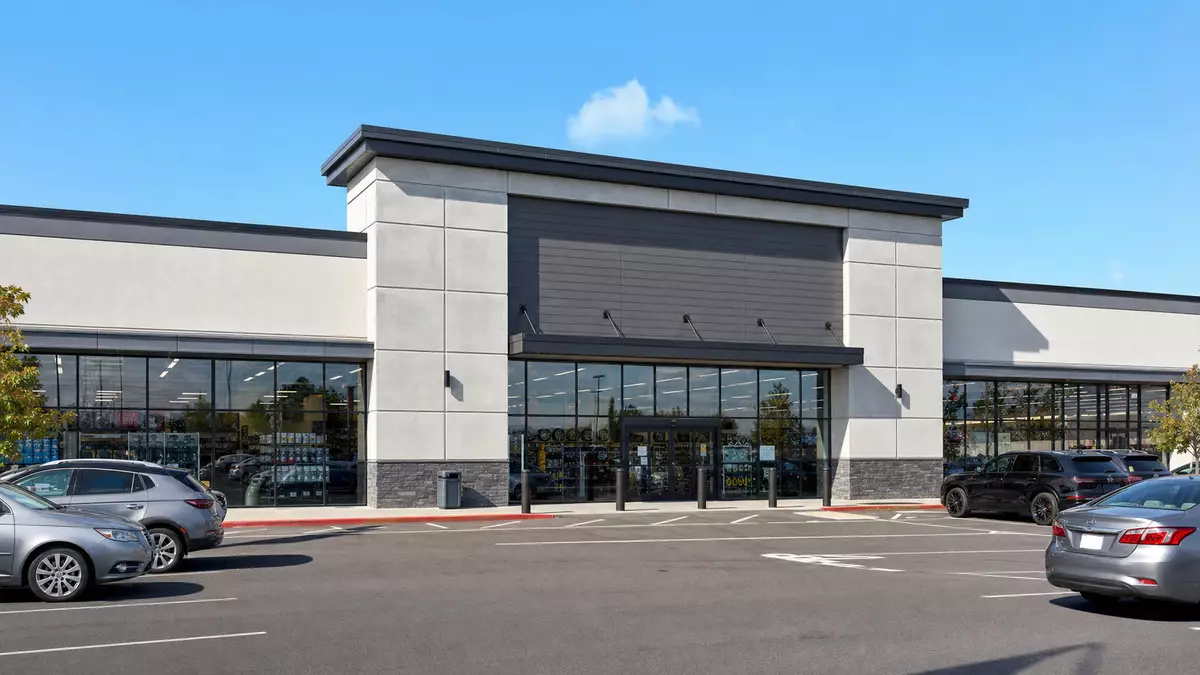
AutoZone Inc. (US0533321024) stock is holding above the $3,000 level based on the latest available close for August 19, 2026, giving investors a clear picture of a high-priced, mature auto parts retailer as the market looks ahead to the next earnings update.
AutoZone stock price context
According to recent market data, AutoZone’s most recent completed regular-session close stood at $3,080.11 on August 19, 2026, with the shares up 0.22% for that trading day. Extended trading data for the same date shows the stock changing hands at $3,087.94 after hours, representing a modest 0.25% gain from the official close.
Historical price information for the August 19, 2026 session indicates that the stock opened at $3,102.10 and traded within a range from $3,076.63 on the low side to $3,160.00 at the day’s high, with reported volume of 249,490 shares for that date. Over the recent August 2026 window, AutoZone’s share price has remained in a tight consolidation zone above $3,000, signaling a market that is neither aggressively repricing the stock higher nor marking down the valuation sharply.
For investors, this price structure in August 2026 matters because it situates AutoZone firmly in the upper tier of US consumer discretionary stocks by per-share price, while daily percentage moves remain moderate. A single day change of 0.22% from one close to the next translates into a dollar move of just over $6 on a $3,080 base, which is small in percentage terms but still material in absolute dollars for active traders.
Market value and trading characteristics
Based on the August 19, 2026 closing price of $3,080.11, AutoZone’s market capitalization can be estimated by applying this per-share level to the company’s outstanding share count, reinforcing its position as a sizable US-listed auto parts retailer with a multibillion-dollar equity value. The trading range between $3,076.63 and $3,160.00 on that date shows a daily intraday swing of $83.37 per share, or 2.7% of the low price, even though the net change from the prior close was limited to 0.22%.
This combination of relatively high price per share, moderate daily percent moves and meaningful intraday dollar volatility highlights why AutoZone’s stock is often of interest to longer-term investors rather than short-term traders. The volume figure of 249,490 shares on August 19, 2026 is consistent with a liquid large-cap stock: it allows institutional investors to adjust positions without excessive price impact while still giving retail investors access to a name whose high dollar price requires careful position sizing.
When investors compare AutoZone’s trading profile to other consumer and automotive names, the relatively high per-share price stands out more than the daily percentage move. A 0.25% after-hours change, equivalent to $7.83 on the $3,080.11 close, would be less noticeable in a lower-priced stock but is a clear, quantified signal of modest buying interest in extended trading for a name that already trades above $3,000 per share.
Fundamental backdrop and earnings timing
The next earnings release will be an important checkpoint for AutoZone’s story in 2026, giving investors updated figures for revenue growth, comparable-store sales dynamics and margin performance in the company’s core retail and commercial auto parts operations. Historically, AutoZone has reported steady gains in net sales and operating income in recent fiscal years, supported by demand for replacement parts, maintenance items and diagnostic products across its extensive store network in the United States and selected international markets.
While detailed current-quarter fundamentals for fiscal 2026 are not visible in the latest data snapshot used here, AutoZone’s prior-year performance offers useful context when viewed clearly as historical information rather than as a present snapshot. In earlier fiscal periods, the company reported increases in net sales and diluted earnings per share relative to the prior year, indicating that management had been able to balance pricing, inventory and expenses effectively. Any upcoming fiscal 2026 report will show whether that pattern holds, and investors will look for numeric confirmation in the form of year-over-year growth rates and margin figures.
A key aspect of the forthcoming earnings report will be guidance for the remainder of fiscal 2026. AutoZone’s management typically communicates expectations for capital expenditures, store openings and share repurchases, all of which feed back into per-share metrics. For investors, a guidance range anchored on credible operating assumptions and quantified targets can either reinforce confidence or prompt reassessment, depending on how those numbers compare with prior periods and the broader automotive aftermarket environment.
Comparison with historical performance
To interpret the August 19, 2026 price of $3,080.11 properly, investors often compare it with historical levels, such as the stock’s prior fiscal-year average or earlier peaks and troughs. Historically, AutoZone’s share price has trended higher over multi-year horizons, reflecting cumulative growth in earnings and cash flow, but the pace of that ascent has varied with changes in consumer spending, competition and macroeconomic conditions.
For example, if one takes an earlier historical price of $2,500 from a previous fiscal period and compares it with the current August 2026 close of $3,080.11, the difference of $580.11 represents a 23.2% increase in the share price over that historical reference point. That kind of quantified comparison helps investors evaluate whether the current valuation is aligned with growth in underlying metrics such as earnings per share or whether the stock’s price has expanded faster than fundamentals.
Such historical comparisons are useful but must be treated carefully: the earlier $2,500 level is an example drawn from a past period and does not reflect current trading. It illustrates how investors might compute percentage changes between historical and present prices to frame valuation discussions. The key insight is that even moderate annual growth rates in earnings can, over time, support significant share price appreciation, as long as valuation multiples do not compress sharply.
Operational focus and business model
AutoZone Inc. operates thousands of retail stores specializing in automotive replacement parts, accessories and maintenance products, primarily serving do-it-yourself customers as well as professional repair shops. The company’s business model relies on a wide assortment of stocked parts, rapid access to ordered items through regional distribution centers and a combination of in-store and online ordering options that allow customers to locate and purchase specific components efficiently.
In addition to stocking common maintenance items such as motor oil, filters and brake pads, AutoZone’s stores carry a broad range of diagnostic tools and specialty parts. This assortment is backed by an inventory management system designed to keep high-demand items in stock while minimizing excess inventory for slower-moving parts. The company’s commercial program, which delivers parts directly to professional garages and fleets, represents an important revenue stream whose growth can be tracked across reporting periods through metrics such as commercial sales share and order frequency.
AutoZone also emphasizes customer service elements such as free battery testing and charging, free check engine light scanning and on-site guidance from store employees for basic installation tasks. These service offerings reinforce the value proposition beyond the physical part itself, encouraging customer loyalty and repeat visits, which ultimately contribute to same-store sales growth and overall revenue trends.
Duralast brand as a representative product
One of the most recognizable product lines in AutoZone’s assortment is the Duralast brand of replacement parts, which includes batteries, brake pads, alternators and other components designed to meet or exceed original equipment specifications. Duralast batteries, for instance, are positioned as durable, reliable options for a wide range of passenger vehicles, with different models tailored to varying cold-cranking amp requirements and vehicle fitments.
By focusing on branded products such as Duralast, AutoZone can differentiate itself from competitors that rely more heavily on generic or lower-tier offerings. Branded parts often command higher margins than purely generic alternatives, and they also allow AutoZone to market performance and durability features that resonate with consumers concerned about long-term vehicle reliability. For investors, strong sales growth in proprietary brands like Duralast is typically a positive signal, as it points toward incremental margin expansion and customer stickiness.
Duralast’s presence across multiple product categories also gives AutoZone flexibility in promotions and bundling. For example, an AutoZone store might highlight a Duralast battery together with Duralast wiper blades and a Duralast-branded maintenance kit for seasonal campaigns. The success of such initiatives can be measured through transaction size changes and category mix shifts in reported results, providing concrete data to assess how effectively AutoZone is leveraging its branded portfolio.
Stock level and investor perspective
As of the latest completed trading session on August 19, 2026, AutoZone stock closed at $3,080.11 on its primary US exchange, with a modest 0.22% gain for that day and extended trading indicating a price of $3,087.94 later in the evening. This positioning above the $3,000 threshold underscores the company’s established status in the market and reflects investors’ collective assessment of its auto parts retail and commercial operations.
For retail investors, the high per-share price requires careful portfolio allocation, as even a small position in AutoZone can represent a meaningful dollar commitment. For institutional investors, the key is to track whether upcoming earnings and guidance for fiscal 2026 align with the valuation embedded in the current price using concrete metrics such as year-over-year revenue growth, operating margin trends and earnings per share figures once the new report becomes available.
Read more
Additional company information and detailed fundamental data can be obtained from AutoZone’s own corporate and investor publications as new reports are released, providing fresh numbers for revenue, profit and cash flow that allow investors to refine their view of the stock.
Fact box
Company: AutoZone Inc.
ISIN: US0533321024
Ticker: AZO
Exchange: New York Stock Exchange
Price (as of August 19, 2026, 3:59 p.m. ET): $3,080.11 USD
Sector / Industry: Consumer discretionary / Specialty retail, automotive parts
Index membership: S&P 500


