

AMD stock retreats from recent highs as investors digest rapid data center growth
Published on 08/19/2026 at 07:32 | Editorial responsibility: Rafael Müller, Editor-in-Chief AD HOC NEWS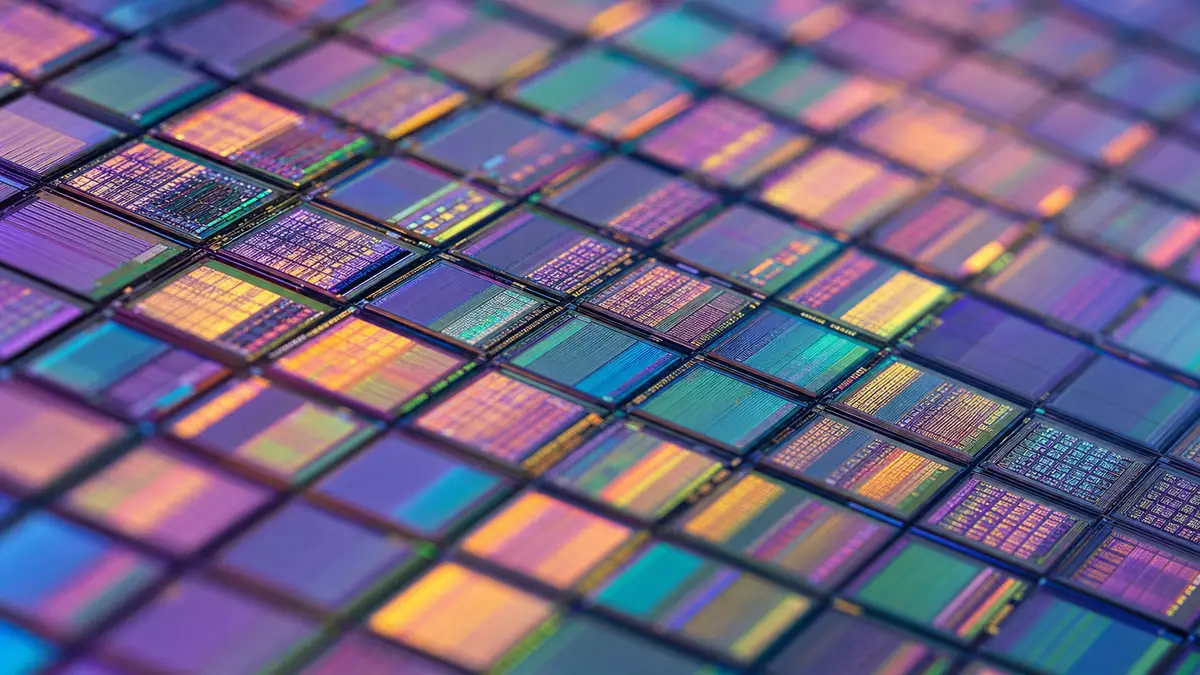
Advanced Micro Devices Inc. (ISIN US0079031078) stock is trading lower on August 19, 2026, with a recent quote near $484.63 after a sharp run that saw the shares close at $506.00 earlier this week as investors weigh rapid data center growth against rich valuations. Recent market data describe AMD changing hands at $484.63 as of August 19, 2026, 00:01 a.m. ET, down 4.26% from a previous reference price of $506.00.
The latest full-session close captured by a recent news overview shows AMD at $484.39 on August 18, 2026, reflecting a one-day decline of 4.27% from the prior close and extended trading indications around $479.47 later that day. That same overview anchors the short-term move as part of a broader pause after the stock had been holding above the $500 mark.
Stock moves after an extraordinary rally
Recent quote snapshots indicate that AMD stock previously closed at $506.00 on Nasdaq on August 17, 2026, supported by intense interest in the company’s AI and data center roadmap. One recent corporate-news overview highlighted a 52-week range from $149.22 to $584.73 and a market capitalization of $826 billion based on the $506.00 price, underscoring how far the stock has climbed in less than a year.
Viewed against that backdrop, the latest quote near $484.63 as of August 19, 2026, represents a pullback of a little more than $21 from the earlier $506.00 level, trimming some gains without changing the longer-term picture of strong appreciation during 2026. The same data imply that AMD has still more than doubled year to date in 2026, even after the recent retreat, leaving the shares well above the lower end of their 52-week range.
Second-quarter 2026 results show powerful growth in data center
The market’s reassessment comes shortly after AMD reported standout second-quarter results for 2026, with company revenue rising 50% year over year to a record $11.5 billion for the period. Coverage of the second-quarter earnings release notes that data center segment revenue climbed 107% to $6.7 billion, meaning the segment now accounts for 58% of total company revenue.
That same report describes adjusted earnings per share rising 82% year over year once roughly $800 million of charges booked a year earlier are set aside, highlighting how profits are scaling alongside revenue growth in the latest quarter. In practical terms, AMD is converting its surge in AI and server demand into bottom-line gains at a rapid clip, which investors are watching closely as the company invests heavily in new accelerators and platform partnerships.
Beyond the headline figures, management commentary emphasizes that server CPU revenue set a record for the fifth consecutive quarter in the second quarter of 2026, while cloud and enterprise sales each grew more than 70% year over year. Those metrics show that the company’s traditional server CPU business remains robust even as newer AI accelerator lines grab more attention, giving AMD multiple engines of growth inside its data center segment.
Guidance points to strong second-half momentum
Looking ahead, AMD has guided to third-quarter 2026 revenue of $13 billion, plus or minus $300 million, implying a midpoint of $13 billion and year-over-year revenue growth of about 41% in that period. The same earnings-related coverage indicates that management expects data center sales to accelerate further in the second half of 2026, supporting stronger overall revenue expansion and continued earnings growth as major AI deployments ramp.
Investor commentary around the August earnings notes that data center growth exceeded expectations and that the revenue outlook for the current quarter is slightly above some forecasts, even if it is not dramatically higher than consensus. In that context, today’s consolidation in the stock price can be read as the market balancing powerful growth in the core businesses against an already ambitious valuation multiple.
Consensus data compiled in recent research suggest that the average analyst target price for AMD stands near $546.87, with the prevailing rating described as a moderate buy stance. A recent consensus snapshot cites the $546.87 figure as the current blended target, offering a numerical reference point for how professionals view upside potential relative to the latest trading zone in the mid-$480s.
Valuation and investor debate in 2026
As of mid-August 2026 commentary, AMD shares are described as trading at roughly 68 times forward earnings, significantly above valuation levels quoted for some peers in the high-performance computing and AI accelerator space. One recent analysis contrasts this forward multiple with an estimated 25 times forward earnings for a major rival, illustrating the premium investors are willing to assign to AMD’s growth trajectory.
At the same time, the same coverage emphasizes that profits are catching up quickly, reinforcing the 82% year-over-year increase in adjusted earnings per share in the second quarter as a key driver. The combination of a 50% revenue jump to $11.5 billion, a 107% surge in data center revenue to $6.7 billion, and the 82% EPS growth figure creates a narrative of high growth that many investors argue helps justify a forward multiple well above the sector average.
The valuation discussion also interacts with broader AI infrastructure trends, including major cloud providers expanding their use of AMD chips. A recent report highlights an expanded bet on AMD’s accelerators within large scale deployments, with management remarking that data center sales should accelerate in the second half of 2026. That outlook supports the idea that earnings could grow into the current valuation over the next several quarters, even if short-term price swings remain pronounced.
Fresh partnership news around AI inference
In parallel with the earnings story, AMD is featured in new partnership discussions around AI inference acceleration. A recent technology alert details how Cerebras unveiled its CS-4 system alongside partnerships with multiple AI players, including a split architecture where AMD GPUs handle the prefill stage of model processing and Cerebras systems manage token decoding. The CS-4 partnership overview notes that this disaggregated inference approach was discussed between Cerebras leadership and AMD’s chief technology officer Mark Papermaster.
Under the described split, GPUs manage the initial context processing, while Cerebras hardware handles the token-by-token generation phase, with claims that the combined system can deliver up to 10 times faster inference than GPU-only configurations and up to five times more throughput than Cerebras systems in isolation. In a separate comparison, the CS-4 platform itself is expected to provide as much as 30 times faster token generation than some GPU solutions, according to the same coverage.
For AMD investors, the partnership reinforces the company’s relevance in cutting-edge AI workloads, especially as AI models grow so large that novel inference architectures become necessary. Although the CS-4 is a distinct platform, tying AMD GPUs into the workflow signals that AMD’s accelerators can play a central role in multi-vendor AI stacks, potentially opening incremental demand beyond traditional server and standalone accelerator deployments.
Short-term sector pressure and trading dynamics
The latest pullback in AMD stock also occurs against a backdrop of sector-wide weakness in some semiconductor and AI names. A recent liveblog summary of US markets points to pressure on key technology and chip indices, as futures for the Nasdaq 100 and related benchmarks showed declines in the 1% range ahead of recent sessions, framing investor caution in the broader growth complex.
In a related development, one trading overview highlights that shares of Cerebras Systems, Intel, and AMD were each under pressure ahead of a major AI-related event, with AMD down around 5% in that context. This sector snapshot ties some of the short-term volatility to event-driven positioning and shifting expectations for near-term newsflow rather than to any specific negative surprise in AMD’s fundamentals.
These cross-currents help explain why AMD shares can give up more than $20 in a single day after trading above $500, even as the latest quarterly numbers remain strong. Traders active in AI and semiconductor names often adjust exposure quickly around events and macro headlines, creating swings that may appear disconnected from recent earnings metrics but that nonetheless shape entry and exit points for shorter-term participants.
Representative AMD product: data center GPUs and accelerators
While AMD’s portfolio spans CPUs, gaming GPUs, and embedded processors, investors currently pay particular attention to its data center accelerators used in AI training and inference. Building on its CDNA architecture, AMD’s latest data center GPUs are designed to deliver high throughput for large language models and other machine learning workloads, competing directly with alternative chip families in the cloud and enterprise space.
These accelerators integrate tightly with AMD server CPUs in many deployments, enabling unified platforms where compute, memory bandwidth, and interconnects are optimized for AI tasks. That integrated approach matters in applications such as recommendation engines, generative AI assistants, and high-performance analytics, where latency and power efficiency are critical alongside raw performance.
The company’s focus on data center products connects directly to the second-quarter figures cited earlier, in which data center revenue reached $6.7 billion and accounted for 58% of overall revenue. As the mix shifts toward these AI-centric and server-focused offerings, AMD’s long-term growth story increasingly hinges on the success of these accelerators and related platform components.
Latest price context for AMD stock
AMD shares trade on Nasdaq under the ticker AMD, with recent closing and quote data offering a concrete snapshot of current levels. As of August 18, 2026, a news summary reports a regular-session close of $484.39 at 4:00 p.m. ET, followed by extended trading indications around $479.47 later that evening. As of August 19, 2026, 00:01 a.m. ET, a separate real-time quote page lists a trading price of $484.63, capturing the latest available level at the time of writing.
Taken together, these figures show AMD stock pulling back from the $506.00 close recorded on August 17, 2026, while still trading at more than three times the lower end of its 52-week range around $149.22. For long-term investors, the combination of strong second-quarter growth, ambitious guidance to around $13 billion in third-quarter revenue, and an evolving AI partnership landscape forms the backdrop against which this high-volatility price action is unfolding.
Read more
Investor Relations
Fact box
Company: Advanced Micro Devices Inc.
ISIN: US0079031078
Ticker: AMD
Exchange: Nasdaq
Price (as of August 19, 2026, 00:01 a.m. ET): $484.63 USD
Market cap: $826 billion (as of August 17, 2026)
Sector / Industry: Semiconductors / Technology hardware
Index membership: S&P 500, Nasdaq-100


