
Amcor stock trades steadily as Q3 FY26 profits rise
Published on 08/27/2026 at 14:16 | Editorial responsibility: Rafael Müller, Editor-in-Chief AD HOC NEWS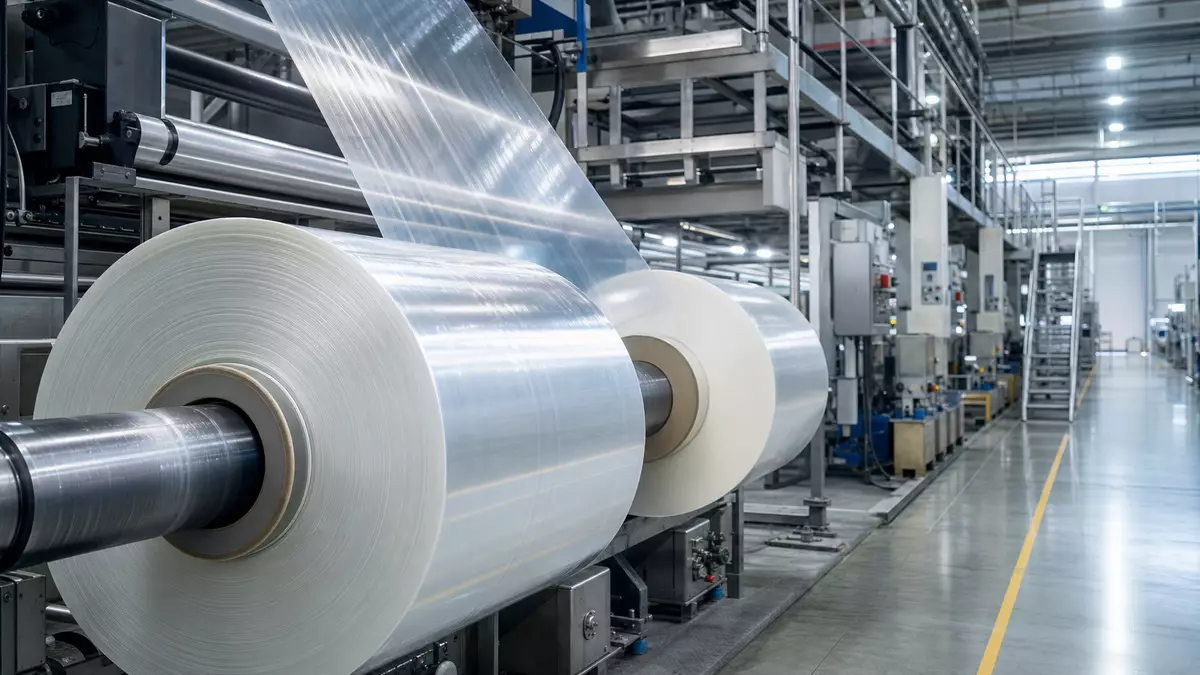
Amcor plc (ISIN JE00BJ1F6598) stock is trading at multiple tens of dollars per share as of late August 27, 2026, reflecting a markedly higher level than before the company’s recent capital actions and supported by improved profitability in the latest reported quarter.
Recent price action and reverse split
Market data for Amcor’s primary listing indicate that, as of August 26, 2026, the stock’s previous close stood at $11.19, with the same $11.19 mark also recorded as the official open for the latest completed session, underscoring a relatively narrow trading range for the packaging group’s equity. This late-August 2026 quote context highlights a day’s range between $11.15 and $11.26, pointing to a calm session despite the company’s broader strategic moves.
A separate market overview shows Amcor’s ordinary shares listed in New York carrying a market capitalization figure of $20 billion as of late August 27, 2026, signaling that the company sits firmly in the large-cap bracket among global packaging peers. The same overview lists Amcor’s main New York–traded line alongside other industrial names, emphasizing that the stock’s valuation now matches investors’ expectations for a stable, cash-generative packaging business.
Corporate actions have also reshaped the share price profile. A recent corporate actions tracker notes that Amcor executed a 1-for-5 reverse split on its ordinary shares, meaning that investors now hold 1 new share for every 5 shares previously held, with fractional positions retained on accounts. This reverse-split adjustment helps explain why the New York–listed stock price appears at a higher dollar level today than historical quotations on the same ticker.
Q3 FY26 earnings and margin trends
While the share price reflects the structural shift from the reverse split, the fundamental story in 2026 centers on Amcor’s earnings and margins. A detailed financial summary for Amcor’s home-market listing states that in Q3 FY26 the company generated revenue of 5.91 billion in its home currency while delivering earnings of 278 million for the same period. The Q3 FY26 snapshot translates that headline into a profit margin of 4.70 percent, indicating that Amcor has been able to convert a mid-single-digit proportion of sales into bottom-line profit in the latest quarter.
Those Q3 FY26 figures mark a concrete step up compared with earlier quarters in the current fiscal year, as the same financial overview shows lower profit contributions in Q1 and Q2 FY26 for comparable revenue bands. In other words, even though revenue in Q3 FY26 at 5.91 billion remains within a similar range to previous quarters, earnings of 278 million and the 4.70 percent profit margin demonstrate that Amcor has improved its operational efficiency and pricing discipline as fiscal 2026 has progressed.
For investors, the key comparison lies between the Q3 FY26 margin and the company’s earlier performance. A mid-fiscal-year margin closer to 4 percent would have implied weaker profitability; the move to 4.70 percent in Q3 FY26 thus represents a meaningful enhancement in earnings power on essentially comparable revenue volumes. This pattern suggests that cost-saving initiatives and product mix shifts are feeding through to the income statement in a way that supports the current share price and dividend capacity.
Analyst expectations and valuation context
The same home-market data set provides an indication of how the market is valuing those earnings. On the Australian listing, the analyst price-target range extends from a low of 57.09 to a high of 83.70 in the home currency, with an average around the mid-60s and the current price cited at 65.07 as of August 26, 2026. This analyst-target band implies that the current home-market share price sits close to the average target, suggesting that much of the recent earnings improvement is already reflected in valuations.
On the New York line, another same-day overview lists Amcor’s ordinary shares at $47.47 in intraday trading as of August 27, 2026, 11:07 a.m. Eastern Time, representing a gain of 0.42 percent for that session. This intraday quote shows that the New York shares are trading modestly above the late-August 26, 2026 closing level reported for the same line at $47.49, underscoring that investors have been gradually bidding the stock higher after the reverse split and Q3 FY26 earnings release.
From a valuation perspective, combining the $47.47 intraday price on August 27, 2026 with the market capitalization indication of $20 billion yields a picture of a packaging giant valued in line with a mature, cash-flow-focused industrial. If investors annualize the Q3 FY26 earnings of 278 million, they arrive at a notional run-rate that helps gauge the price-to-earnings multiple implied by the current market cap, even if quarter-to-quarter volatility suggests that straight-line extrapolation should be treated cautiously.
Dividend and income profile
Income-oriented shareholders are also watching Amcor’s dividend decisions. On the New York–listed line, the latest corporate communication notes a cash dividend of $0.65 per share with an ex-dividend date of September 4, 2026 for AMCR. This dividend announcement underscores the company’s intention to return cash to shareholders even as it invests in operational improvements and navigates input-cost fluctuations.
On the home-market line AMC.AX, the financial snapshot points to a forward dividend of 3.68 in the local currency with a yield of 5.64 percent as of August 27, 2026. The combination of a mid-single-digit dividend yield and a market capitalization of 20 billion in the New York listing reinforces Amcor’s positioning as a high-cash-generation packaging name aimed at investors who prioritize a regular income stream backed by global operations.
Trailing total-return figures as of August 27, 2026 indicate that the stock’s performance over recent periods has been shaped by both price appreciation and dividend reinvestment. For long-term holders, the interplay between regular payouts and the company’s ability to expand earnings in fiscal 2026 will be central to whether Amcor’s total return continues to compare favorably with broader packaging and materials benchmarks.
Institutional flows and earnings forecasts
Beyond the headline numbers, market commentary on August 27, 2026 highlights how institutional investors and research houses are framing Amcor’s outlook. One instant alert summarizes that analysts collectively assign the stock a consensus rating of Moderate Buy, with a consensus target price of $49.49 for the New York–listed shares and individual research houses issuing differing views on the magnitude of expected earnings growth. The consensus snapshot shows that the $49.49 target sits slightly above the latest $47.47 intraday quote, providing only limited upside if the company merely delivers on existing expectations.
At the same time, a separate institutional-holding report dated August 27, 2026 notes that a fund recently disclosed a new $1.49 million position in Amcor’s New York–listed shares. This new institutional allocation signals that at least some professional investors view Amcor’s current valuation, dividend policy and Q3 FY26 earnings trajectory as attractive, despite research commentary pointing to downside risks for future quarters.
For investors weighing those conflicting signals, the quantified comparison between today’s $47.47 price and the $49.49 consensus target is instructive. The gap of just over $2 per share suggests that the market has already priced in much of the Q3 FY26 profit margin improvement and the announced dividend, leaving less room for disappointment in the upcoming Q4 FY26 results or any potential shifts in input costs and end-market demand.
Guidance, outlook and risk factors
While the latest home-market snapshot does not detail Amcor’s full fiscal 2026 guidance line by line, the Q3 FY26 revenue and profit figures provide clues about management’s priorities. With revenue sitting at 5.91 billion and earnings at 278 million, the company appears focused on enhancing margins rather than chasing pure volume growth, a pattern that often appeals to investors in mature industrial sectors. In many cases, such a strategy involves disciplined capital expenditure, selective price increases and ongoing cost reductions in manufacturing and logistics.
The analyst-target range between 57.09 and 83.70 on the home-market shares signals that there is still a wide band of views regarding Amcor’s medium-term earnings power. If the company can maintain or expand its Q3 FY26 profit margin of 4.70 percent into Q4 FY26 and fiscal 2027, the higher end of that target range may become more realistic; conversely, any deterioration in margins or cash flow could drag the stock back toward the lower end of the range, especially if global economic growth slows or packaging volumes soften.
Key risk factors include fluctuations in raw-material costs, shifts in demand from major consumer-goods customers, and currency movements that affect translated earnings across Amcor’s global footprint. The company’s large market capitalization and diversified business footprint help mitigate some of these risks, but the quantified earnings data from Q3 FY26 underline that even modest changes in margin percentages can have a significant impact on absolute profit given the 5.91 billion revenue base.
Amcor’s packaging solutions portfolio
Beyond the numbers, Amcor’s investment case rests on its portfolio of packaging solutions for food, beverage, healthcare and other consumer products. The company’s flexible packaging and rigid containers are designed to meet stringent safety, shelf-life and sustainability requirements, enabling brand owners to protect products while reducing waste and supporting recycling initiatives. Many of Amcor’s product lines target high-volume categories, where small design and material innovations can translate into meaningful cost savings for customers and incremental margin gains for the company.
In the healthcare segment, Amcor offers specialized packaging for pharmaceuticals and medical devices, where regulatory demands and patient-safety considerations drive the need for high-performance materials and precise manufacturing standards. These offerings can command higher margins than commoditized packaging categories, and the improved Q3 FY26 profit margin suggests that premium segments may be playing an increasing role in the company’s earnings mix.
Amcor also positions itself as a partner for customers seeking to reduce their environmental footprint, including through lighter-weight materials, higher recycled content and designs that facilitate recycling. As regulators and consumers push for more sustainable packaging, companies that can combine scale with credible sustainability credentials stand to benefit from both volume and pricing opportunities. In that context, the Q3 FY26 revenue and earnings trajectory provides a quantitative backdrop for assessing how these strategic initiatives are translating into financial performance.
Stock takeaway for late August 2026
As of August 27, 2026, Amcor’s New York–listed shares change hands around $47.47 in intraday trading, modestly above the previous late-August close of $47.49 cited in the same data set, and implying a market capitalization of 20 billion for the packaging group. The stock’s current level sits just below the consensus target of $49.49 and reflects a market view that the Q3 FY26 profit margin of 4.70 percent on revenue of 5.91 billion is sustainable, at least in the near term, especially given the company’s commitment to a $0.65-per-share dividend with an ex-dividend date in early September 2026.
Read more
Further details on Amcor’s global operations, including investor presentations and financial reports, are available on the company’s official investor relations page at Amcor investor relations, where investors can review full fiscal 2026 disclosures, sustainability commitments and segment-level performance data.
Flexible packaging for consumer goods
One representative example of Amcor’s product portfolio is its flexible packaging solutions for food and beverage customers, which combine barrier films, resealable features and high-quality printing to protect contents and enhance shelf appeal. These flexible formats are designed to help customers reduce packaging weight compared with rigid alternatives, contributing to both cost savings and lower transportation emissions. By tailoring structures to specific product needs, from snack foods to pet care, Amcor can leverage its engineering and design capabilities to win contracts that support volume in core categories.
Amcor stock and investor perspective
For investors assessing Amcor stock in late August 2026, the combination of a $47.47 intraday price on August 27, 2026, a consensus target of $49.49, a Q3 FY26 profit margin of 4.70 percent on 5.91 billion of revenue, and a planned $0.65-per-share dividend frames a case centered on income and steady earnings rather than explosive growth. The 1-for-5 reverse split has repositioned the stock at a higher nominal price level, while the market capitalization of 20 billion underscores the company’s role as a major global player in packaging, with the Q3 FY26 figures and analyst expectations providing the key benchmarks investors will watch as fiscal 2026 draws to a close.
Fact box
Company: Amcor plc
ISIN: JE00BJ1F6598
Ticker: AMCR
Exchange: NYSE
Price (as of August 27, 2026, 11:07 a.m. ET): $47.47 USD
Market cap: $20 billion (as of August 27, 2026)
Sector / Industry: Materials / Packaging
Index membership: S&P 500


