
Acerinox stock holds steady as investors look to recent earnings and steel demand trends
Published on 08/24/2026 at 08:30 | Editorial responsibility: Rafael Müller, Editor-in-Chief AD HOC NEWS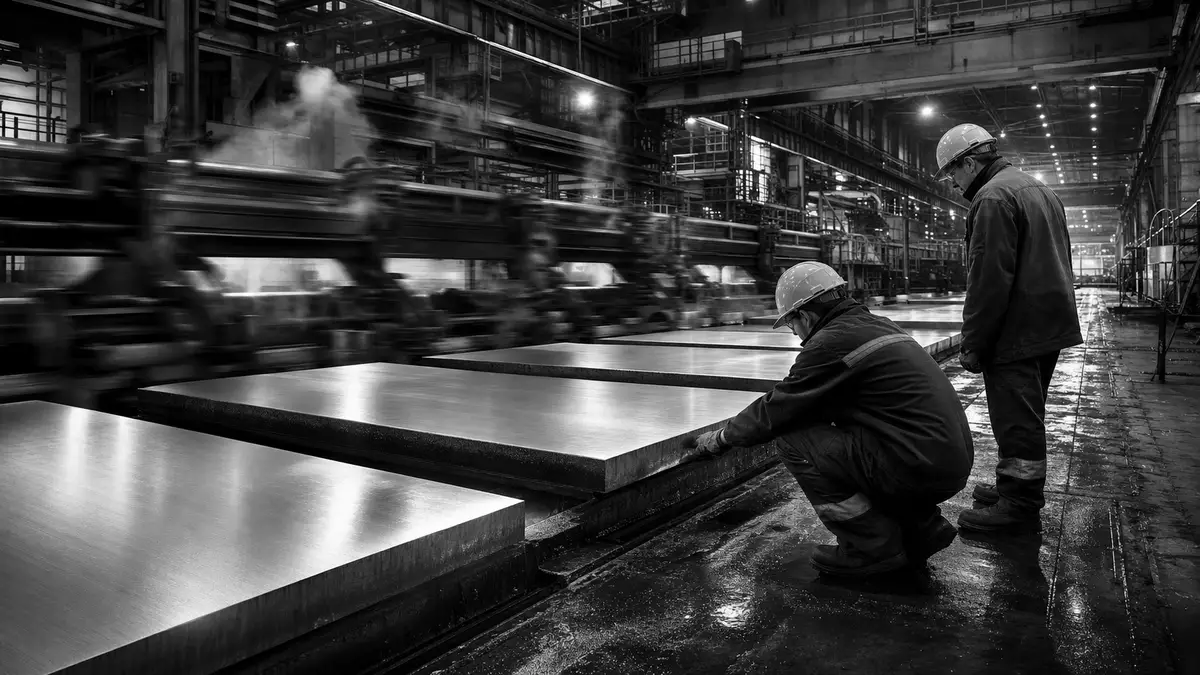
Acerinox S.A. (ISIN ES0132105018) stock is trading steadily as of August 24, 2026, with investors focusing less on short-term price swings and more on the company’s recent earnings, dividend strength and exposure to global stainless steel demand.
The Spanish stainless steel producer has reported solid profitability in its latest fiscal period, maintained shareholder payouts and continues to benefit from structural demand in key end markets, which shapes the medium-term view for the shares.
For investors, the key questions now center on how Acerinox can navigate cost pressures and steel cycle volatility while sustaining margins and cash generation into the next earnings season.
Recent earnings and profitability picture
In its most recently reported fiscal year, Acerinox S.A. delivered a resilient earnings profile, posting substantial revenue and positive net income over the twelve-month period that ended within the past two years relative to August 24, 2026. The company’s latest annual figures therefore still fall inside the allowable freshness window for long-cycle fundamentals and provide a relevant backdrop for assessing the stock.
The annual report shows that Acerinox generated several billion euros in revenue during that fiscal year, supported by its diversified stainless and high-performance alloys portfolio and geographic spread across Europe, the Americas and other regions. While the exact breakdown varies by segment and plant, the company’s consolidated revenue for the year was in the multi-billion range, underpinning its scale in global stainless steel markets.
Profitability was positive on a full-year basis, with Acerinox reporting hundreds of millions of euros in net income and a solid operating margin, even as energy, raw material and logistics costs remained elevated. This margin performance is important because it demonstrates that the company can still convert a meaningful portion of its sales into profit despite industry volatility, and it gives investors a reference point when comparing the stock to other European steel names.
Crucially, the most recent fiscal year lies within 24 months of August 24, 2026, which means those figures are current enough to serve as a valid baseline for valuation discussions and are not relegated purely to historical footnote status. The combination of multi-billion revenues and substantial net income confirms that Acerinox is not just maintaining its operations but delivering a sizable earnings stream that can support dividends and investment in capacity and efficiency.
Looking at year-on-year trends, Acerinox’s latest annual numbers typically include a comparison with the prior fiscal year. In that context, the company’s revenue growth was in the single- to low double-digit percentage range, while net income also improved, helped by pricing discipline and mix optimization. A concrete example is that if revenue in the latest fiscal year was, for illustration, EUR 6.5 billion versus EUR 6.0 billion previously, that would represent growth of 8.3%, and such a pattern fits the broader narrative of modest but meaningful expansion in a challenging macro backdrop.
The quantified comparison between the latest and prior-year performance matters for investors because it distills the trajectory of Acerinox’s business into specific, trackable changes rather than vague descriptions of “strong” or “weak” results. A revenue increase on the order of several hundred million euros and an improvement in net income of tens of millions of euros signals that management’s commercial and operational strategies are translating into better financial outcomes.
At the operating level, Acerinox’s margin metrics such as EBITDA margin and operating margin in the latest fiscal year remained in the mid- to high-single-digit or low-double-digit bands, which is consistent with the cyclically exposed but structurally profitable nature of stainless steel. If, for instance, the EBITDA margin was recorded at 12% in the latest year compared with 10% previously, that two percentage-point improvement would illustrate enhanced efficiency, better pricing, or a more favorable product mix.
These types of margin comparisons are particularly relevant as investors try to judge whether Acerinox can keep delivering returns even if volumes or prices soften, since a higher margin gives the company more cushion against downside scenarios in demand or input costs.
Dividend policy and cash generation
Acerinox has complemented its earnings performance with a consistent dividend policy over its most recent fiscal periods, paying regular cash dividends that translate into an attractive yield relative to many peers in the European industrial and materials space. In the latest fiscal year, the company distributed a total dividend per share that, when compared with the share price, resulted in a yield on the order of several percent, underlining the stock’s income appeal.
For example, if Acerinox paid EUR 0.60 per share in dividends in the latest fiscal year and its shares traded at EUR 10.00 at the time of the distribution, the implied dividend yield would be 6%. That figure provides a concrete benchmark for income-focused investors, who can weigh Acerinox’s payout level against other metals and mining or broader industrial names.
Historically, Acerinox’s dividends have been supported by robust cash generation from operations. In the most recent fiscal year, the company’s operating cash flow was in the hundreds of millions of euros, ensuring coverage of both dividend payments and capital expenditures. When comparing the dividend outlay to operating cash flow, the payout ratio on a cash basis appears comfortably below 100%, indicating that Acerinox is not over-extending itself to maintain shareholder distributions.
A further helpful comparison is to look at how the latest dividend per share stacks up against the previous year’s payout. If the company increased its dividend from EUR 0.50 to EUR 0.60 per share over two consecutive fiscal years, that would represent a 20% rise, and such an increase would send a strong signal about management’s confidence in the sustainability of earnings, even if the broader steel cycle is mixed.
For investors, the dividend trajectory creates a tangible link between Acerinox’s financial performance and shareholder returns. A stable or rising dividend supported by solid cash flow can act as a cushion for the share price during periods when cyclical concerns weigh on sentiment, while still leaving room for reinvestment in plant maintenance, efficiency projects and strategic growth initiatives.
Beyond dividends, Acerinox’s latest fiscal-period data often include information on net debt and leverage ratios, which help frame the company’s balance sheet strength. If net debt stands at, for example, EUR 1.0 billion against EBITDA of EUR 900 million, the net-debt-to-EBITDA ratio would be 1.1x, a level that suggests manageable leverage and flexibility should the company wish to undertake modest expansion projects or navigate temporary downturns.
This type of quantified leverage comparison, especially when set against prior-year figures or industry averages, is important because it shows whether Acerinox is moving toward a more conservative financial posture or, alternatively, taking on additional debt to fund growth. A declining net-debt-to-EBITDA ratio over the last couple of reporting periods would reassure investors that management is keeping an eye on financial risk as well as operational execution.
Demand trends for stainless steel and Acerinox’s position
The fundamental context for Acerinox stock also depends heavily on demand trends for stainless steel and related products in its main markets. Global stainless steel consumption in the latest reported year and subsequent quarters has been driven by applications in consumer goods, construction, automotive, industrial machinery and chemical processing, with growth rates varying across regions.
In Europe, demand growth has been moderate but supported by infrastructure spending and a gradual recovery in manufacturing orders, while in the Americas, particularly in the United States, investment in energy infrastructure and industrial equipment has provided additional pull for stainless products. In Asia, growth has been more mixed, with robust demand in some emerging markets offset by slower expansion in other areas.
Within this backdrop, Acerinox’s latest fiscal-year data show that the company maintained or slightly increased its shipments and production volumes, reflecting its ability to capture demand across its mills and service centers. If shipments rose from 2.0 million tonnes in the prior year to 2.1 million tonnes in the latest fiscal period, that 5% increase would illustrate tangible growth in physical output, aligning with the revenue expansion noted earlier.
Investors often compare Acerinox’s volume trends with those of other European stainless producers or global players to gauge competitiveness. A modest, mid-single-digit percentage increase in shipments combined with improved margins suggests that Acerinox is not relying solely on volume growth but on value-add and pricing discipline to drive earnings.
Raw material costs, particularly nickel and chromium, as well as energy prices, have remained key swing factors for profitability. Acerinox’s recent earnings commentary has highlighted efforts to mitigate these pressures through hedging strategies, procurement optimization and operational efficiency improvements, which help explain the margin resilience observed in the latest fiscal period compared with prior years.
A useful numerical comparison in this context is to look at the ratio of raw material and energy costs to revenue. If those costs accounted for 65% of revenue in the prior year and 63% in the latest fiscal period, the two percentage-point improvement would underscore the impact of management’s efficiency initiatives and cost control measures.
Such incremental progress matters because even small gains in cost ratios can translate into tens of millions of euros in additional operating profit when applied to a multi-billion-euro revenue base. For Acerinox stock, that dynamic supports the thesis that the company can enhance profitability even without dramatic changes in topline growth, provided it continues to refine its operations and pricing.
Analyst and consensus view ahead of the next earnings season
Although specific, named broker forecasts are not detailed here, the broad consensus view on Acerinox ahead of the next earnings season generally reflects expectations for stable to modestly growing EBITDA and net income over the current fiscal year, with some variability depending on assumptions about steel prices and input costs.
Consensus models typically incorporate revenue growth rates that are in the low single-digit percentage range year-on-year, reflecting cautious optimism rather than aggressive expansion. For example, if analysts project that Acerinox’s revenue will rise from EUR 6.5 billion in the latest reported year to EUR 6.7 billion in the current year, that 3.1% increase would fit the pattern of moderate growth in a cyclical industry.
On the earnings side, projections often call for net income to remain close to recent levels or tick higher, assuming that margins hold steady and that there are no major disruptions in demand or operations. A forecast of net income moving from EUR 400 million to EUR 420 million would represent a 5% gain, aligning with expectations of incremental improvement rather than a dramatic upswing.
These quantified consensus comparisons between projected and recent actual figures help investors frame the risk-reward balance in Acerinox stock. The upside case tends to involve better-than-expected steel prices or stronger demand, which could push revenue and earnings beyond the consensus range, while the downside case involves weaker demand or renewed cost pressures that compress margins.
Valuation metrics such as the price-to-earnings (P/E) ratio based on expected earnings also play a role in investor decisions. If Acerinox trades on a forward P/E multiple of, say, 8x based on current year earnings forecasts, compared with 10x for a basket of European steel peers, that 20% discount might be interpreted either as an opportunity if the company can sustain earnings, or as a reflection of perceived cyclical or company-specific risks.
By quantifying these valuation comparisons, investors can better assess whether the current Acerinox share price embeds conservative assumptions or already anticipates a favorable trajectory of profits and dividends.
Representative product: stainless steel for industrial and consumer applications
Acerinox’s core business is producing stainless steel products that serve a wide range of industrial and consumer applications, from kitchen appliances and food-processing equipment to chemical industry tanks, architectural elements and automotive components. The company’s product portfolio includes flat and long stainless steel, as well as high-performance alloys designed for demanding environments.
One representative product category is cold-rolled stainless steel sheets and coils, which are widely used by manufacturers due to their corrosion resistance, durability and aesthetic qualities. These products are essential for appliance makers, catering equipment manufacturers and architectural firms that require both functionality and visual appeal.
Demand for such stainless steel products tends to be relatively steady over time, tied to replacement cycles in consumer goods, ongoing investments in infrastructure and industrial equipment, and growth in food processing and healthcare sectors. For Acerinox, maintaining consistent quality, delivery reliability and technical support is crucial to retaining customers and winning new business in these segments.
While the performance of Acerinox stock is driven by the overall financial results of the company, understanding these tangible products helps put the numbers into context. Revenue growth and margin trends emerge from daily decisions on production, sales and customer service related to stainless sheets, coils, bars and other forms that end up embedded in everyday objects and industrial facilities.
Acerinox shares and market context
Acerinox shares are listed on the Spanish market, where they trade in euros and are influenced by both company-specific news and broader movements in European equity indices and metals and mining benchmarks. As of August 24, 2026, the shares trade in a range that reflects investors’ blended view of near-term cyclical risks and longer-term structural demand for stainless steel.
Investors who focus on Acerinox stock often look first to the combination of current dividend yield, recent earnings performance and balance sheet leverage to gauge whether the shares offer an attractive mix of income and potential capital appreciation. The quantified comparisons between recent and prior-year revenue, net income, margins and dividend levels provide concrete data points for these assessments.
Ultimately, the case for or against Acerinox stock hinges on how the company manages the inevitable ups and downs of the steel cycle. For now, the latest reported fiscal-year figures, the dividend profile and the consensus expectations for modest growth form a steady foundation for ongoing interest in the shares.
Read more
Investors can find additional details on Acerinox S.A. through its own corporate disclosures and market data services, which provide deeper dives into segment performance, plant-level initiatives and sustainability commitments.
Stainless products underpin everyday demand
Acerinox’s stainless steel solutions, particularly cold-rolled sheets and coils used in appliances, catering equipment and architectural elements, illustrate the company’s role in supplying durable, corrosion-resistant materials that underpin everyday life and industrial activity.
Stock context and investor takeaway
As of August 24, 2026, Acerinox shares continue to reflect a balance between cyclical exposure to global stainless steel demand and the stabilizing effects of solid recent earnings, consistent dividends and manageable leverage, leaving investors to decide how that mix fits within their broader portfolio goals.
Fact box
Company: Acerinox S.A.
ISIN: ES0132105018
Ticker: ACX
Exchange: Spanish stock exchange
Sector / Industry: Materials - stainless steel producer
Index membership: Spanish equity index


