

Lenovo Yoga 9i 2-in-1 Gen 9 14 Intel Core Ultra 7 - Premium OLED Convertible With AI Power
Published on 09/10/2026 at 10:22 | Editorial responsibility: Rafael Müller, Editor-in-Chief AD HOC NEWS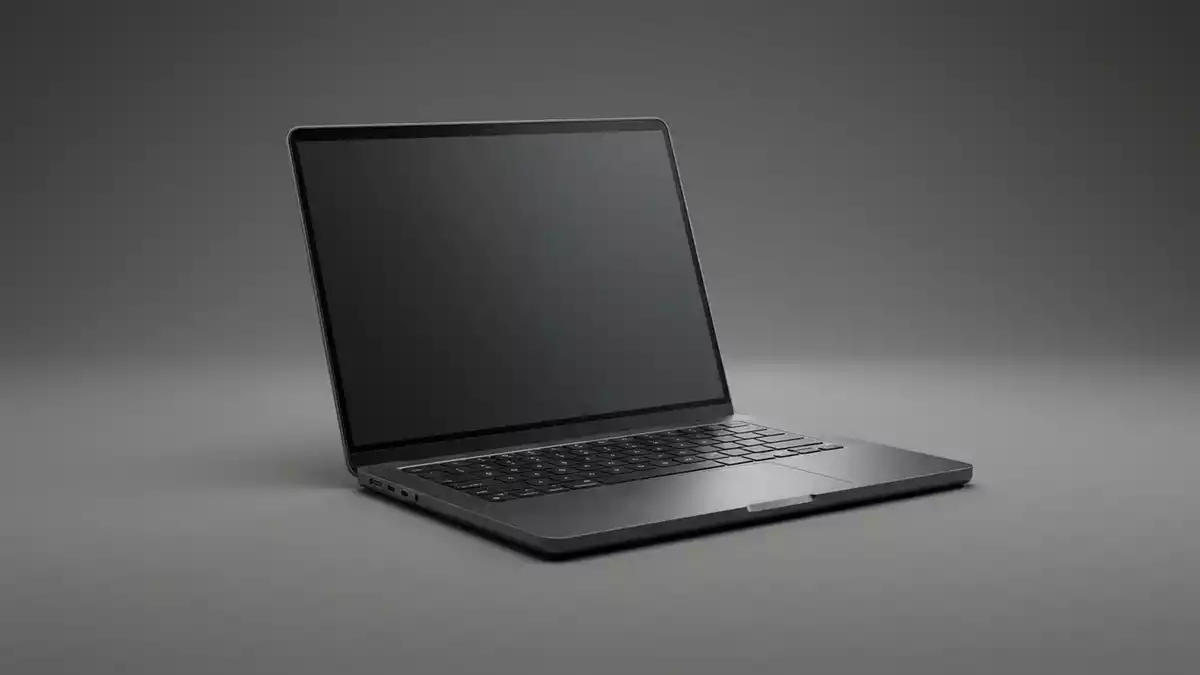
Lenovo Yoga 9i 2-in-1 Gen 9 14 Intel is Lenovo's premium 14-inch convertible laptop built around Intel's Core Ultra 7 155H processor, a high-resolution OLED touch display and a flexible 360-degree hinge for tablet-style use. In its mainstream configuration in the United States, the system pairs the Core Ultra 7 155H with 16GB of LPDDR5X-7467 memory, Intel Arc integrated graphics and a 1TB PCIe Gen 4 solid-state drive, giving it a spec sheet aimed at power users who still want a thin, under-3-pound machine.PCMag's tested configuration details these components.
Core Hardware, Display And Battery
At the heart of the Yoga 9i 14 Gen 9 is Intel's Core Ultra 7 155H, a Meteor Lake processor that combines CPU cores, an Intel Arc integrated GPU and a dedicated NPU on one package for AI-accelerated features.Thurrott's review notes the Core Ultra 7 155H as the sole CPU option. In typical US retail and direct configurations, this chip is paired with 16GB or 32GB of soldered LPDDR5X-7467 RAM, up to a 1TB NVMe SSD, and Intel Arc graphics, which together target demanding productivity and creative workloads without a discrete GPU.PCMag lists 16GB RAM and 1TB SSD in its test unit.
The 14-inch OLED touch display is one of the Yoga 9i's headline components. Base configurations use a 2.8K panel with a 2,880x1,800-pixel resolution and a 120Hz refresh rate, while higher-end units upgrade to a 3,840x2,400-pixel OLED panel running at 60Hz.CNET identifies the 14-inch 2880x1800 OLED touch base displayLaptop Mag documents the 3840x2400 OLED upgrade option. Both panels support pen input, Dolby Vision and high contrast, making them suitable for photo editing and video streaming.
Battery capacity comes in at 75 watt-hours, according to test specifications, paired with a chassis that measures roughly 12.44 inches wide by about 8.66 inches deep and 0.64 inches thick, and weighs around 2.9-2.91 pounds depending on configuration.A detailed spec listing cites the 75Wh battery, 12.44 x 8.66 x 0.64 inch size and 2.91-pound weightLaptop Mag places the machine at 12.4 x 8.7 x 0.6 inches and 2.9 pounds. In Laptop Mag's battery test with continuous web browsing at 150 nits, the Yoga 9i lasted 7 hours and 24 minutes on this 75Wh pack, a runtime that aligns with its premium thin-and-light class.Laptop Mag reports 7 hours 24 minutes of battery life.
Design, Ports And Convertible Features
The Yoga 9i Gen 9 keeps a familiar 2-in-1 design, with a 360-degree hinge that lets the system switch between traditional laptop, tent and tablet modes. It is offered in at least two colors for US buyers, Cosmic Blue and Luna Grey, giving it a more dressed-up finish than many utilitarian business convertibles.CNET lists Cosmic Blue and Luna Grey as color options. The chassis integrates a soundbar hinge with quad speakers and support for Dolby Atmos, which reviewers highlight as providing punchy, room-filling audio compared with typical laptop speakers.PCWorld describes punchy sound from the soundbar hinge.
Port selection reflects a premium thin-and-light convertible. On the left side, the Yoga 9i provides two Thunderbolt 4 / USB4 Type-C ports and a single full-size USB-A port; on the right, there is another USB-C 3.2 Gen 2 port along with a 3.5mm headphone/microphone combo jack.A detailed connectivity list describes two Thunderbolt 4 ports, one USB-A, and an extra USB-C plus audio jackThurrott notes the layout of Thunderbolt 4 and USB ports. Wireless networking includes Wi-Fi 6E and Bluetooth 5.3, plus an IR webcam for Windows Hello and a fingerprint reader for quick sign-ins.The same spec summary cites Wi-Fi 6E, Bluetooth 5.3, IR webcam and fingerprint reader.
The bundle typically includes a Lenovo Slim Pen, which works with the OLED touch screen for drawing and note-taking, turning the Yoga 9i into a digital sketchbook in tablet mode.The spec listing notes one Lenovo Slim Pen in the box. Combined with the 2.5K IR webcam, the machine is positioned for videoconferencing and stylus-heavy workflows, especially for creative professionals and students.
Yoga 9i 2-in-1 Gen 9 Product Details
Lenovo's official listing for the Yoga 9i 2-in-1 Gen 9 14 Intel details configurations, AI features and warranty support for US buyers.
Pricing And Configurations In The US
In the United States, the Yoga 9i 14 Gen 9's pricing starts around $1,449 for a configuration with the Intel Core Ultra 7 155H, 16GB of RAM, a 1TB SSD and the 14-inch 2.8K OLED panel.Laptop Mag cites a $1,449 starting price with 16GB RAM, 1TB SSD and 2.8K OLED panel. Laptop Mag's tested unit with 32GB of RAM and the 3,840x2,400-pixel OLED display pushes that price to $1,649, reflecting the cost of higher memory and display options.The same review lists $1,649 for the 32GB RAM and 4K-class OLED configuration.
A separate review notes that prices for the Yoga 9i 14 Gen 9 start at about $1,475 for a base configuration with the Core Ultra 7 155H, 16GB RAM, 512GB SSD and a 2.8K OLED display, with upgrades to a 1TB SSD and 4K OLED panel adding roughly $32 and $80, respectively, bringing a fully configured system to about $1,590.Thurrott reports a base price around $1,475 and upgrade costs of $32 for 1TB SSD and $80 for the 4K OLED panel. Sale pricing can drop lower: Notebookcheck documented a Best Buy promotion cutting a configuration with the Core Ultra 7 155H, 16GB LPDDR5X-7467 RAM, 1TB PCIe Gen 4 SSD and 14-inch 1800p OLED display to $1,099.99, down from $1,449.99, highlighting typical discounting in US retail channels.Notebookcheck notes a sale price of $1,099.99 versus a regular $1,449.99.
Across these sources, current pricing bands place the Yoga 9i Gen 9 solidly in the US premium thin-and-light convertible segment, where similarly specified 14-inch OLED laptops with modern Intel chips often sit between roughly $1,400 and $1,700 before discounts. For US shoppers, the choice between the base 2.8K panel and the higher-resolution 3,840x2,400 display, and between 16GB and 32GB RAM, will drive whether they pay closer to the lower or upper end of this range.
Performance, AI Features And Comparison
On synthetic benchmarks, the Yoga 9i 14 Gen 9 lands comfortably above the average for its class. Laptop Mag measured a Geekbench 6 multi-core score of 12,455 for a configuration with the Core Ultra 7 155H, 32GB of RAM and 1TB SSD, compared with a category average around 10,297.Laptop Mag reports a Geekbench 6 multi-core score of 12,455 versus a 10,297 category average. This surplus in multi-core performance, combined with fast LPDDR5X memory and PCIe Gen 4 SSD storage, positions the system ahead of many older 11th or 12th Gen Intel-powered convertibles on heavy multitasking and creative workloads.
Beyond raw performance, the Core Ultra 7 155H's integrated NPU enables hardware-accelerated AI tasks in Windows, and Lenovo markets the Yoga 9i Gen 9 with features like Lenovo AI Engine+ and a dedicated Microsoft Copilot key on the keyboard.Thurrott highlights Lenovo AI Engine+ and a Copilot key as part of the Yoga 9i Gen 9. Reviewers frame these additions as part of a broader shift toward local AI processing in laptops rather than as standalone reasons to upgrade, but they do differentiate the machine from earlier Yoga 9i generations that lacked NPUs and Copilot keys.
Against its immediate predecessor, the Yoga 9i Gen 8, the most concrete change is the move from conventional Intel processors to Core Ultra 7-series silicon with Intel Arc integrated graphics and the NPU, plus the option for higher-refresh 120Hz 2.8K OLED panels in addition to 4K-class displays.Thurrott notes the significant under-the-hood change to Core Ultra 7-series processors with Arc GPU and NPU. Compared with a typical midrange 14-inch 2-in-1 that might use a non-OLED 1920x1200 display, 8GB RAM and a smaller battery in the $800-$1,000 band, the Yoga 9i's higher-resolution OLED panel, 16GB-32GB memory, 75Wh battery and aluminum build justify its more expensive positioning.
Use Case, Limits And Overall Positioning
Within the crowded field of 14-inch convertibles, the Lenovo Yoga 9i 2-in-1 Gen 9 14 Intel stands out most for its combination of OLED display options, relatively light 2.9-pound weight and strong multi-core performance at a starting price around $1,449. Users who prioritize display quality and stylus input, such as photographers, illustrators and students working on visual projects, benefit directly from the 2.8K or 3,840x2,400 OLED panels and bundled Lenovo Slim Pen.Laptop Mag's configuration and pricing context align the machine with power users and creatives.
The main limits come from its soldered memory and integrated graphics. With RAM fixed at 16GB or 32GB at purchase and no discrete GPU option, buyers planning heavy 4K video editing or 3D rendering have to rely entirely on Intel Arc integrated graphics and the chosen RAM amount. That said, for typical productivity, code work, photo editing and content consumption, the combination of Core Ultra 7 155H, 16GB-32GB LPDDR5X and a 1TB SSD, plus the 75Wh battery that delivers roughly 7.5 hours in standardized web browsing, makes the Yoga 9i Gen 9 a strong everyday machine with enough headroom for demanding tasks.
Key Specs And US Positioning
- Product: Lenovo Yoga 9i 2-in-1 Gen 9 14-inch Intel Core Ultra 7 (typical US configuration with 16GB RAM, 1TB SSD and 14-inch 2.8K OLED display)
- Manufacturer: Lenovo Group Ltd., Morrisville, NC 27560, United States
- Category: 14-inch 2-in-1 OLED laptop
- Processor: Intel Core Ultra 7 155H with integrated Intel Arc graphics
- Memory and storage: 16GB-32GB LPDDR5X-7467 (soldered), up to 1TB PCIe Gen 4 NVMe SSD
- Display: 14-inch OLED touch, 2880x1800 resolution at 120Hz or 3840x2400 resolution at 60Hz
- Battery and weight: 75Wh battery, approximately 2.9-2.91 lb curb weight
- Price: $1,449-$1,649 typical range for US configurations (as of 09/10/2026)
- Target audience: Mobile professionals and creatives seeking a premium 14-inch convertible with high-resolution OLED display and AI-capable Intel Core Ultra 7 processor


