Rheinmetall’s Defence Pivot Is Complete, but the Stock Faces a Gauntlet of Geopolitics, Competition, and Execution Hurdles
09.06.2026 - 04:53:44 | boerse-global.de
Rheinmetall has severed its last civilian ties. The Düsseldorf-based group is selling its automotive division Power Systems to Munich holding company AEQUITA for a preliminary €350 million, pending closing in the fourth quarter of 2026. The transaction, which triggers a non-cash impairment charge of around €200 million, transfers 6,250 employees globally along with heritage brands such as Pierburg and Kolbenschmidt. The unit generated roughly €2 billion in annual revenue. CEO Armin Papperger described the move as historic, cementing the group’s status as a pure-play defence contractor.
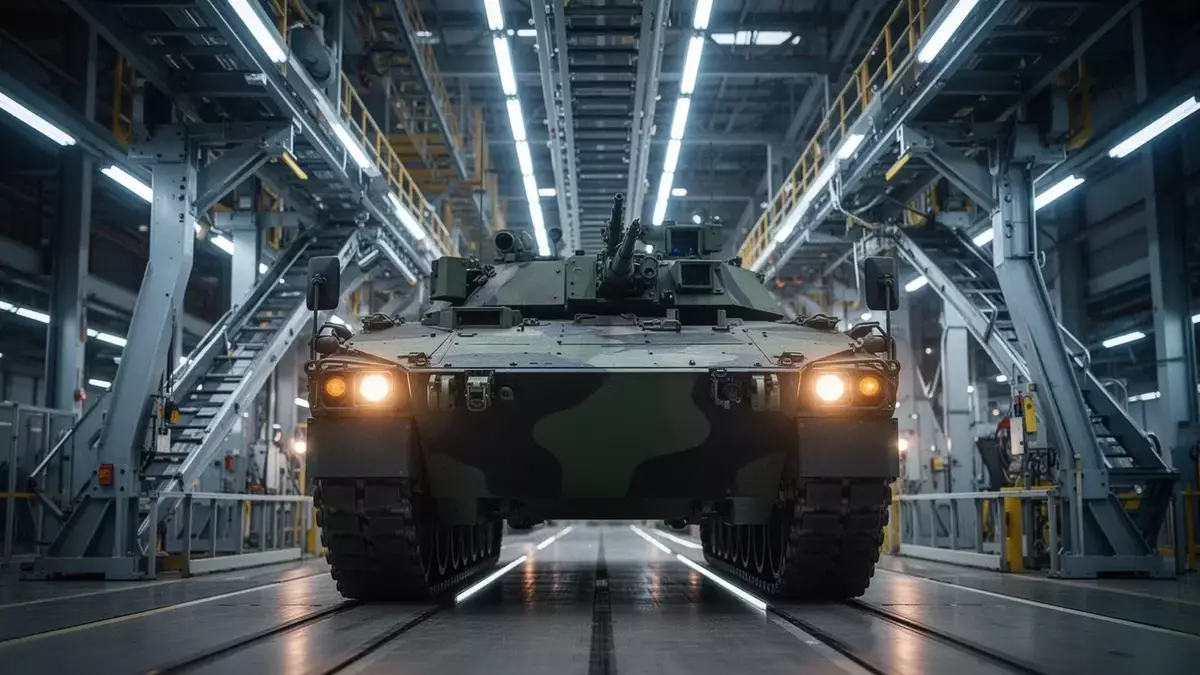
A record order book backs the strategic shift. Rheinmetall’s backlog has swelled to €73 billion, equivalent to five times planned annual sales. A fresh Romanian contract worth €5.7 billion underscores the momentum: Bucharest has ordered nearly 300 Lynx infantry fighting vehicles, plus air-defence systems and patrol boats, with deliveries scheduled between 2028 and 2030. The company will manufacture a large portion directly in Romania, ramping up local capacity for the first major test of its expanded production base.
Yet the market remains unimpressed. Rheinmetall shares closed yesterday at €1,202.40, paring the year-to-date loss to roughly 25% and leaving the stock about 40% below the all-time high reached last September. With the 52-week low of €1,099.80 just 9% below, the technical picture looks fragile; the Relative Strength Index stands at a neutral 41.8. The disconnect between a towering order book and a sagging share price reflects a cluster of headwinds that go well beyond the automotive divestiture.
Should investors sell immediately? Or is it worth buying Rheinmetall?
Operationally, the first quarter revealed cracks. Revenue came in at €1.94 billion, missing analyst estimates by 15%. Heavy upfront investment pushed free cash flow deep into negative territory, raising questions about how quickly the backlog can translate into bottom-line profits. Management maintains its full-year guidance, and the next big delivery deadline—the half-year results on August 6—will test that conviction.
Competition is also sharpening on the home front. The German government plans to list state-backed tank maker KNDS this summer, with an estimated valuation of up to €20 billion. KNDS, known for the Leopard 2, will emerge as a state-supported rival directly challenging Rheinmetall’s core land-systems business. Both Germany and France intend to retain significant stakes in the floated entity.
Meanwhile, Rheinmetall is pressing ahead with portfolio expansion beyond its traditional land base. At this week’s ILA Berlin air show—the company’s first major public appearance since the restructuring—it is showcasing Boeing’s autonomous MQ-28 drone, which the Bundeswehr hopes to procure by 2029. A space joint venture with ICEYE recently secured a billion-euro satellite reconnaissance order. On the naval side, the group has submitted a non-binding bid for the Kiel-based German Naval Yards shipyard, with due diligence underway; rival TKMS has also signalled interest, setting up a potential bidding contest for the frigate builder.
External factors complicate the outlook further. Prospects of peace talks between the US and Ukraine are eroding the geopolitical risk premium that has buoyed defence stocks. Any diplomatic breakthrough could remove the emergency-spending tailwind that Rheinmetall has enjoyed. The next sector catalyst will be the NATO summit in Ankara in early July, followed by the critical half-year report in August, when investors will demand evidence that the €73 billion order book is flowing into cash flow and margins.
Ad
Rheinmetall Stock: New Analysis - 9 June
Fresh Rheinmetall information released. What's the impact for investors? Our latest independent report examines recent figures and market trends.
So schätzen die Börsenprofis Rheinmetall’s Aktien ein!

Für. Immer. Kostenlos.